

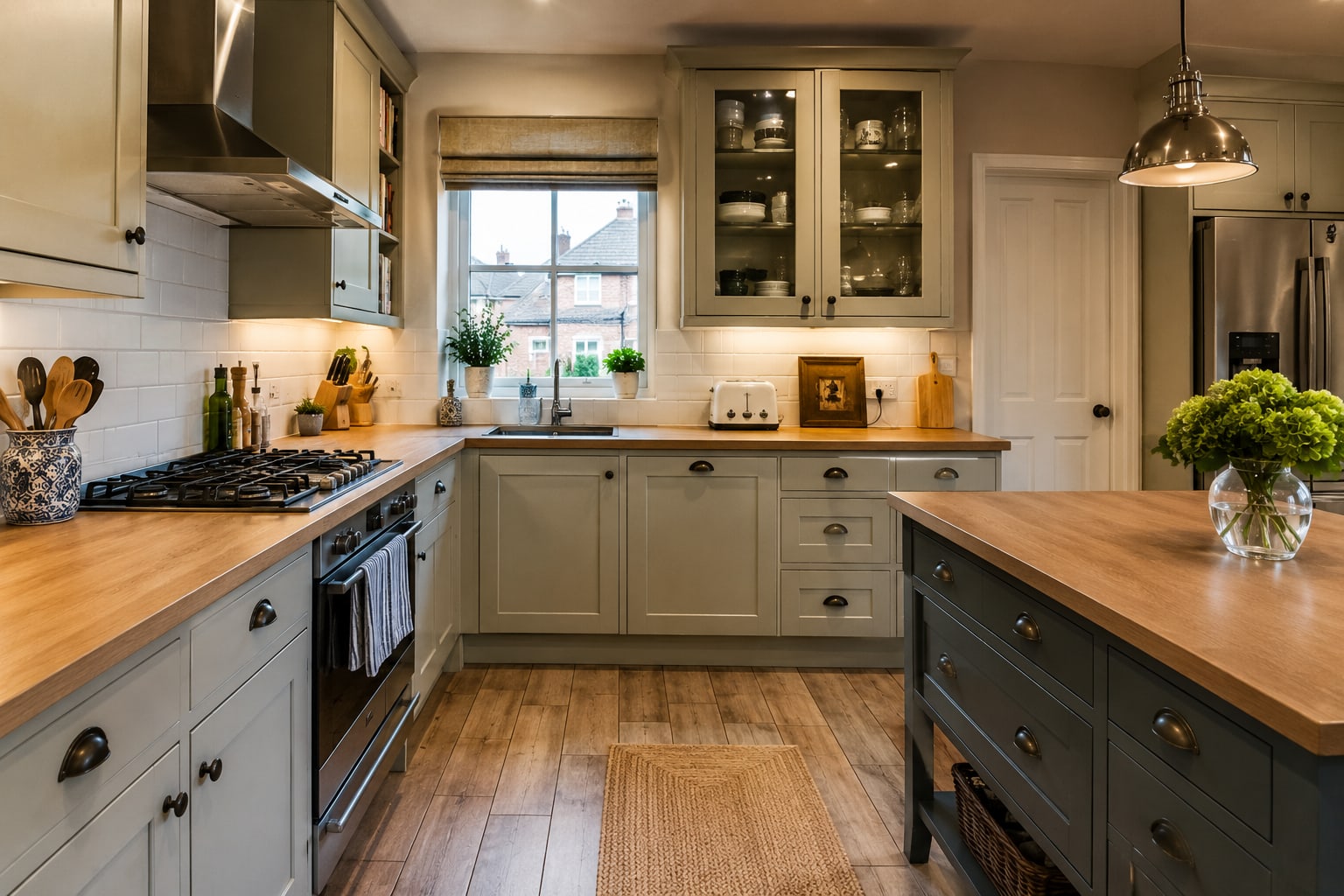
1. Light Oak and White Scandi Kitchen with a Garden Window
Light oak, warm white and a big garden window flood this Scandi-Japandi kitchen with calm daylight. A pale quartz waterfall island and a couple of teal stools are all the drama it needs, the rest is breathing space.
 See the full design
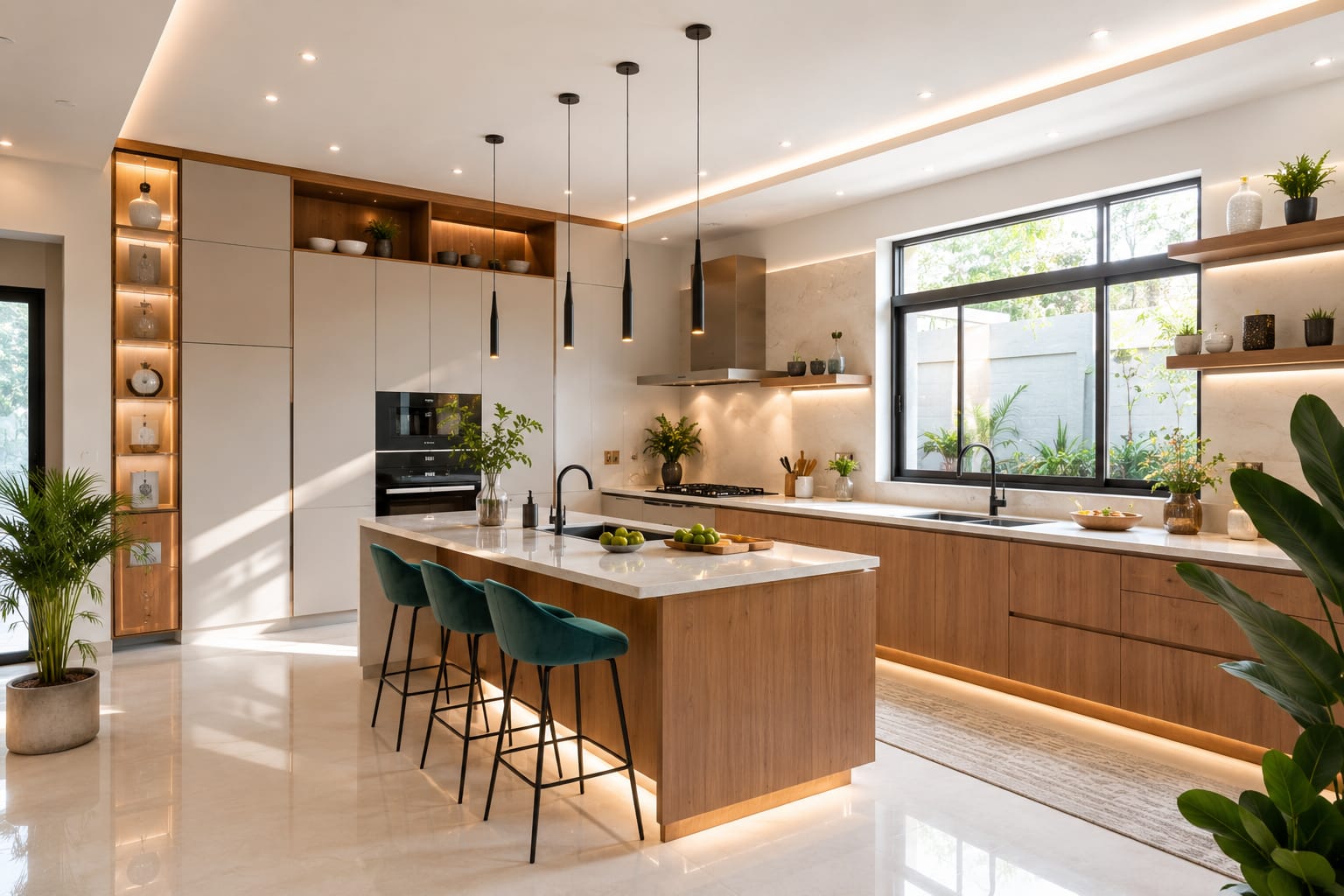
 2. Blue and White Coastal Farmhouse Kitchen
Slate-blue shaker cabinets, a bright white marble island and woven rattan stools sit under a vaulted shiplap ceiling. Breezy, light and effortlessly coastal without a single seashell in sight.
 See the full design
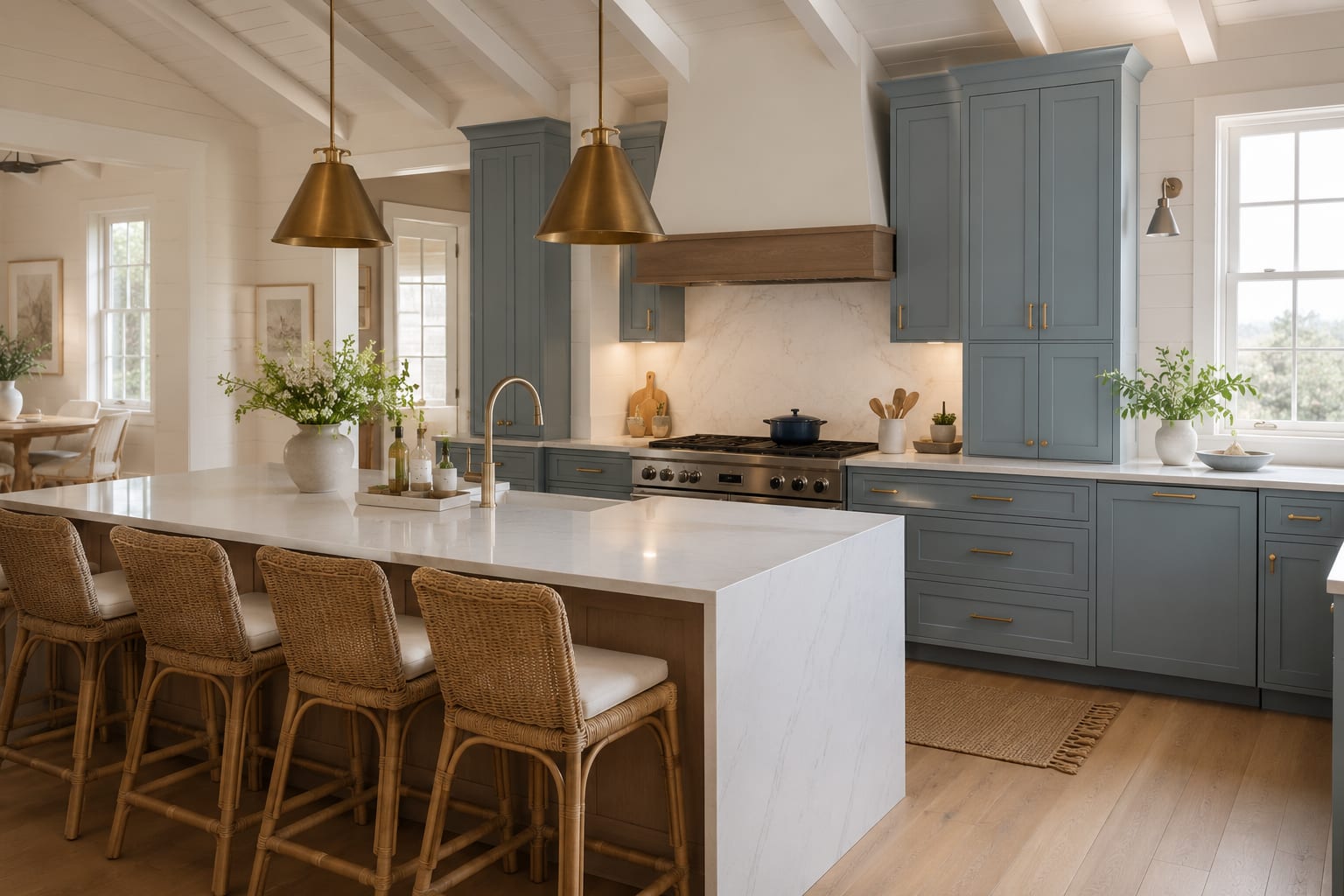
 3. Coastal Blue Shaker Kitchen With a Marble Waterfall Island
Dusty blue shaker cabinets and a white marble waterfall island on a warm oak base, lit by aged brass domes. It is relaxed Hamptons calm with an airy, sea-view simplicity.
 See the full design
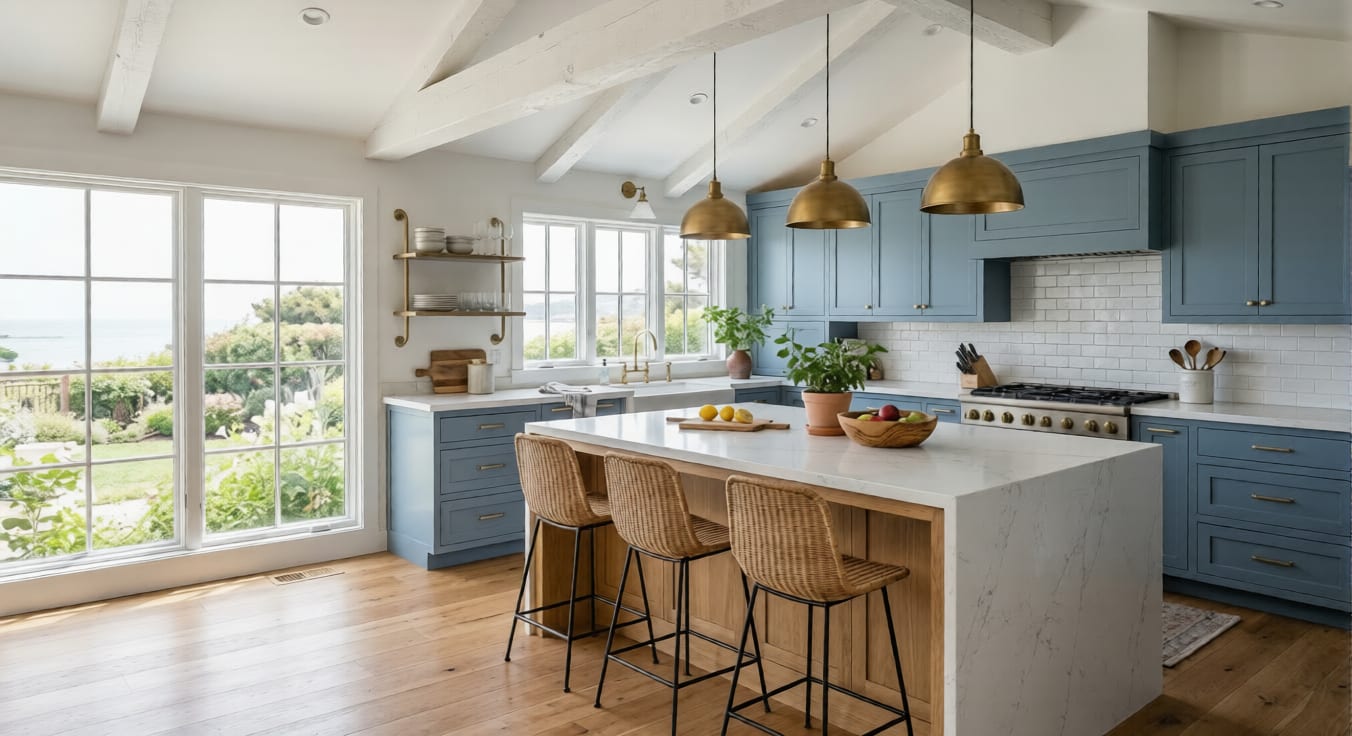
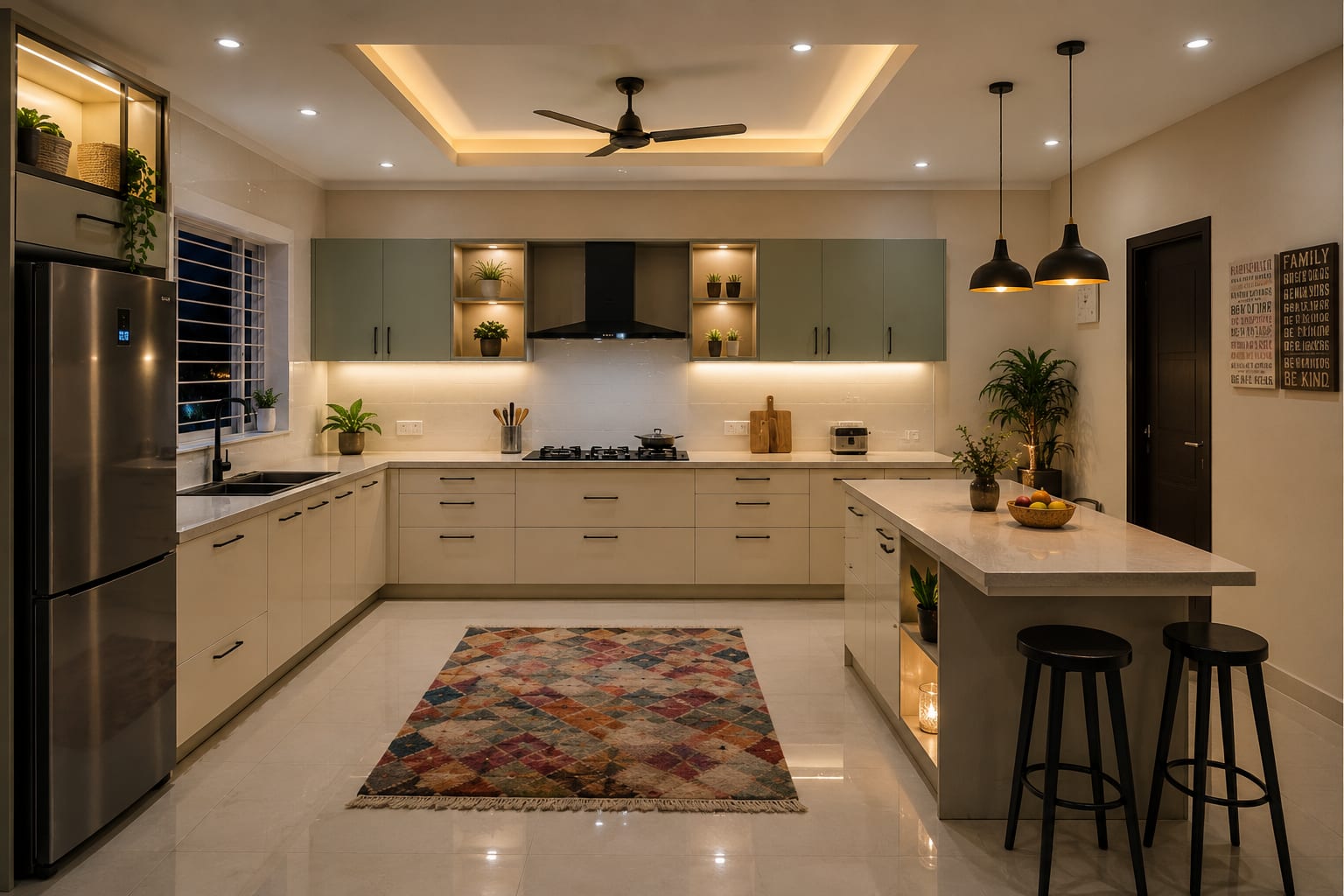
 4. Sage and Cream Modular Kitchen with Breakfast Island
Ivory base units, soft sage uppers and a compact quartz breakfast island keep this two-tone kitchen fresh and uncluttered. It is proof that a little colour and a lot of restraint feels lived-in from day one.
 See the full design
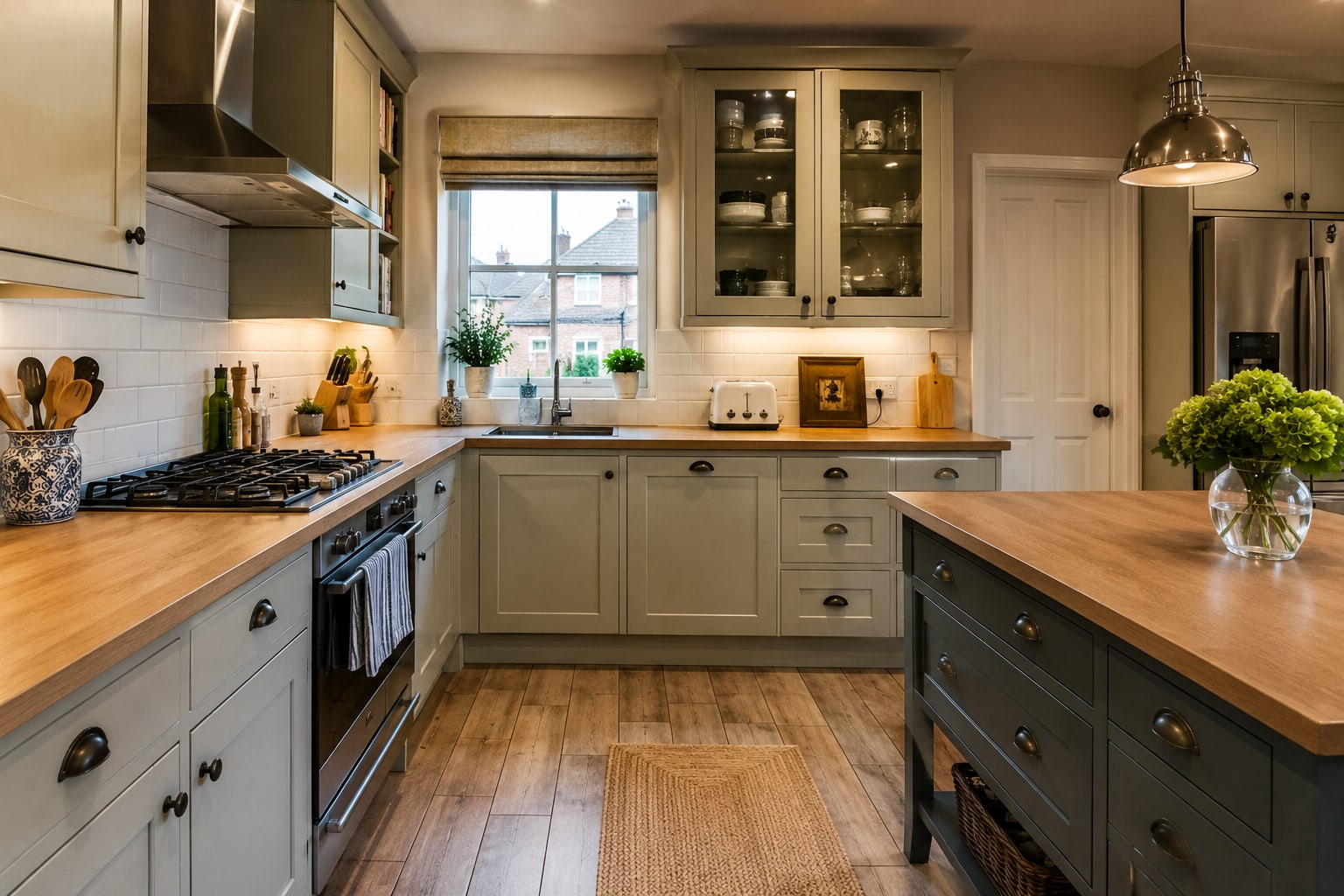
 5. Sage Green Shaker Cottage Kitchen With Oak Worktops
Soft sage shaker cabinets, warm solid-oak worktops and classic white metro tiles make a calm, timeless English-cottage kitchen. Nothing shouts here, it simply looks settled and easy to live in.
 See the full design
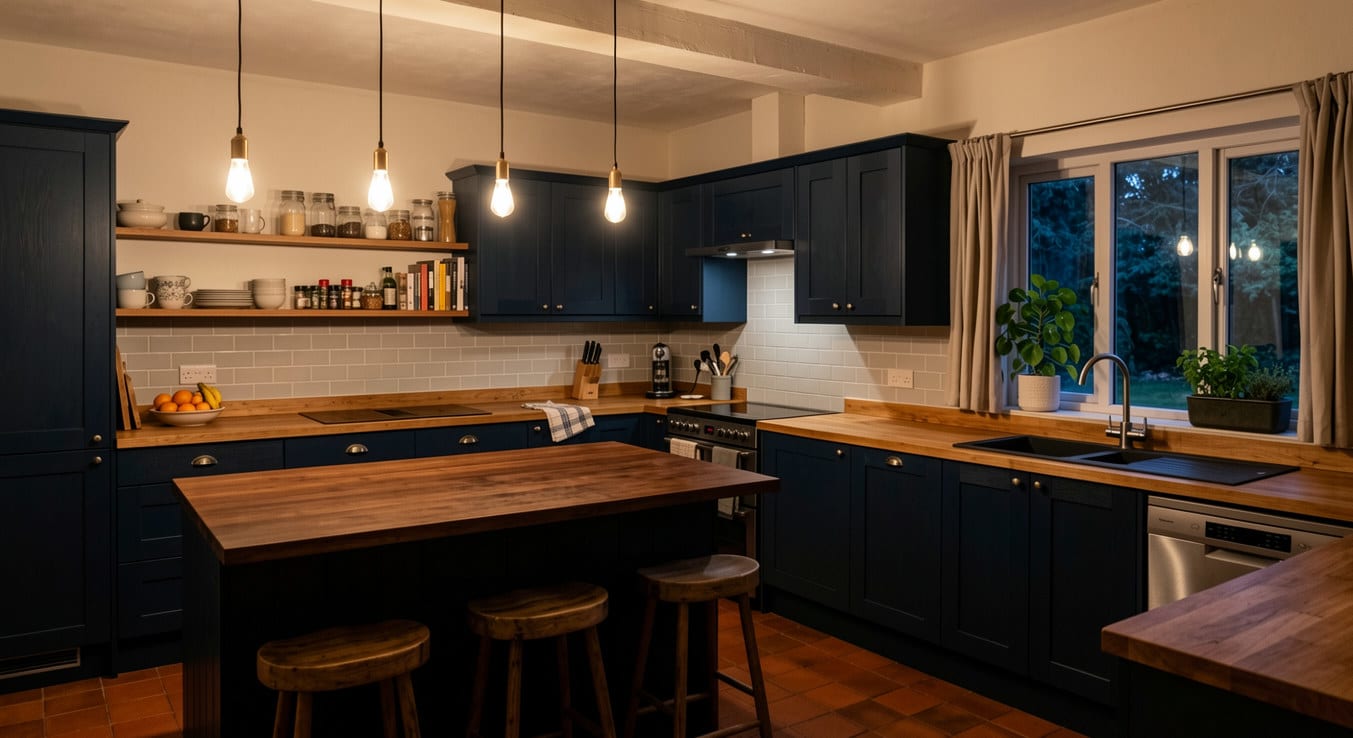
 6. Navy Shaker Country Kitchen With Butcher Block Worktops
Deep navy shaker units, warm butcher-block worktops and open wood shelves under Edison bulbs. Simple, cosy country character grounded by terracotta floors, clean lines with a soul.
 See the full design
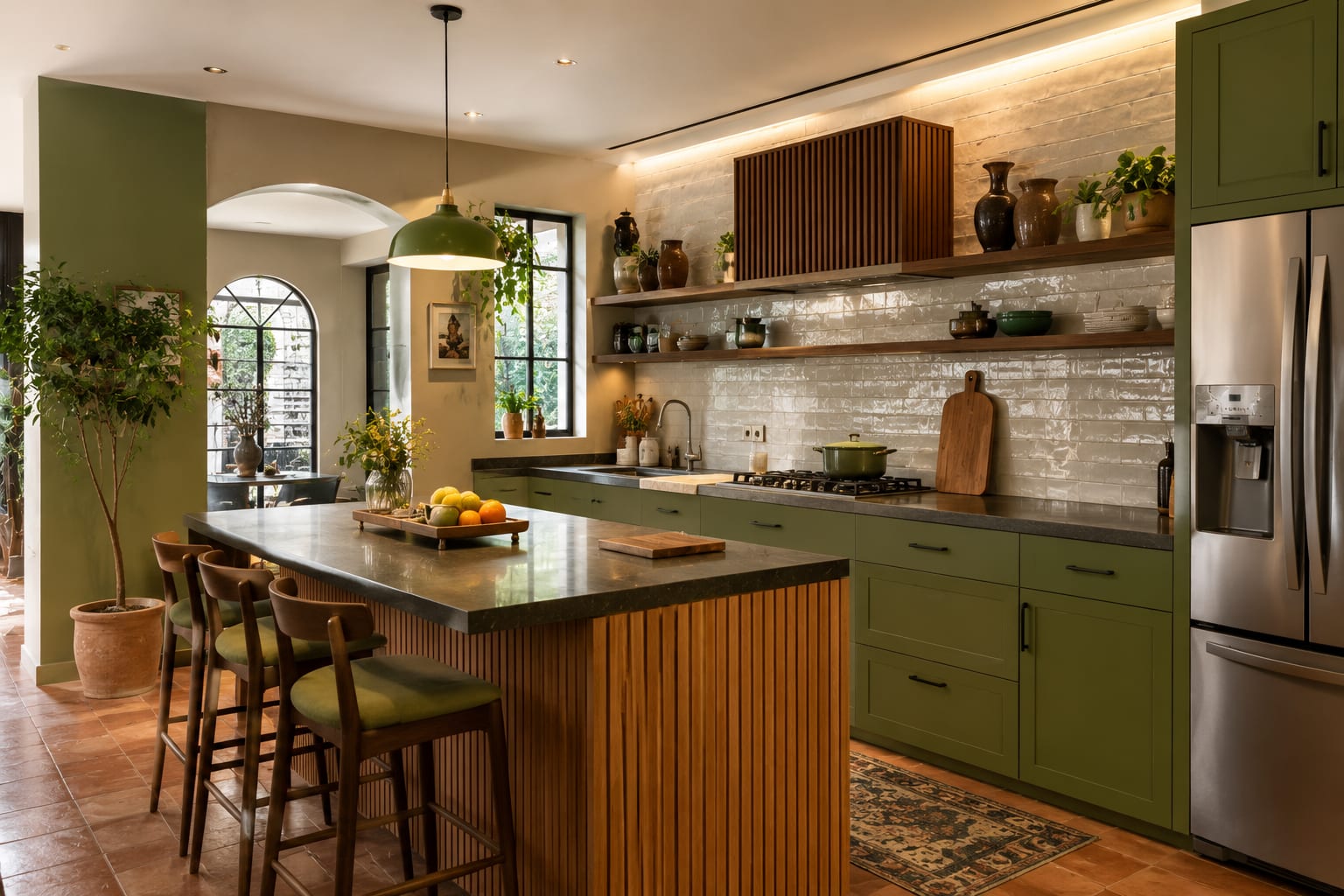
 7. Olive Green Shaker Kitchen With Zellige Tile and Soapstone Worktops
Muted olive shaker cabinets, a handmade cream zellige backsplash and terracotta floors keep this kitchen warm, honest and pared-back. Natural materials do the talking, so it never needs to try too hard.
 See the full design
 How to keep a kitchen feeling clean and calm
A clean, minimal kitchen is less about a particular colour and more about restraint, a tight palette, natural materials, warm lighting and worktops you actually keep clear. Choose one soft accent, whether that is a couple of coloured stools or a run of open oak shelving, and let everything else stay quiet. Tap through to any of these designs for its palette, budget and step-by-step, and start by editing back rather than adding more.
A minimal kitchen still needs to handle a busy day
The calm appearance comes from giving ordinary equipment somewhere convenient to go, not from pretending the kitchen is never used. List what normally sits beside the kettle, hob and sink, then design one reachable home for each group. Daily appliances may deserve a dedicated counter zone or an accessible cabinet with suitable power and ventilation; recycling, tea towels and cleaning products need enough capacity for the interval between resets. Keep the main preparation stretch genuinely clear, but do not hide essential objects so far away that they return to the worktop after the first breakfast. A useful kitchen can look quiet because its storage follows the cooking routine.
Decisions to make before choosing doors and worktops
- Map the route between food storage, preparation, cooking and washing before fixing the island or peninsula position.
- Count the wide drawers, vertical tray slots and shallow everyday storage you need instead of repeating equal cabinets.
- View cabinet, worktop, floor and paint samples together in morning and evening light; undertones change beside one another.
- Choose handleless hardware for cleaning and reliability as well as appearance, and test how the door is opened with wet hands.
- Use open shelving only for a small group of frequently used pieces, leaving enough gap to clean the wall and shelf properly.
- Plan sockets, task lighting, extraction and appliance servicing before the visual details make those routes difficult to change.
Where to spend for a calmer result
Reliable hinges, full-extension drawers, effective extraction and a durable preparation surface influence daily life more than a decorative end panel. If the budget is tight, keep a straightforward cabinet layout and use paint, handles or one timber detail to create warmth. Fewer well-planned materials are easier to coordinate and repair. The result feels minimal because every visible decision has a purpose, not because every practical item has been removed from the room.
Join the conversation
Share your thoughts on this room