

Measure both wall planes as one composition
Measure the usable width of each wall from the corner seam to the nearest window, door trim or tall furniture. Mark the top and bottom limits with low-tack tape, then photograph the empty corner straight on and from the doorway. One wall can hold the largest piece while the other carries a smaller echo. Keep the gaps between frames broadly consistent, but let the corner itself have a little more air so shadows do not merge the two sides.
Build a collected reading corner around one comfortable chair
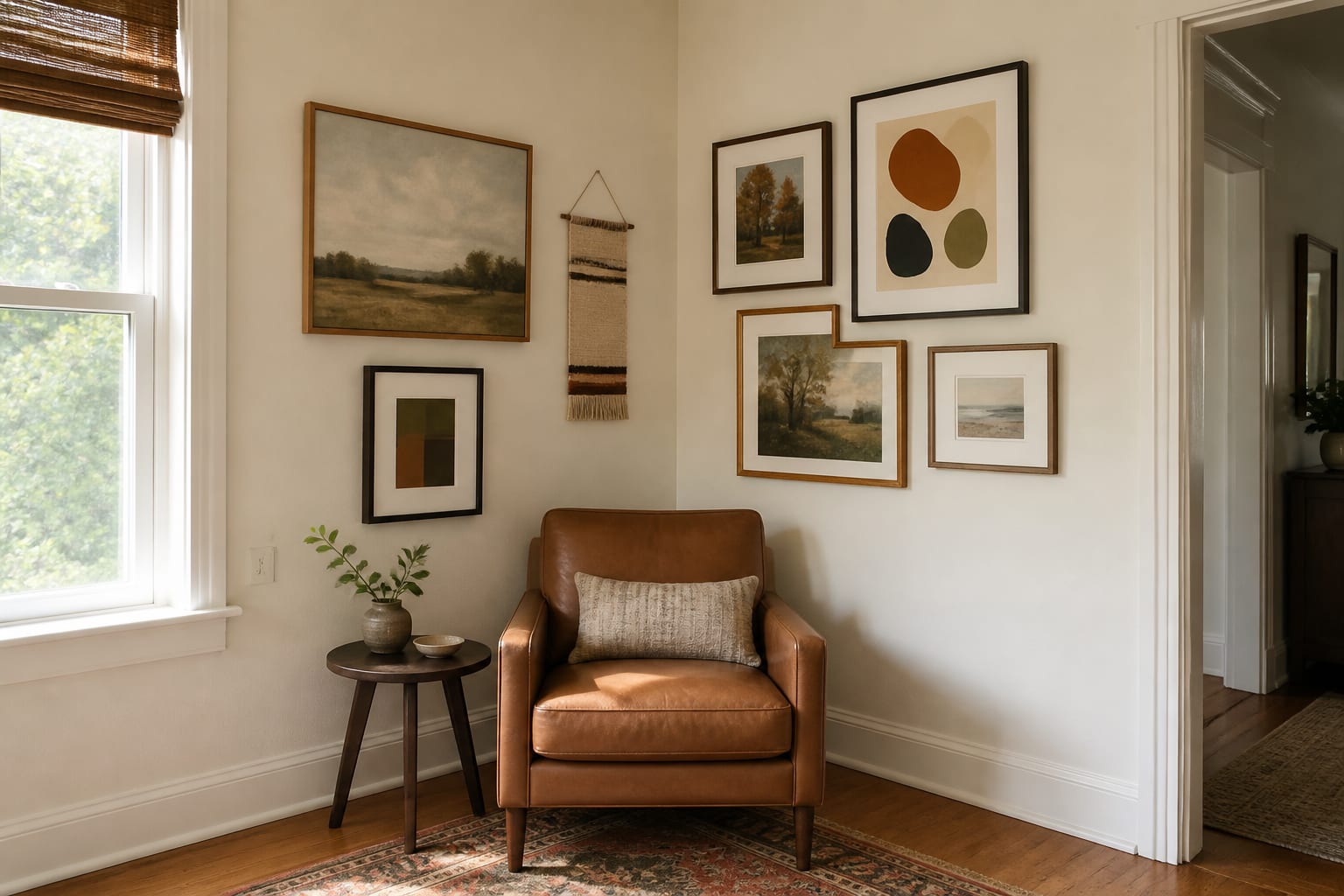
The chair is the anchor, while the large landscape on the left gives the window wall enough presence to balance the denser group on the right. A small textile near the seam softens the transition without trying to hide the corner. Notice that the arrangement does not form a perfect mirrored V. The two sides share colour and frame finishes, but each keeps its own rhythm. Copy the principle by repeating two materials across both walls and allowing one larger piece to set the scale.
Keep a modern apartment corner light with five focused pieces
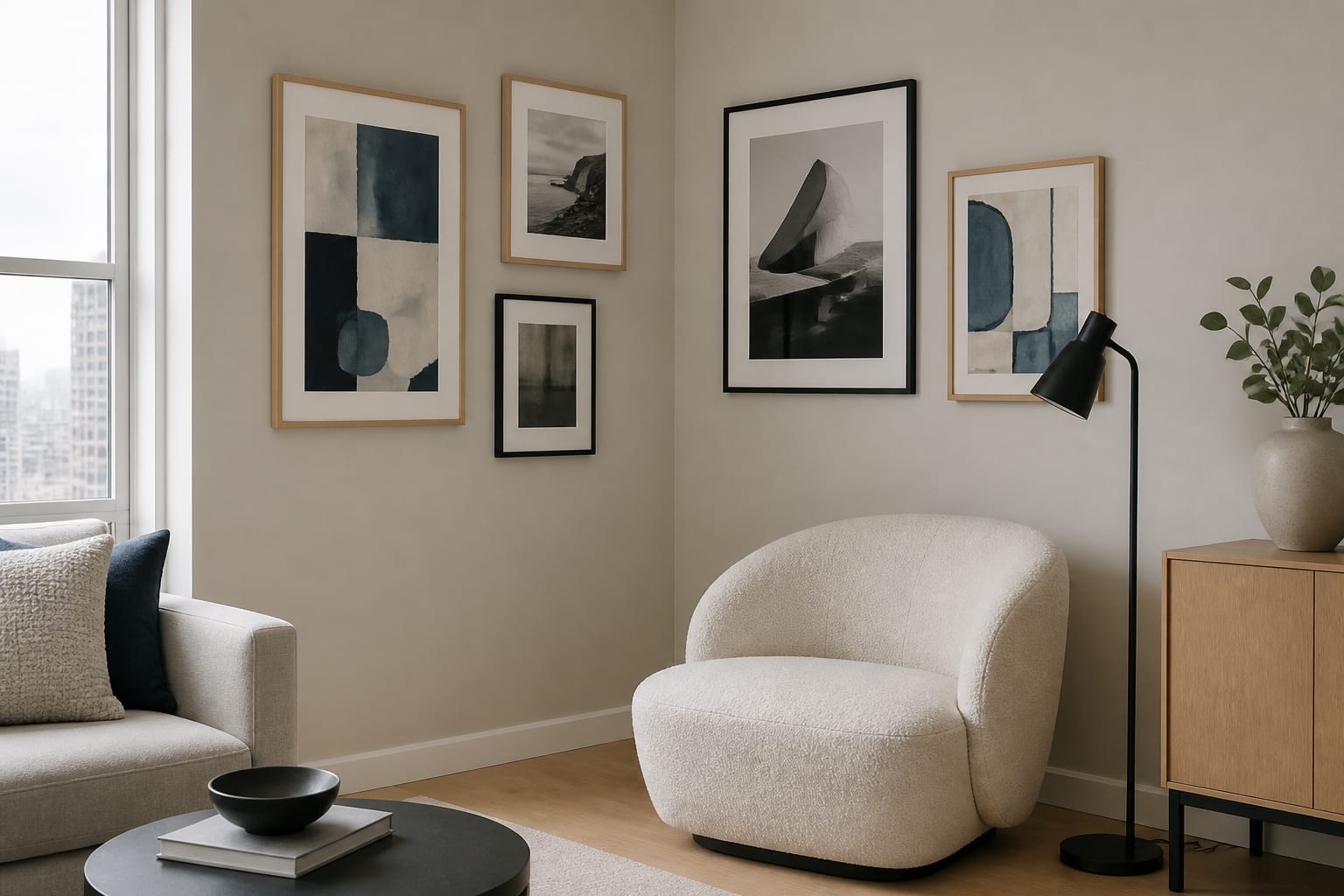
This layout proves that a corner gallery does not need dozens of frames. Two pieces occupy the narrower wall and three sit on the wider wall, with the black floor lamp acting as a slim vertical counterweight. Wide mats create quiet space inside the frames, and dusty blue repeats across the artwork rather than across the furniture. For a similarly compact result, limit yourself to one dominant colour, two frame finishes and enough bare wall around the outer edges.
Wrap a dining banquette with a balanced vintage arrangement
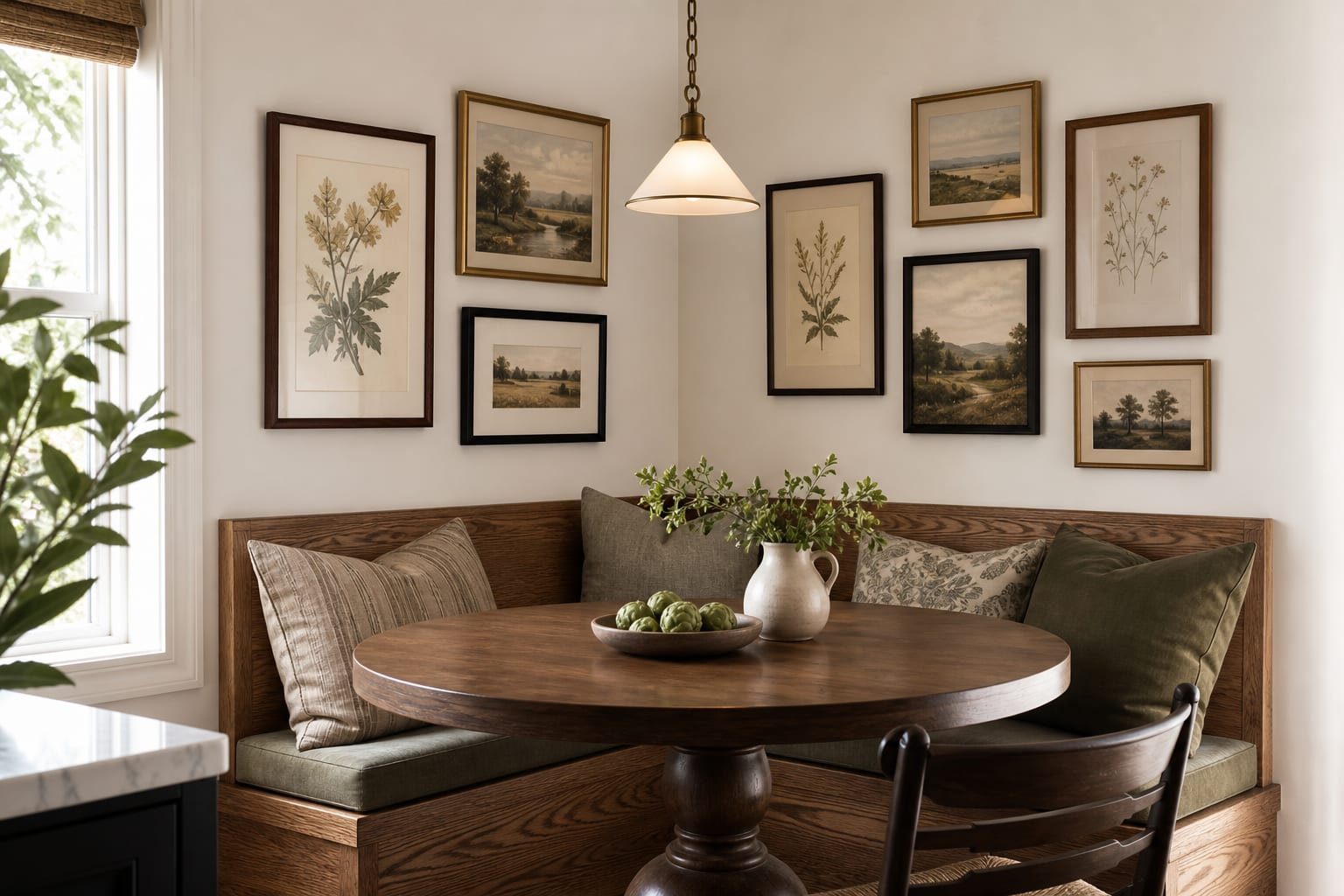
The built-in bench makes this the most architectural option. Frames follow the full length of the seating rather than clustering tightly at the seam, so the art feels connected to the banquette. Botanical prints and landscapes share muted greens and warm paper tones, which lets the mixed frames look intentional. Keep the lowest frames safely above seated head height, and centre the overall composition on the dining nook rather than on the corner line alone.
Use shallow picture ledges when you expect the display to change
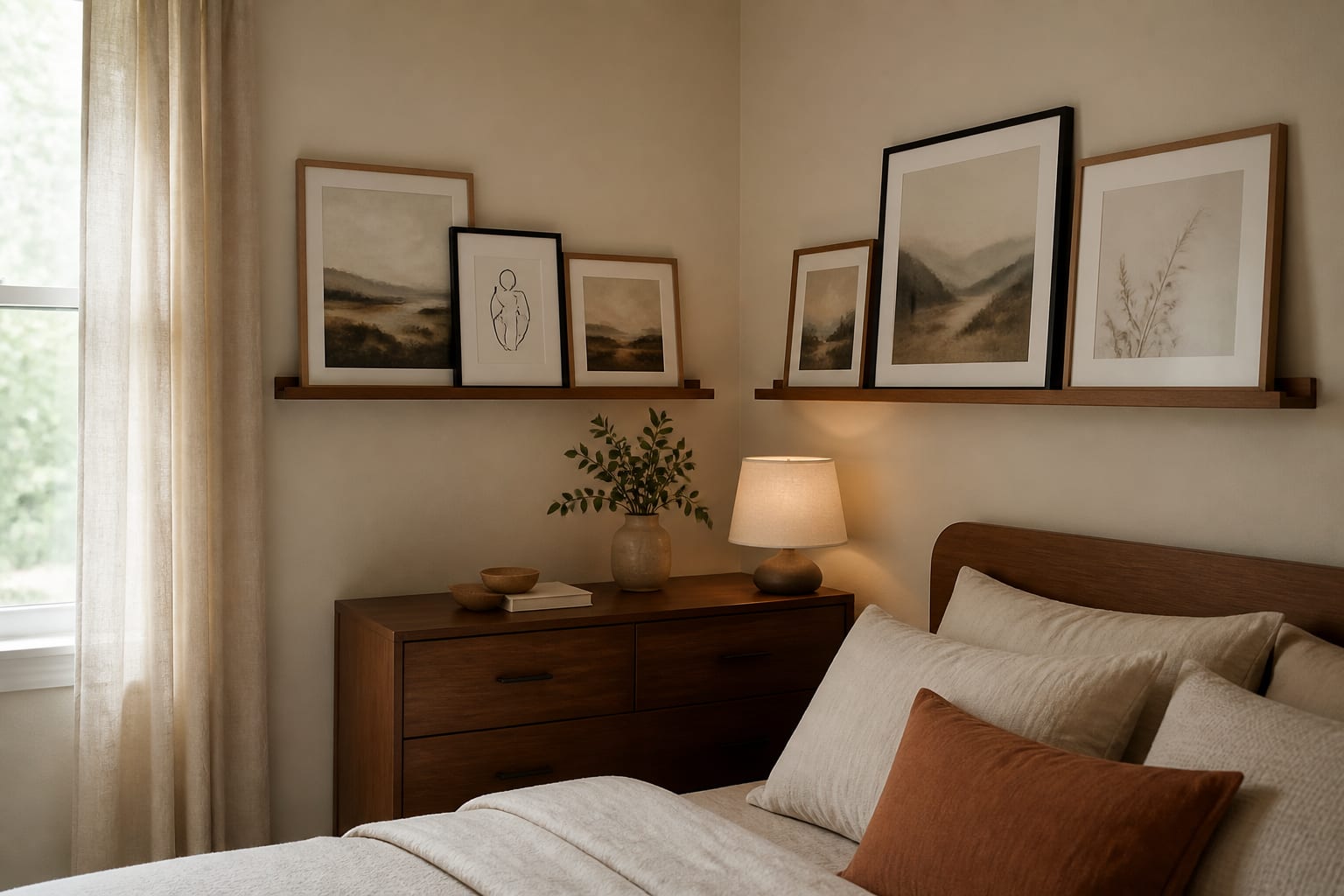
Picture ledges suit a display that changes with seasons, travel finds or family photographs. Here, each ledge stops before the corner rather than joining across it, but the similar height and walnut finish make them read as a pair. Larger frames sit behind smaller ones without hiding their main subject. Check the fixing method and weight rating carefully, especially above a bed or dresser, and keep the ledges shallow enough that they do not become catch-all shelves.
A simple layout formula for two adjoining walls
- Choose the chair, banquette or dresser that will anchor the display.
- Set one large or visually strong artwork on the wider wall first.
- Add a smaller supporting group to the adjacent wall instead of mirroring the first side.
- Repeat at least one frame finish and one colour across the corner.
- Leave a slightly wider gap beside the corner seam than between neighbouring frames.
- Test paper templates from the doorway, main seat and side view before hanging anything.
Join the conversation
Share your thoughts on this room