

Why the gold and black marble combination works
Black gives a room visual weight, gold introduces warmth, and marble stops the palette from reading as one flat block of colour. The important part is deciding which material leads. If the marble has strong gold veining, the cabinet hardware and lighting do not also need to be ornate. If the marble is quieter, a brass-framed mirror or sculptural light can carry more of the decorative work. Across a whole home, repeat the same metal temperature and black tone, but vary the dose. That creates continuity without making every room feel copied.
1. A black and gold bedroom with a marble feature wall

The bedroom is the most restrained room in the set, even though it contains several glamorous elements. The bed and feature wall form one dark zone, while cream wall panelling, pale flooring and a large neutral rug protect the room from becoming visually heavy. Gold appears as a thin outline on the bedding, furniture and wall panels rather than as another large surface. That distinction matters: the metal reads as a warm thread connecting the room, not decoration applied everywhere.
To adapt the idea, start with a charcoal or black upholstered headboard and one marble-look panel behind it. Keep the remaining walls warm white or soft ivory, and use a rug large enough to extend beyond both sides of the bed. Put the cove lighting and bedside lamps on separate dimmers. A bedroom needs a low, calm night setting; the full ceiling glow should be optional rather than the only way to light the room.
2. A black and gold living room with controlled symmetry
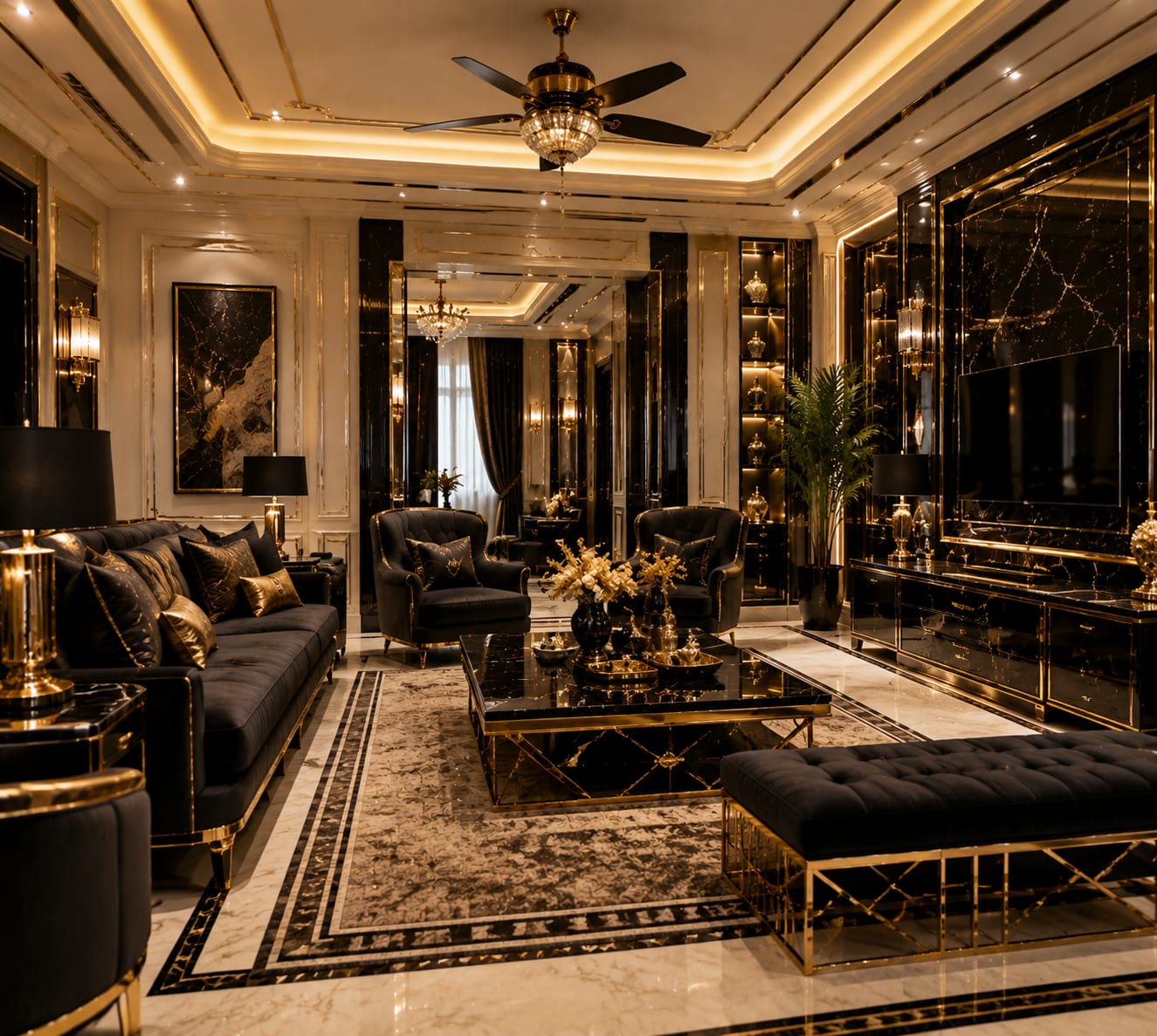
Here the TV wall, coffee table and upholstered seating are all dark, so layout becomes the calming device. Two matching chairs face the central table, the bench closes the seating group and the rug creates a clear rectangular boundary. The pale floor surrounding that group acts almost like a wide picture mount. Without it, the black furniture and black marble would merge into one dense mass.
The useful lesson is to spend the visual drama in one organised zone. In a smaller living room, choose either a marble media wall or a marble coffee table, not necessarily both. Keep the screen surround mostly matte so reflections do not compete with viewing, and hide cables before the stone or porcelain panels are installed. Warm shelf lighting should illuminate objects and surfaces; visible rows of bright LED dots will make even expensive joinery look unfinished.
3. A black marble bathroom softened with cream stone
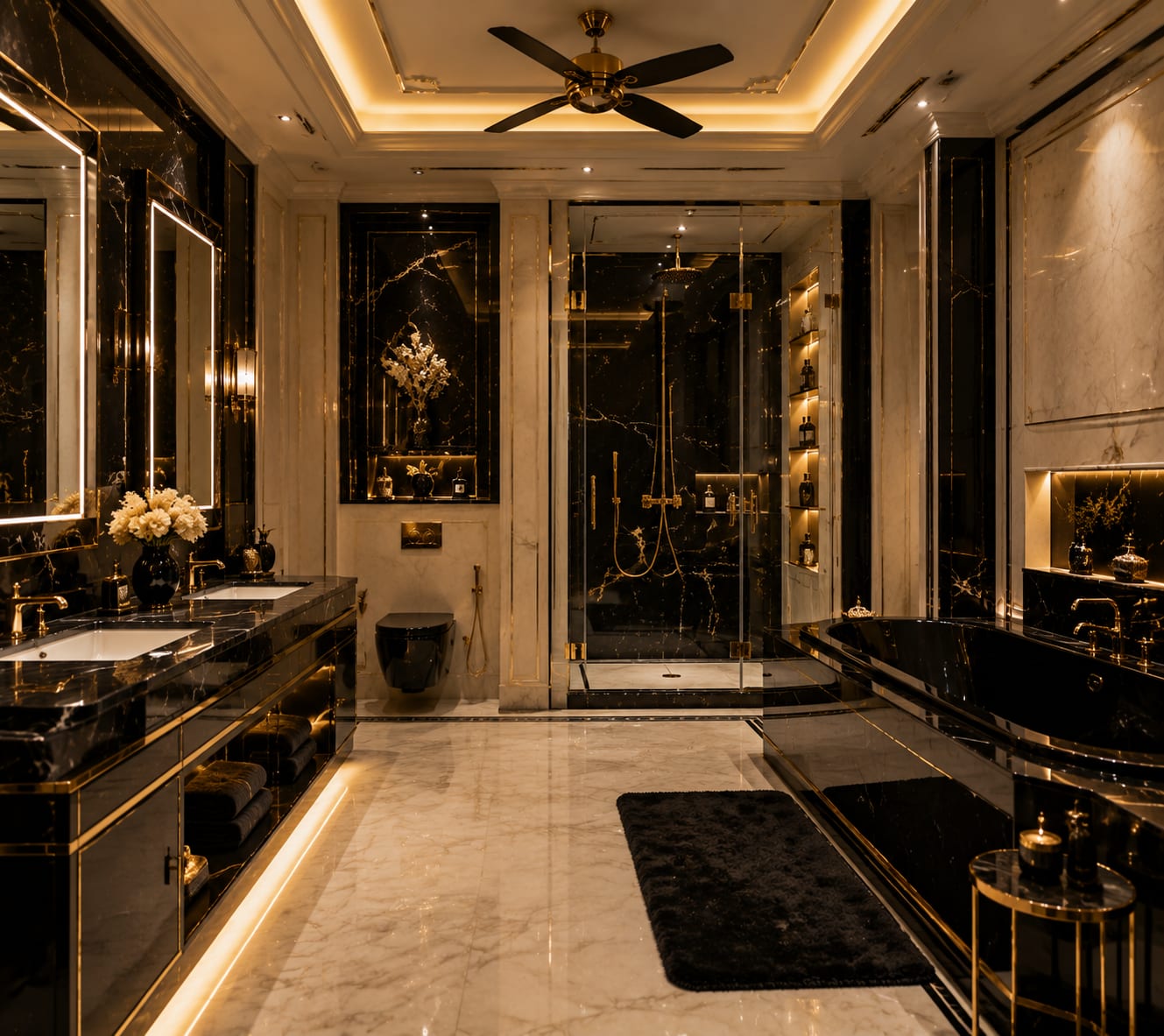
The bathroom uses black marble to identify functional zones: vanity counters, the shower backdrop and the bath surround. Cream stone fills the larger wall and floor areas, so the room remains readable and bright. This is a more practical pattern than taking dark polished stone across every plane. Mirrors and glass multiply the warm light, while enclosed illuminated niches provide storage without adding freestanding furniture.
Before copying the look, separate appearance from specification. Shower floors need suitable slip resistance and correct drainage falls; large wall panels need an installation system appropriate to their weight and substrate. Natural marble may need sealing and careful cleaning, particularly around cosmetics and acidic products. If maintenance is a concern, a convincing porcelain slab can provide the black-and-gold effect with less sensitivity. Use side lighting at the mirror for the face and reserve dramatic cove light for atmosphere.
4. A black and gold marble kitchen that still functions
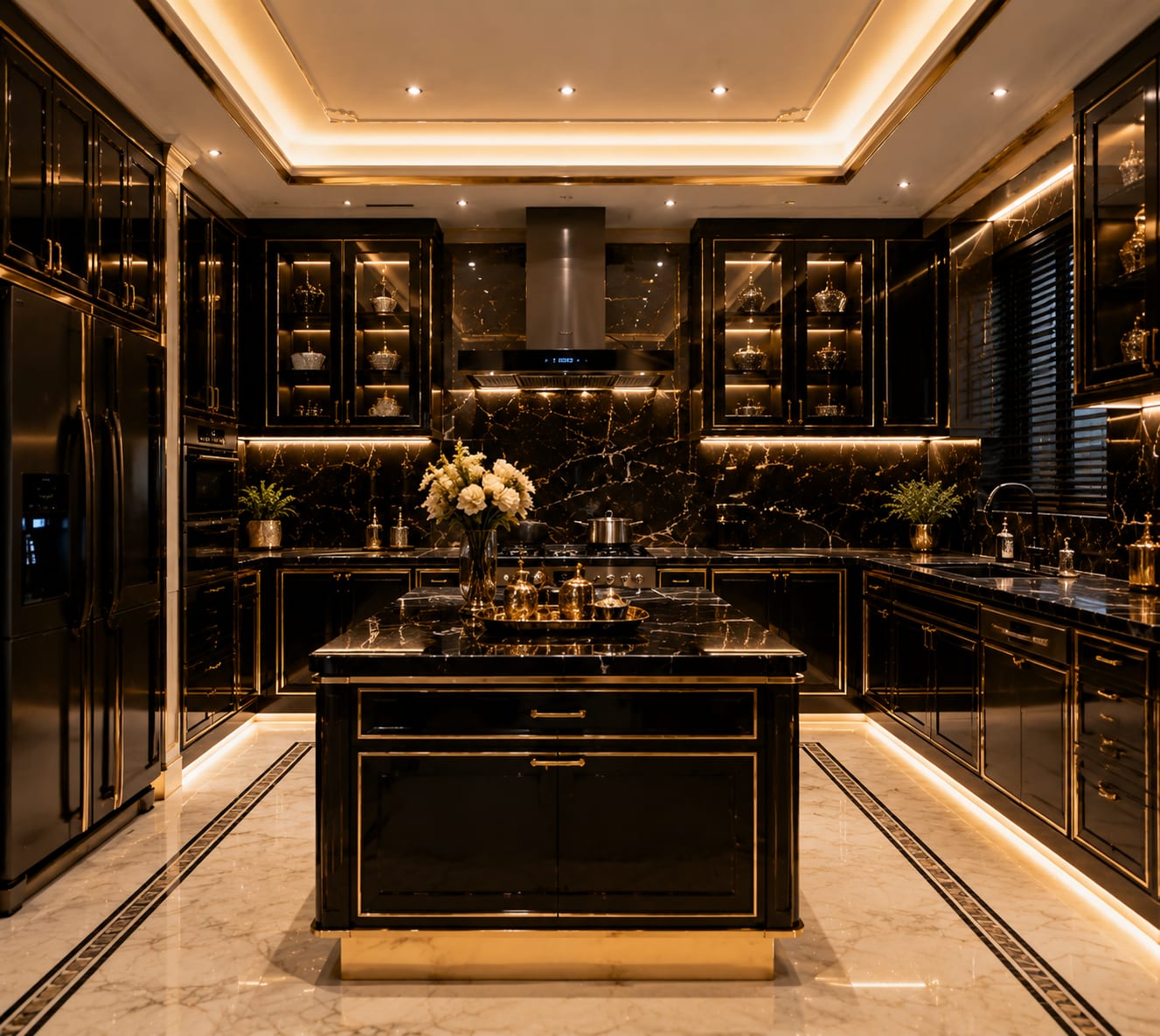
This kitchen is the darkest room because cabinetry, splashback and island all share the same black-and-gold language. What prevents the details from disappearing is light placed at the working edges: beneath wall cabinets, inside glass cupboards and around the plinth. The central island has generous clear space on each side, so its visual weight does not obstruct movement. Display cabinets break the run of solid doors, although in a real kitchen they should be used selectively; illuminated glass storage only looks calm when its contents are edited.
Function comes before the finish. Confirm safe distances around the island, extraction above the hob and adequate task lighting on every preparation surface. Glossy black doors reveal fingerprints quickly, while highly polished stone can show crumbs, streaks and water marks. A satin cabinet finish and honed or low-sheen worktop are usually easier to live with. If the full scheme is beyond budget, use ordinary dark cabinetry with a single gold-veined splashback and repeat warm brass through handles or taps.
5. A built-in black marble vanity room
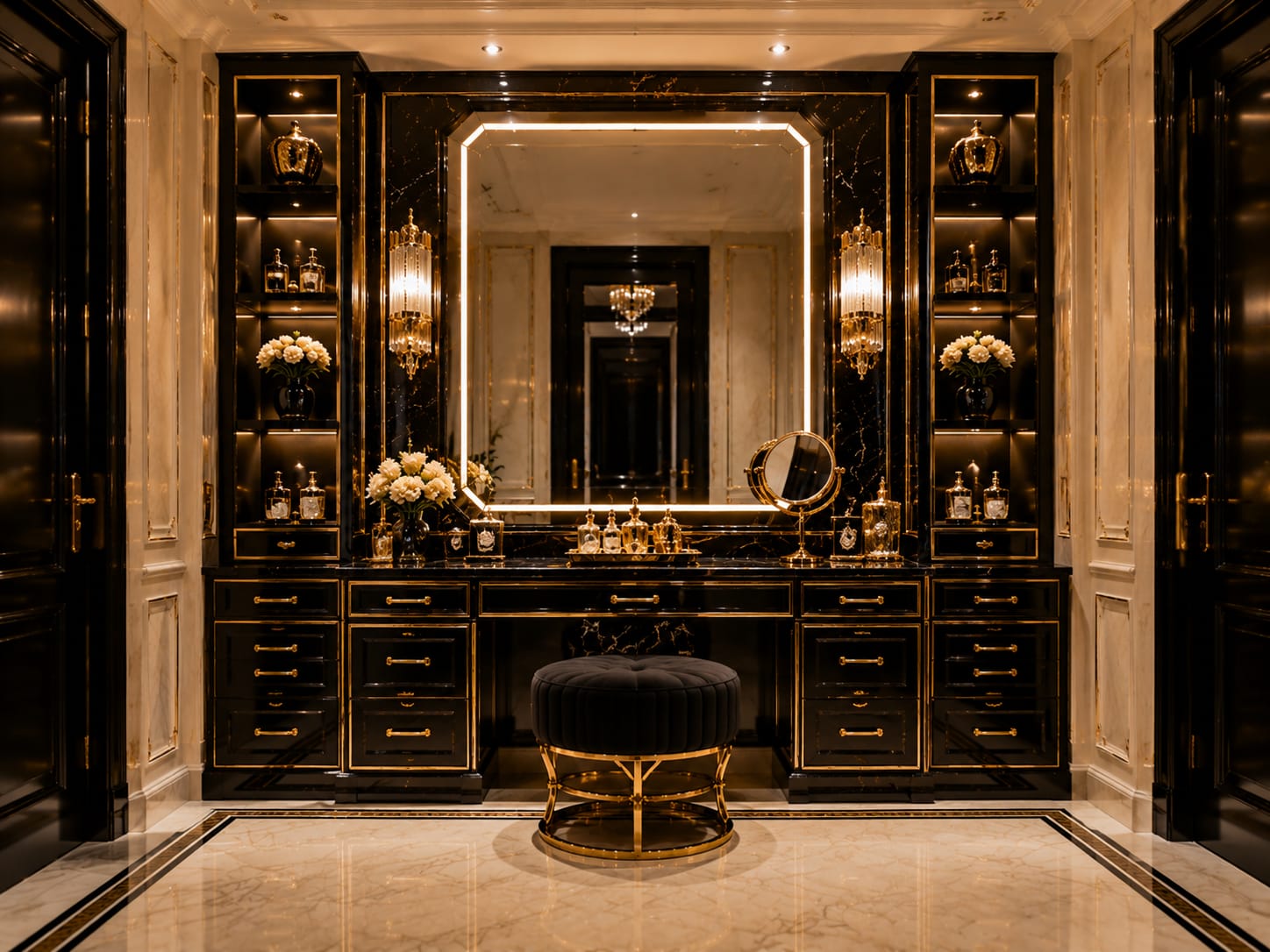
The vanity room repeats the kitchen's fitted logic at a smaller scale. Drawers sit close to the chair, tall illuminated cabinets frame the mirror and a genuine knee recess makes the centre usable. The large mirror reduces the apparent weight of the black joinery by reflecting the pale room behind it. Gold lines define the cabinetry, but the shapes stay simple and symmetrical, which is why the composition feels ordered despite its ornate finish.
Measure the seated position before finalising anything. The counter height, knee width, drawer clearance and mirror height should work together, and the stool needs somewhere to tuck away without blocking the walkway. For flattering light, place diffused sources on both sides of the face or use a properly specified illuminated mirror. Decorative shelf lights are not a substitute for task light. Keep electrical outlets accessible for hair tools and arrange heat-safe storage so hot equipment is never returned directly to a closed drawer.
The palette rule that keeps five rooms connected
A whole-home gold and black marble scheme needs consistency, not identical rooms. Choose one near-black, one warm metal finish and one pale background stone or paint. Repeat those three references, then let each room change the proportion. The bedroom can be mostly cream with one dark wall; the kitchen can take the largest dose of black; the bathroom can alternate dark wet zones with pale circulation areas. This shifting balance is what makes the home feel designed rather than themed.
A practical order for recreating the look
- Measure the room and mark the largest dark surface at full scale before buying material.
- Select the marble or marble-look surface first, because its vein colour will determine the best gold finish.
- Keep one major background light: cream walls, pale flooring, a large rug or substantial mirrors.
- Specify ambient, task and accent lighting separately, using warm high-CRI sources where colour accuracy matters.
- Repeat one brass or gold tone instead of mixing several metallic finishes.
- Choose matte and satin surfaces for frequently touched cabinetry, reserving high polish for controlled focal areas.
- Finish with fewer, larger accessories so the marble remains visible and the room does not become visually crowded.
Join the conversation
Share your thoughts on this room