

Four home office layouts designed around real work
Fit a complete workstation into a shallow alcove
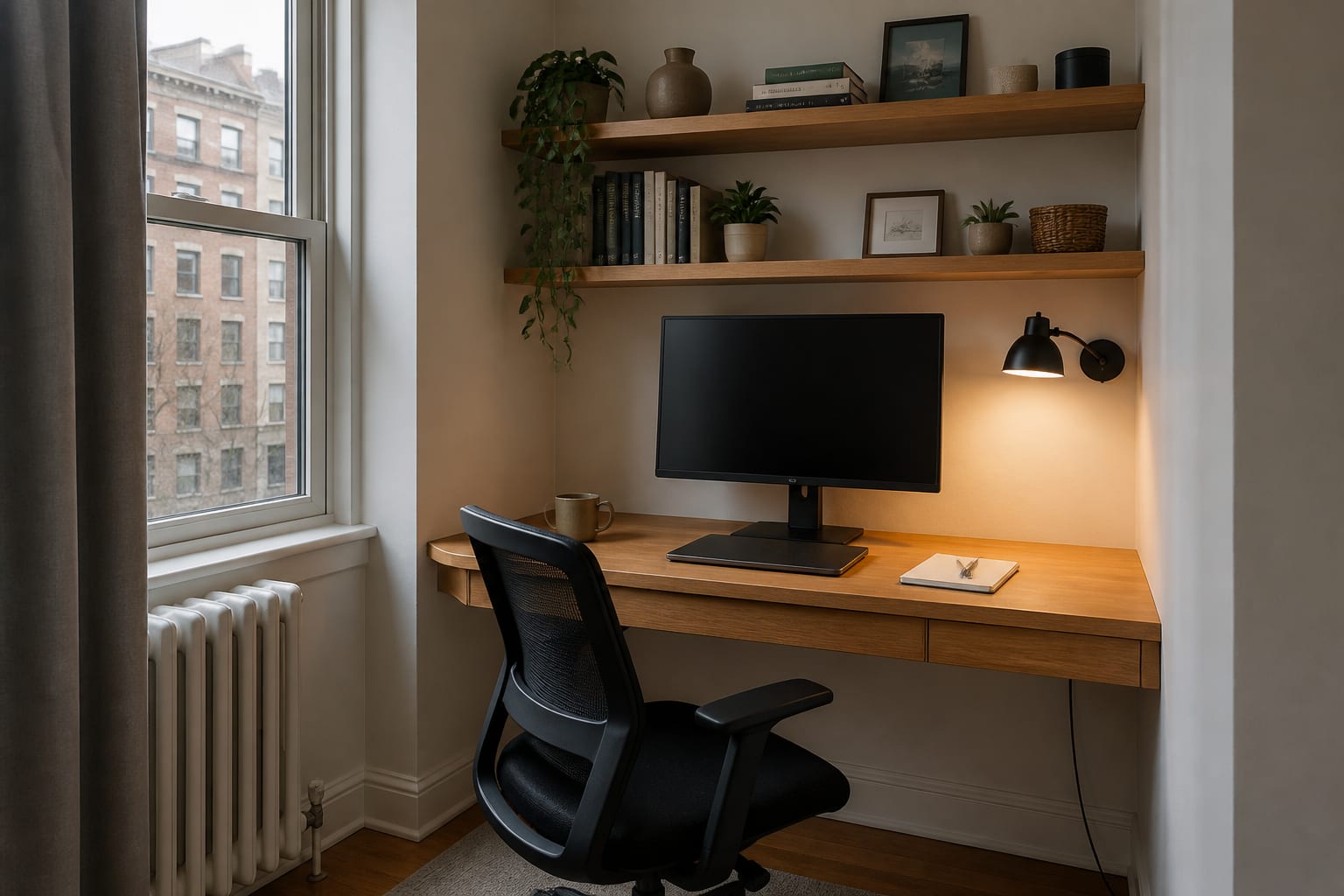
An alcove works when the desktop spans the available width and does not waste precious space on bulky side panels. Here the monitor sits away from the window glare, while the wall lamp frees the desk from a large lamp base. Two deep drawers hold items used every day; the shelves carry reference books and a few objects rather than becoming open storage for everything. Leave a gap behind the monitor for ventilation and run the power strip beneath the desktop where plugs remain reachable. Measure chair width including its arms before fixing the desk, and keep enough space behind it to stand without striking a wall. If the alcove is rented, a freestanding top on narrow drawer units can create a similar fit without permanent joinery.
Use a darker wall to reduce visual noise, not available light
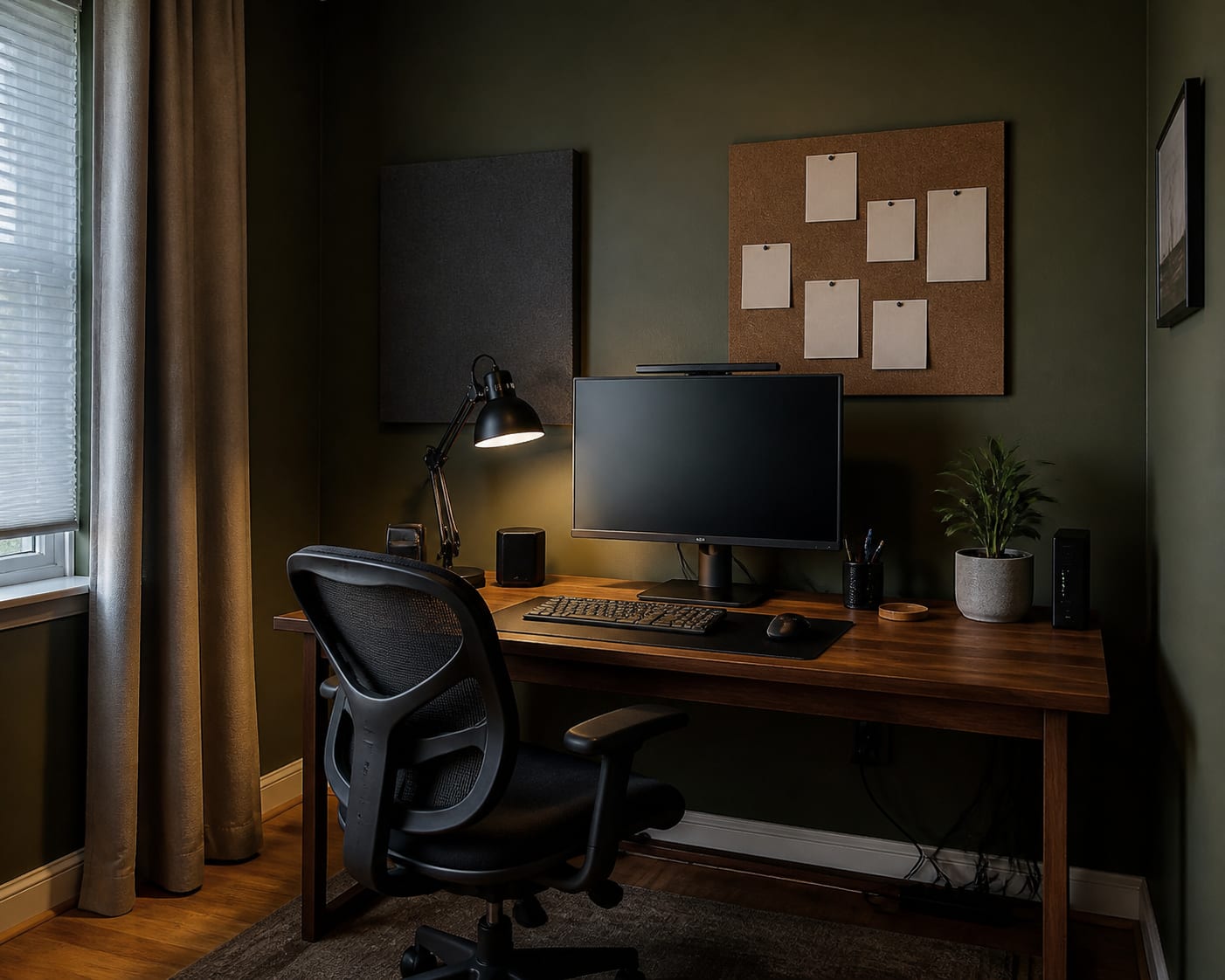
Dark paint can make the view beyond a monitor feel quieter, but it should not be used as an excuse for inadequate lighting. This office combines side daylight with one adjustable task lamp and keeps the wall behind the screen almost empty. A cork board sits outside the direct sightline so notes remain available without competing for attention. Acoustic felt helps in a room with hard floors or shared walls, although a heavy curtain and rug can make a noticeable difference for less money. Keep the monitor brightness close to the room brightness, position the lamp so it does not reflect on the display and choose a warm but clear wall colour rather than pure black. The objective is reduced distraction, not theatrical mood.
Give a guest room office one clear storage boundary
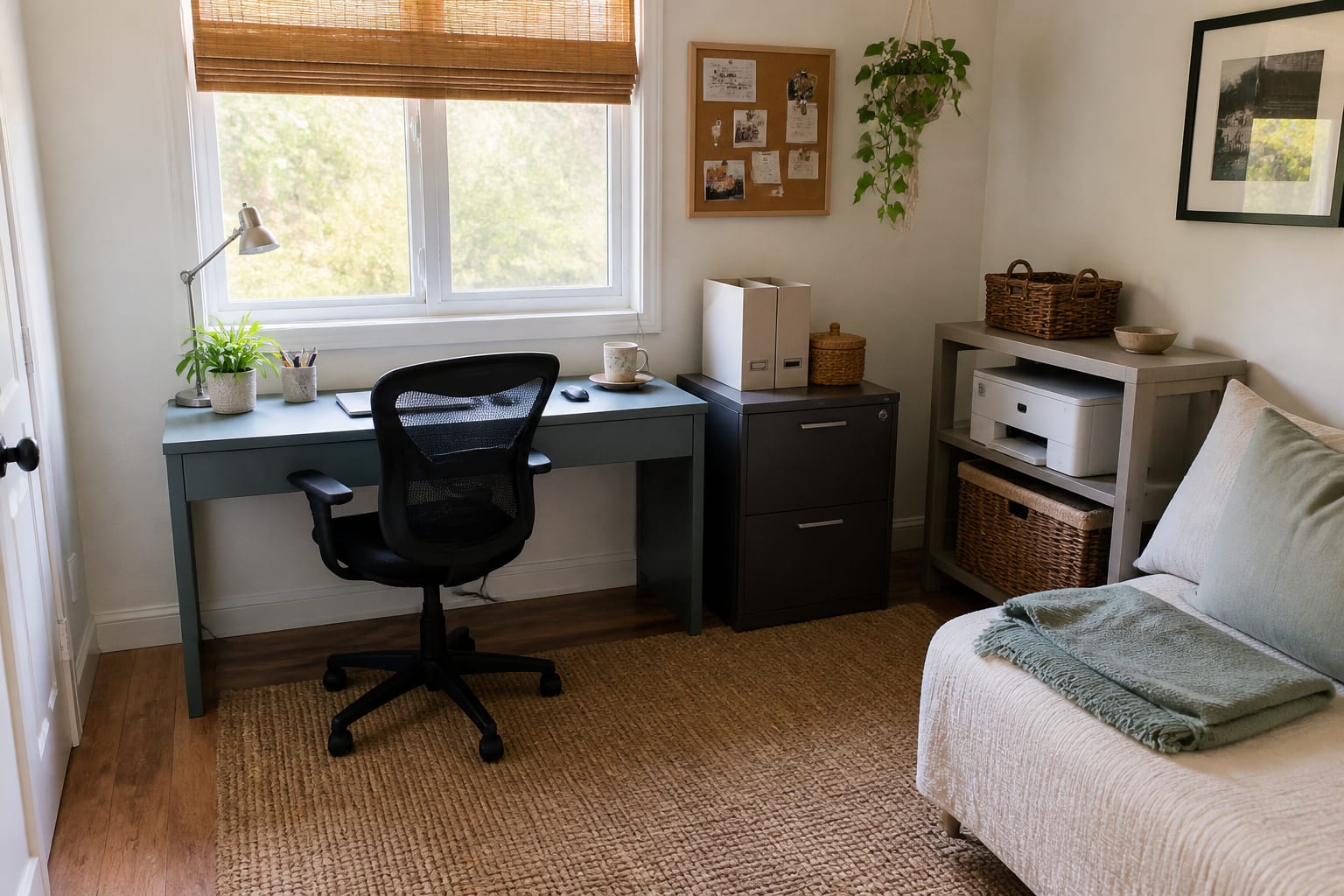
A dual-purpose room feels chaotic when work spreads onto the bed and guest items collect on the desk. This layout assigns the office one side of the room: desk beneath the window, files in a closed cabinet and printer on a separate shelf that can also hold baskets. The daybed remains clear and the central floor area is not blocked by office furniture. Use one drawer for the daily reset, with space for the laptop, notebook and chargers, so the room can stop looking like an office in a few minutes. Check that the printer shelf is deep enough and that paper can be loaded without moving the machine. Closed storage matters more here than decorative shelving because it protects both functions of the room.
Place a traditional desk perpendicular to the window
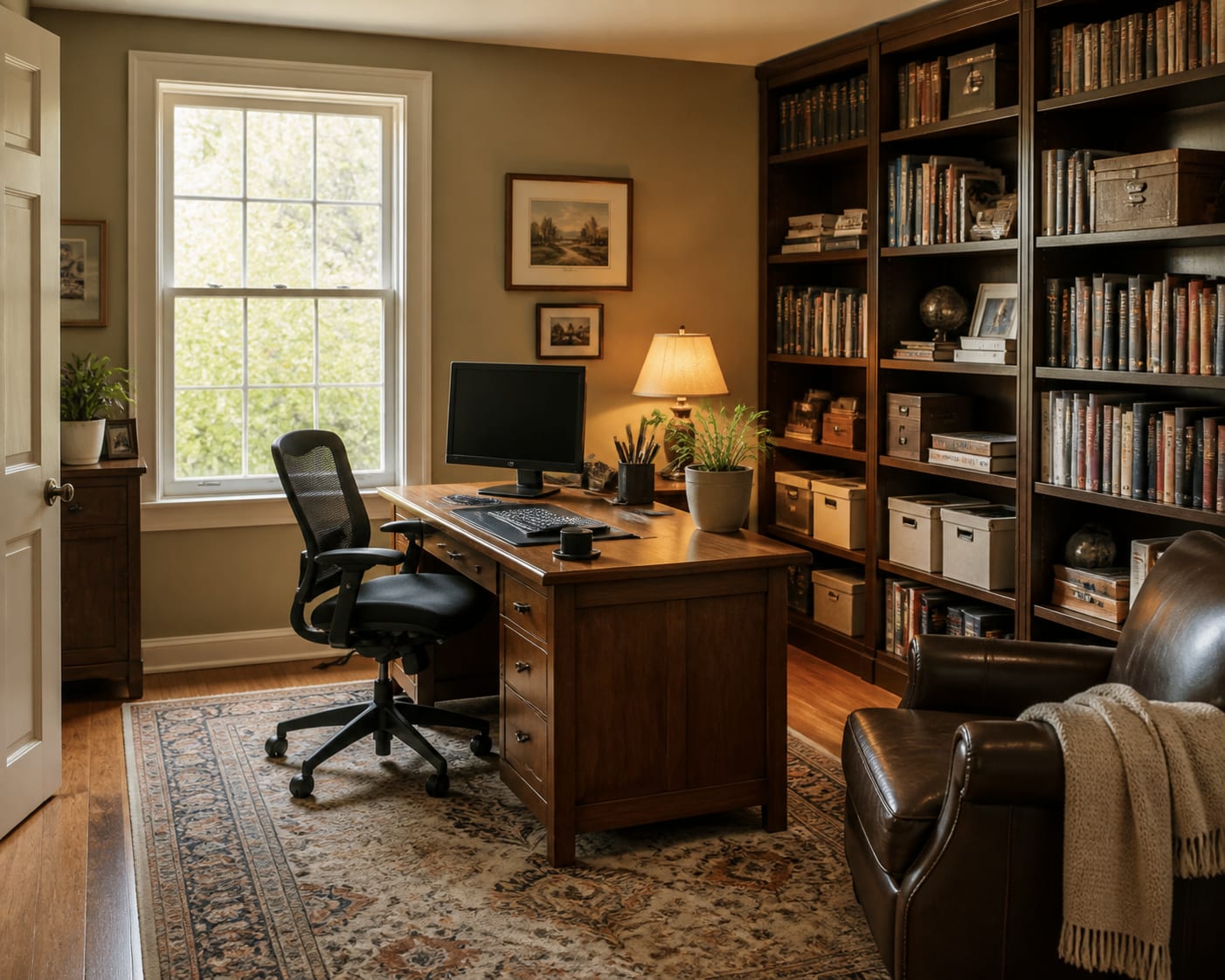
Placing the desk at right angles to the window lets daylight reach the work surface without sitting directly behind the screen. The bookcases provide dense storage, but repeated boxes on the lower shelves calm the visual field and keep loose supplies out of sight. A rug softens sound and helps define the working zone, while the shaded lamp supports reading after daylight fades. Before choosing a large desk, mark its footprint and pull the chair back as though standing up; generous furniture can quickly obstruct a door or cabinet. Keep frequently used references between seated shoulder and eye height, archive material lower down and leave one shelf partly empty so new work does not immediately create a pile.
Set the room up in the right order
- Choose the quietest workable position and test daylight at different times.
- Set desk and chair height before placing shelves, art or monitor arms.
- Put the screen at a comfortable distance with its top near eye level.
- Create one accessible route for power and data cables.
- Assign closed storage to paper, technology and items used less than weekly.
- Add task lighting, then judge whether the room needs more decorative light.
What actually deserves the budget
Spend first on the chair, a stable work surface and lighting that prevents squinting. A monitor arm can recover useful desk depth, while a correctly mounted power strip prevents cables from becoming a daily irritation. Built-in cabinetry is worthwhile only when you understand what must be stored. Paint, framed art and accessories can improve the mood, but they cannot compensate for a desk that is too shallow or a chair that becomes uncomfortable before lunch.
Join the conversation
Share your thoughts on this room