

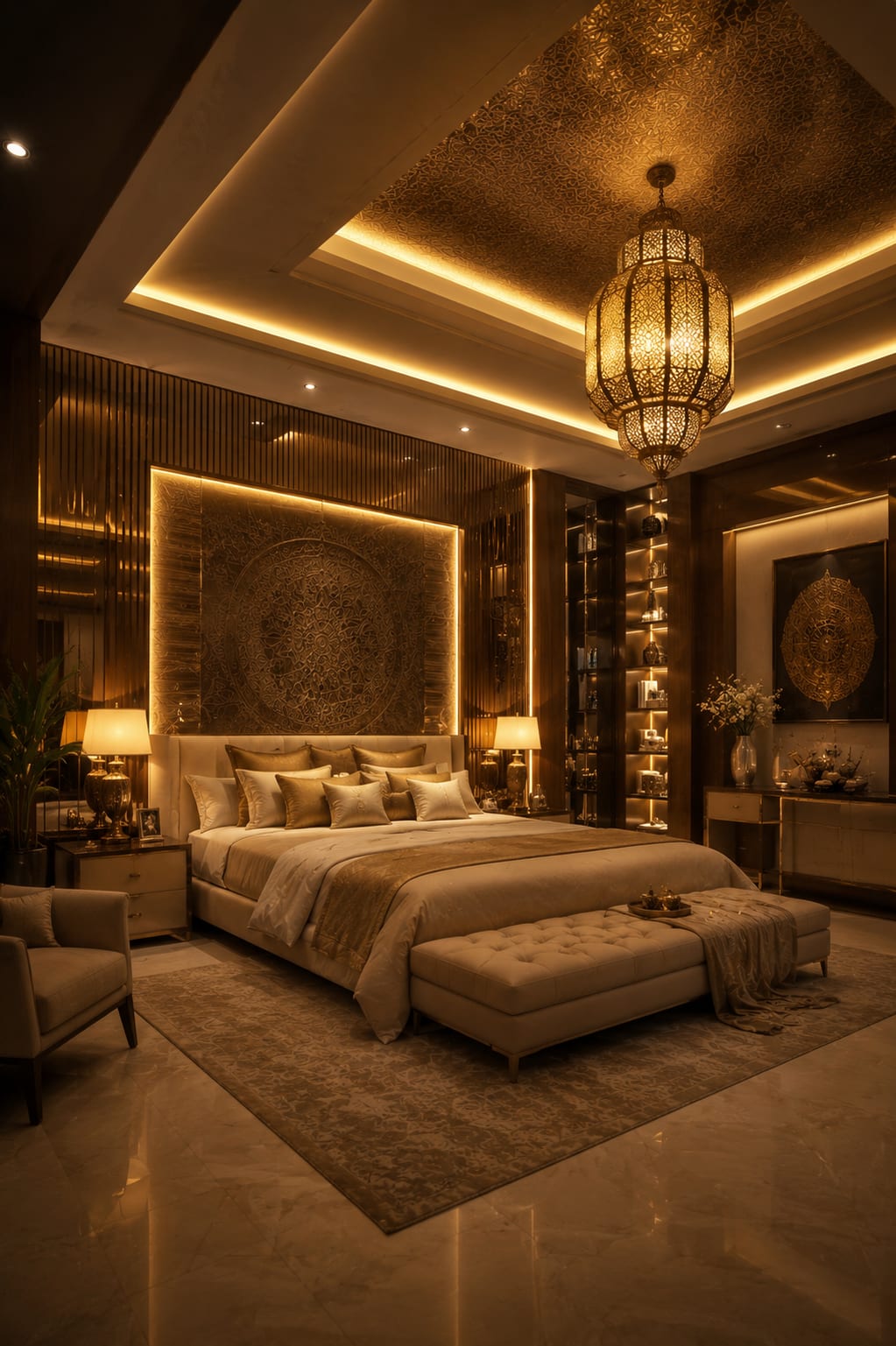
This is the guide I wish someone had handed me years ago, no jargon, just the exact moves that make a room glow like a five-star suite, and the mistakes that quietly make it feel cheap.
It's not the furniture, it's the lighting
Here's a test. Picture two identical rooms: same sofa, same paint, same rug. Room A has one bright white ceiling light blazing in the middle. Room B has a couple of warm table lamps, a soft glow behind the TV, and a dimmed strip tucked into the ceiling. Room A feels like a waiting room. Room B feels like somewhere you'd happily spend the evening. Nothing changed except the light.
That's the whole secret. Expensive-looking rooms are rarely about expensive things, they're about how the light is shaped. Once you start seeing rooms as 'pools of light and shadow' instead of 'furniture under one big bulb', everything else gets easier.
The one rule that changes everything: layer your light
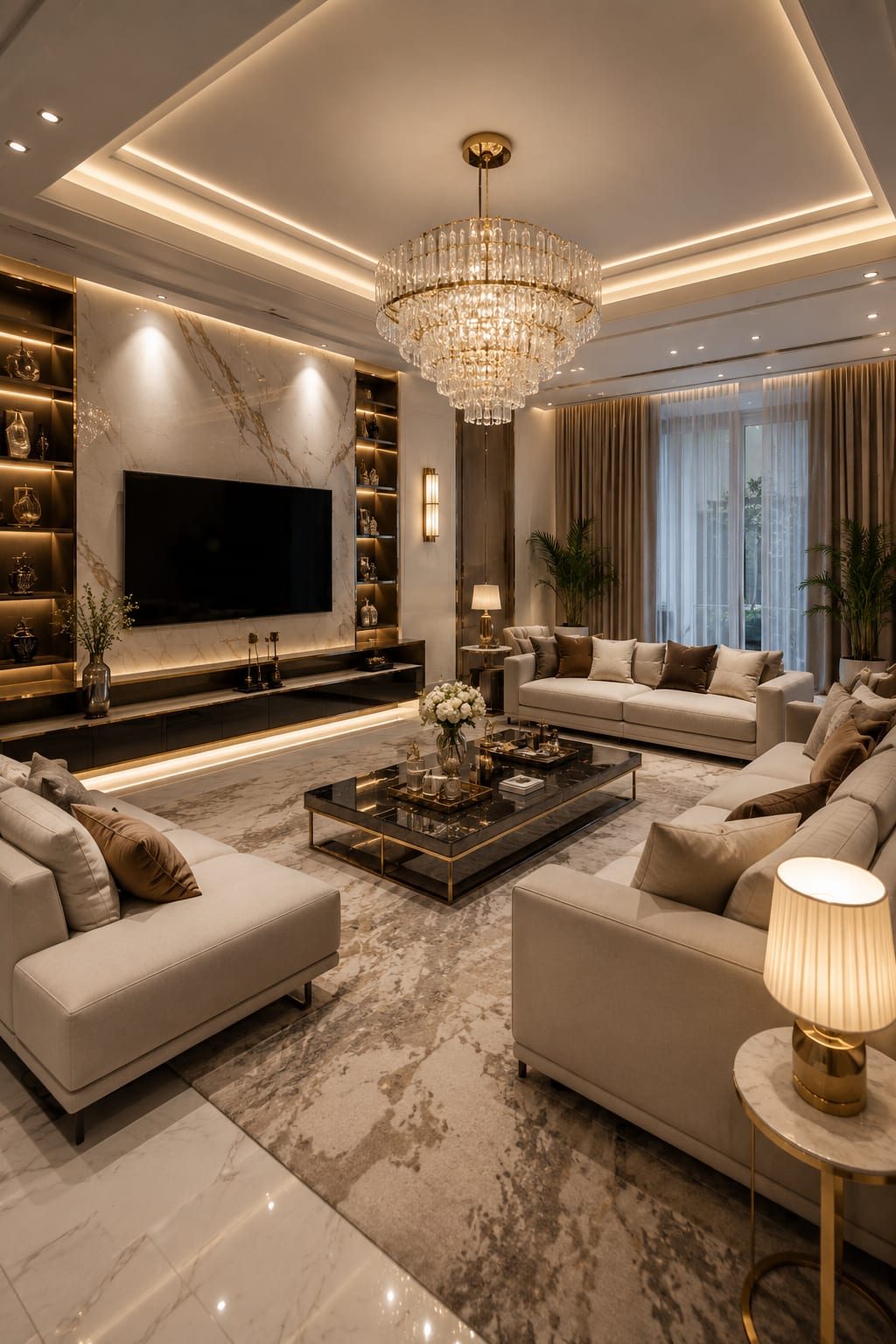
Professionals never light a room with a single source. They build it in three layers, and you should too. Think of it like getting dressed, you don't wear one giant garment, you layer pieces that work together.
Layer 1, Ambient (the soft base glow)
This is the gentle, overall fill that stops the room from being dark. Crucially, it should not come from one harsh overhead fixture. Good ambient light is indirect: a ceiling cove that bounces light off the ceiling, wall washers, or a couple of lamps spread around the room. It sets the mood and hides nothing harshly.
Layer 2, Task (light where you actually do things)
Reading a book, cooking, doing your makeup, working, these need focused, brighter light exactly where the activity happens. A reading lamp beside the chair, under-cabinet strips in the kitchen, a vanity light by the mirror. Task light means you never have to flood the whole room just to see one thing.
Layer 3, Accent (the drama and depth)
This is the layer that makes a room look designed: a strip backlighting the TV wall, a glow inside a display niche, a picture light over art, an LED line under a floating console. Accent light creates depth and those little 'how is that glowing?' moments that read as luxury.
Kill the "big light"
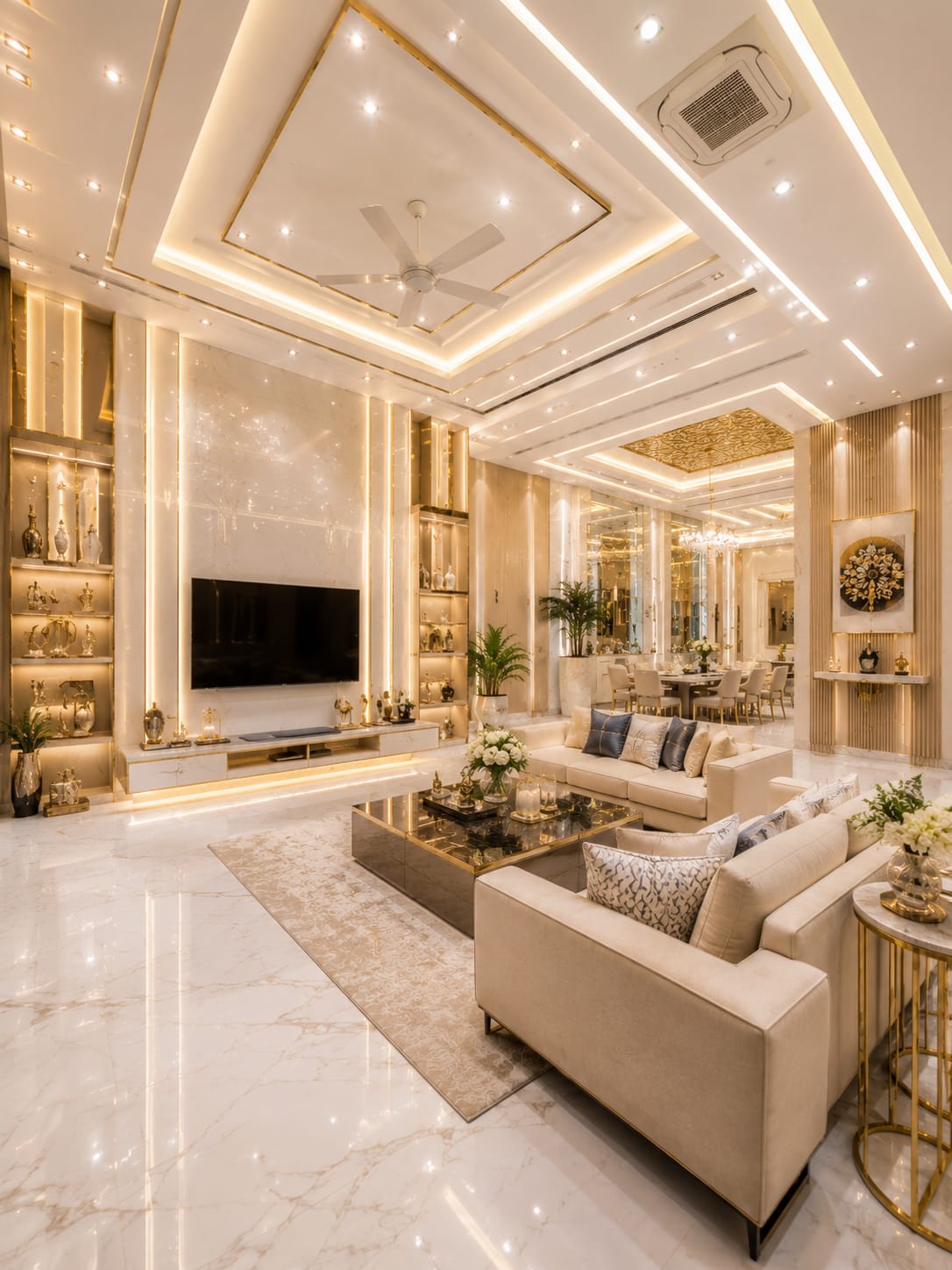
If you take only one thing from this guide, make it this: stop using the single bright ceiling light as your main source in the evening. In the UK they even have a name for the people who refuse to use it, and they're right. That central downlight flattens everything, throws ugly shadows under faces, and screams 'rented flat'.
You don't have to remove it. Just put it on a dimmer and treat it as a 'cleaning the room' light, not a 'living in the room' light. For everyday evenings, switch it off and let your lamps and accent layers do the work. This one habit alone transforms how a space feels.
Colour temperature: the 2700K secret
Bulbs aren't just bright or dim, they have a colour, measured in Kelvin (K). This is the single most common thing people get wrong, and it's free to fix. Lower numbers are warmer and cosier; higher numbers are cooler and more clinical.
- 2700K (warm white), the golden, candle-like glow of a luxury hotel or restaurant. This is what you want for living rooms, bedrooms, and lounges.
- 3000K (soft white), still warm, slightly crisper. Fine for kitchens and bathrooms where you want a little more clarity.
- 4000K+ (cool white / daylight), bluish and harsh. Great for a garage or operating theatre. In a home living space, it instantly feels cold and cheap.
Where to hide LED strips for that hotel glow
That soft, sourceless glow in luxury interiors almost always comes from cheap warm LED strip tape, hidden so you see the light but not the diodes. The trick is always to conceal the strip behind a lip or edge. Best places to tuck one:
- Inside a ceiling cove or a drop in the ceiling, pointing up to wash the ceiling with light
- Behind the TV or a wall panel, so the wall glows around it
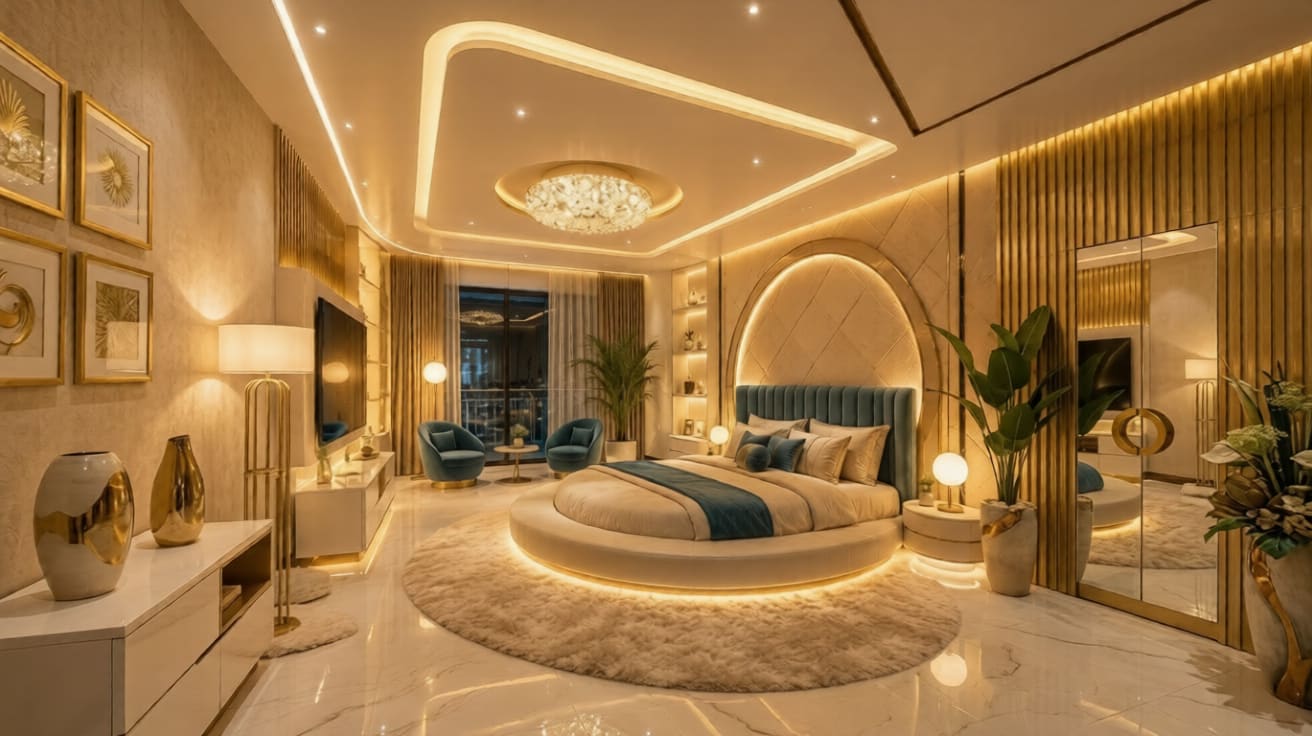
- Under a floating console, bed, or vanity, for that 'levitating' look
- Inside display niches and shelves, lighting the objects from within
- Under the lip of a kitchen island or along a stair edge
Dimmers: the cheapest luxury upgrade in your home
A dimmer switch costs very little and does more for a room's mood than almost any piece of furniture. Light that can drop to a low, warm glow in the evening is the difference between a space that feels like a showroom and one that feels like a sanctuary. Put your main lights and, ideally, your lamps on dimmers, and you can dial the exact mood for the time of day. Hotels dim everything after dark, so should you.
6 warm-lighting mistakes that make a room feel cheap
- One bright ceiling light doing all the work, flat, harsh, and unflattering.
- Cool-white or 'daylight' bulbs in a lounge or bedroom, instantly clinical.
- Mixing colour temperatures in the same room, subtly 'off' and disjointed.
- Visible LED strips, seeing the diodes instead of just the glow.
- No dimmers, full brightness is the only option, so the room never relaxes.
- Forgetting the corners, a dark corner shrinks a room; a small lamp or plant uplight expands it.
Your 5-step plan to start tonight
You don't need an electrician or a big budget to feel the difference. Here's the order I'd do it in:
- Switch off the big ceiling light tonight and notice how the room changes with just lamps.
- Replace every bulb in your main living space with 2700K warm-white, one consistent temperature.
- Add a second and third light source: a table lamp, a floor lamp, anything off-centre.
- Buy one warm LED strip and hide it behind the TV or under a shelf for instant accent glow.
- Fit dimmers on your main lights so you can drop the mood after dark.
Do those five things and an ordinary room will start to feel like a suite, no renovation required. Lighting is the highest-impact, lowest-cost upgrade in any home. Once you see it, you can't unsee it. For room designs that put all of this into practice, browse the warm, layered-light spaces in our design gallery and copy the lighting moves straight into your own.
Join the conversation
Share your thoughts on this room