

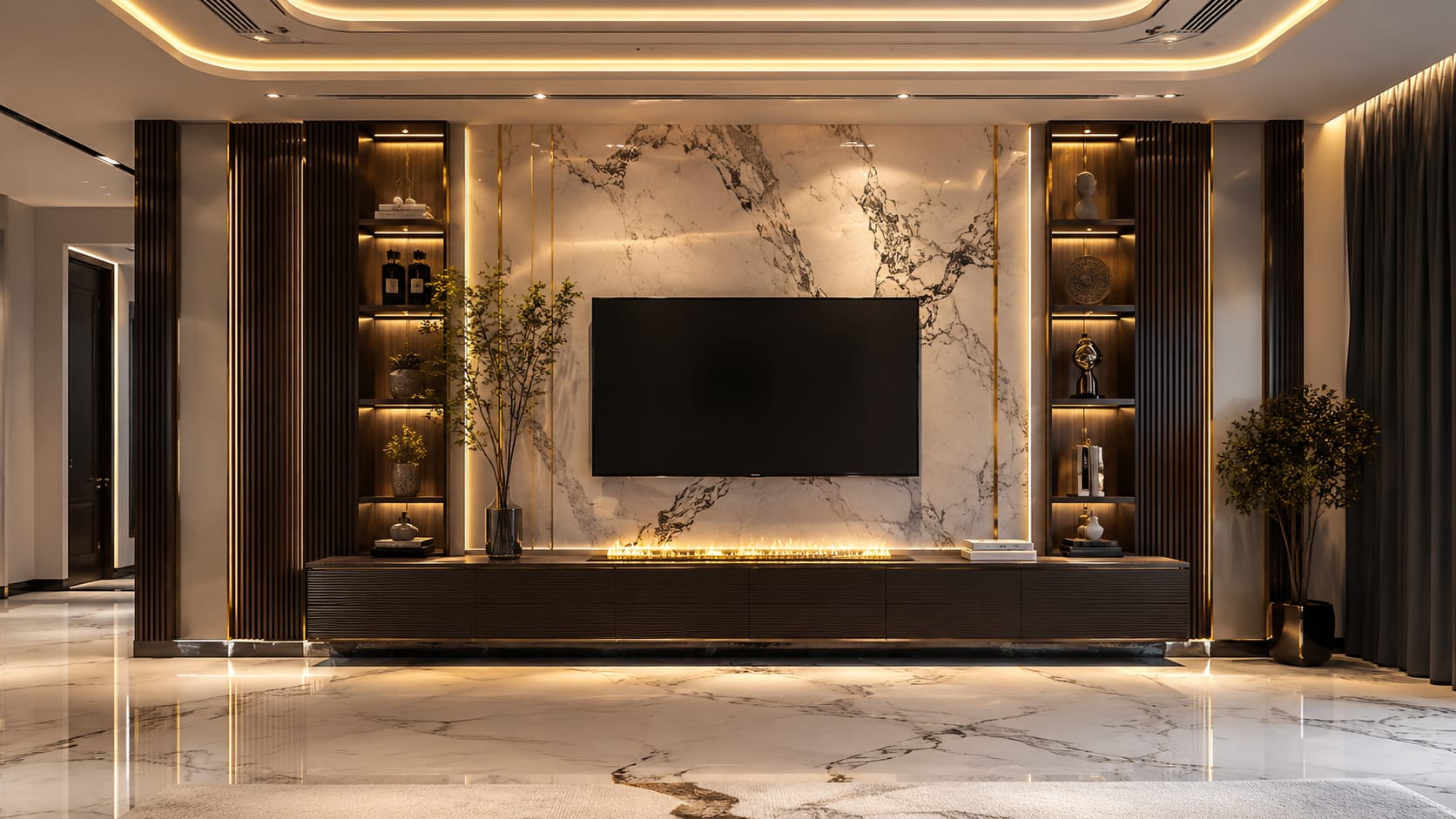
One rule worth carrying through all nine: the marble should frame the screen, not compete with it. Almost every mistake below comes from forgetting that.
1. Frame the stone, don't cover the wall
 See the full design
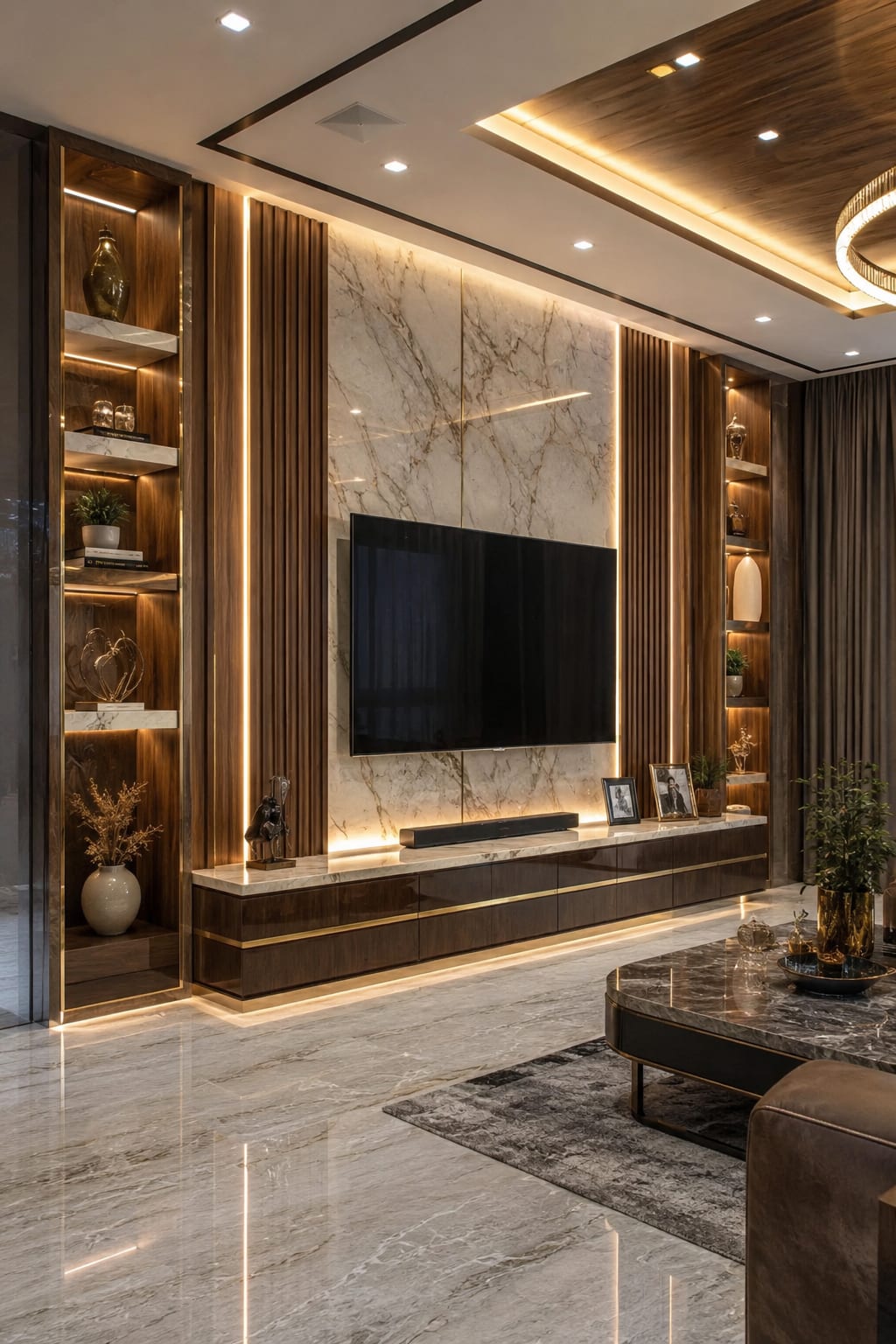
 The marble panel here is barely wider than the television, and everything either side is fluted walnut. That restraint is the whole trick, a narrow slab costs a fraction of a full wall, and the timber does the job of filling space while adding vertical shadow. Steal this: size your stone to the TV plus about 40–50 cm each side and spend the saving on better wood.
2. One gold line, following the vein
 See the full design
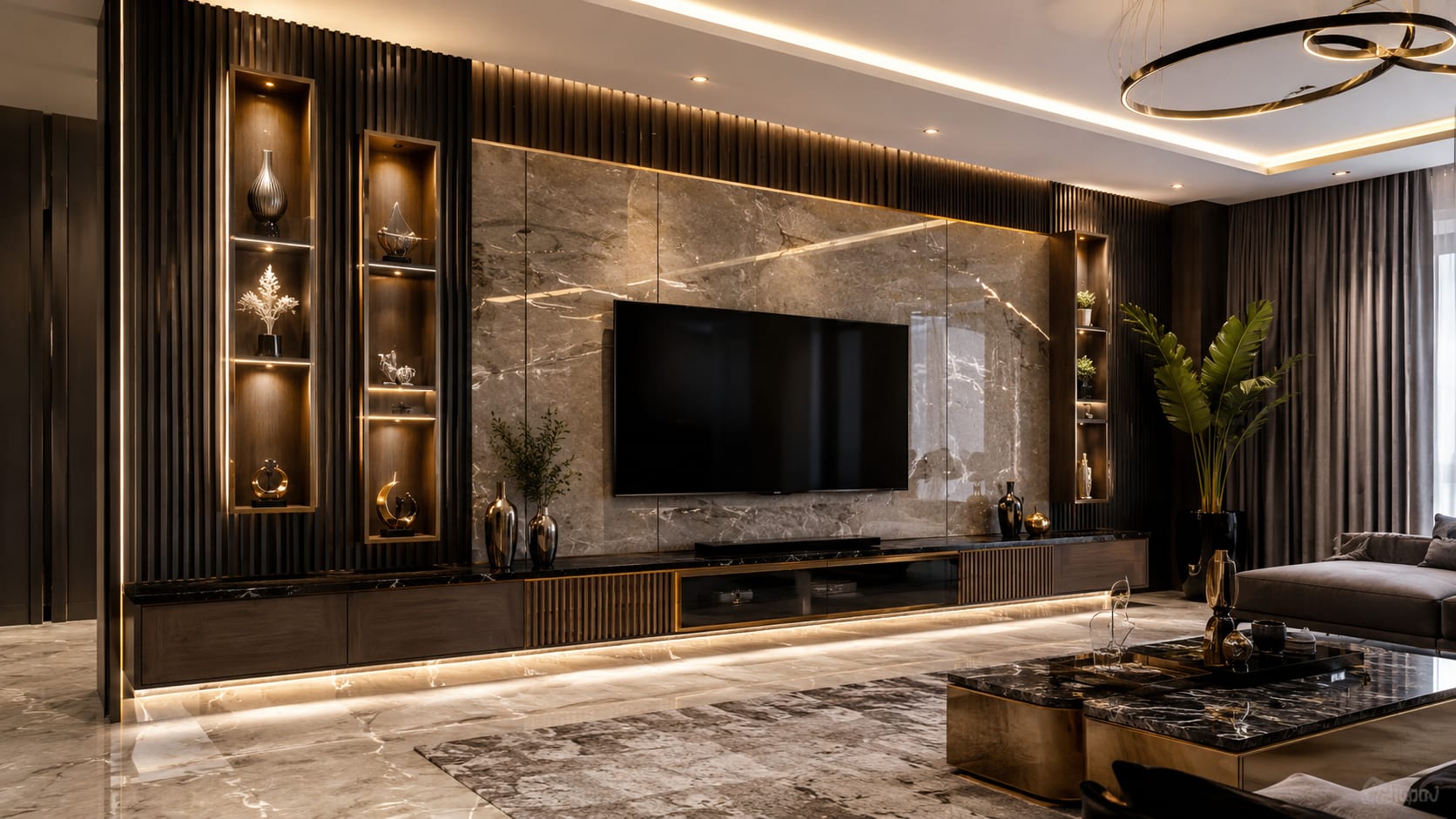
 A single brass strip is inset into the stone, running along the direction of the natural veining. Because it follows the marble rather than cutting across it, it reads as part of the slab. Steal this: if you inlay metal into stone, use one line only and let the veining decide where it goes, two or three lines start to look like decoration.
3. Make the curve big enough to mean it
 See the full design
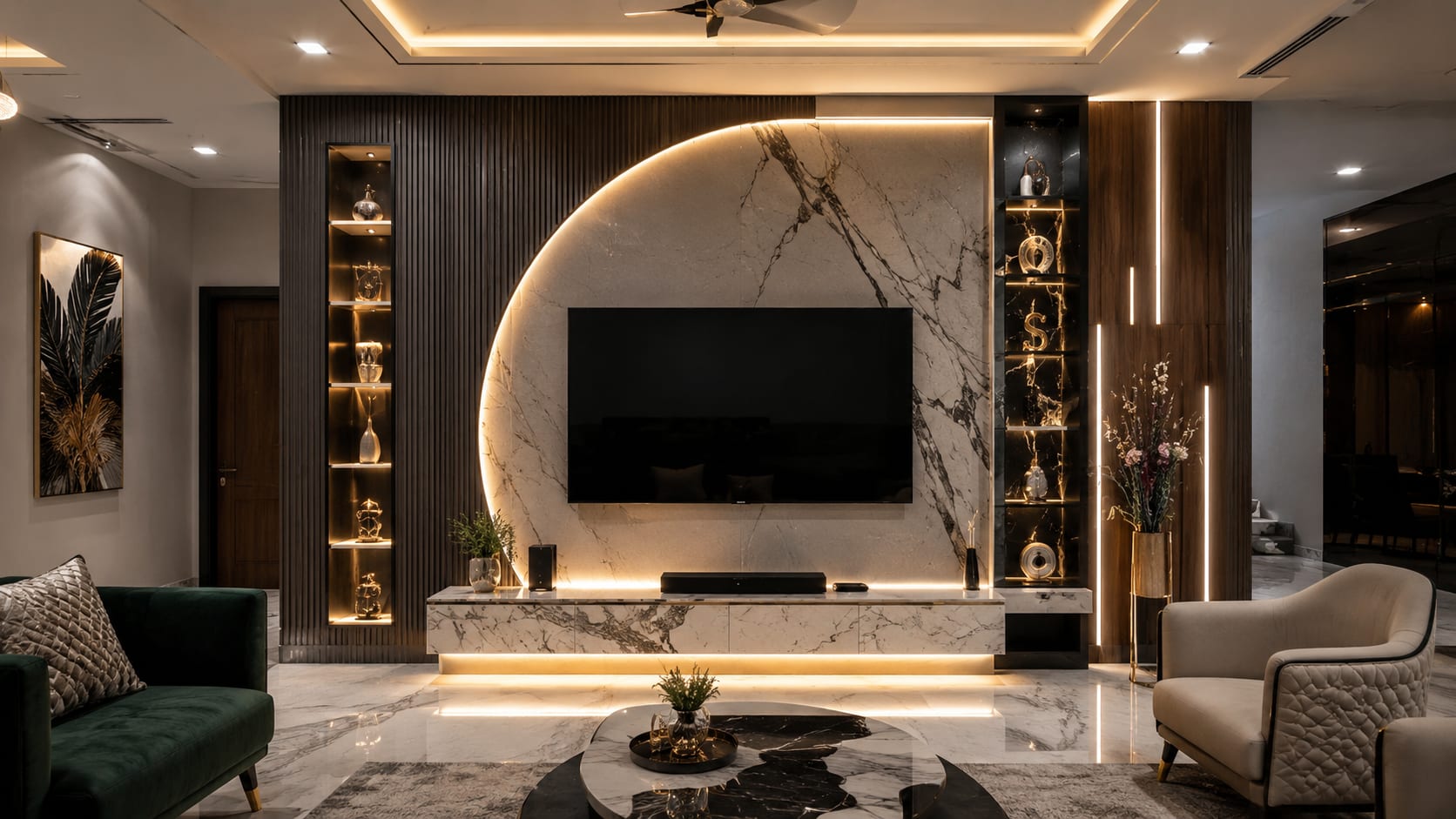
 A sweeping arc is cut into the marble with the LED hidden in a recessed channel along its edge, so the light appears to come from behind the stone. The surrounding geometry stays strictly rectangular, which is why the curve reads as confident rather than random. Steal this: tape the arc out full size and look at it from the sofa before anyone cuts anything, timid curves look like mistakes.
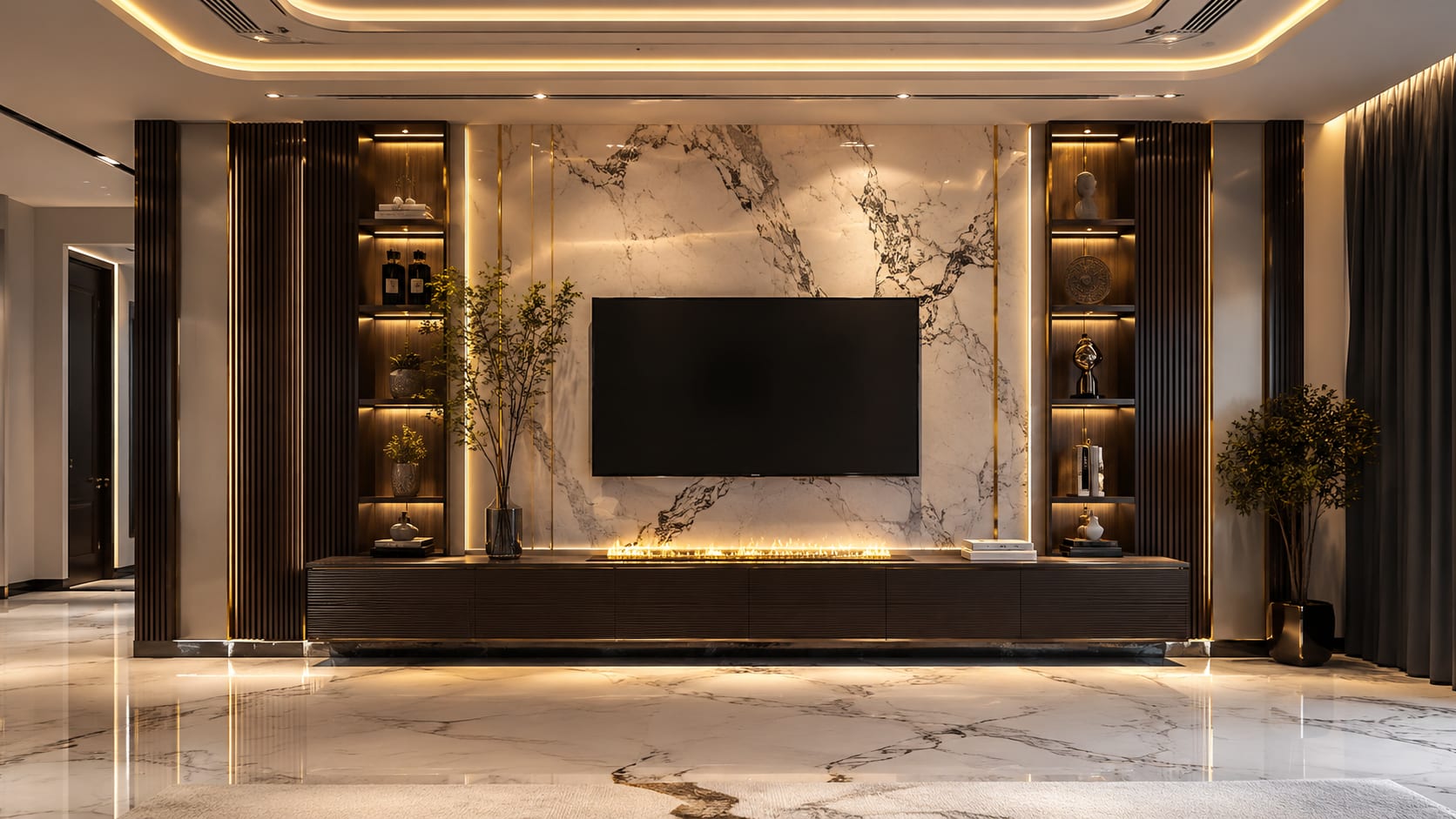
4. Book-match the slab, then centre everything on it
 See the full design
 Two mirrored slabs open like a butterfly directly behind the screen, and the linear fire sits on the same centre line below. Stacking both focal points on one axis is what stops the classic argument about where the room should look. Steal this: approve the book-matched layout in person at the stone yard, this is the one detail you cannot fix afterwards.
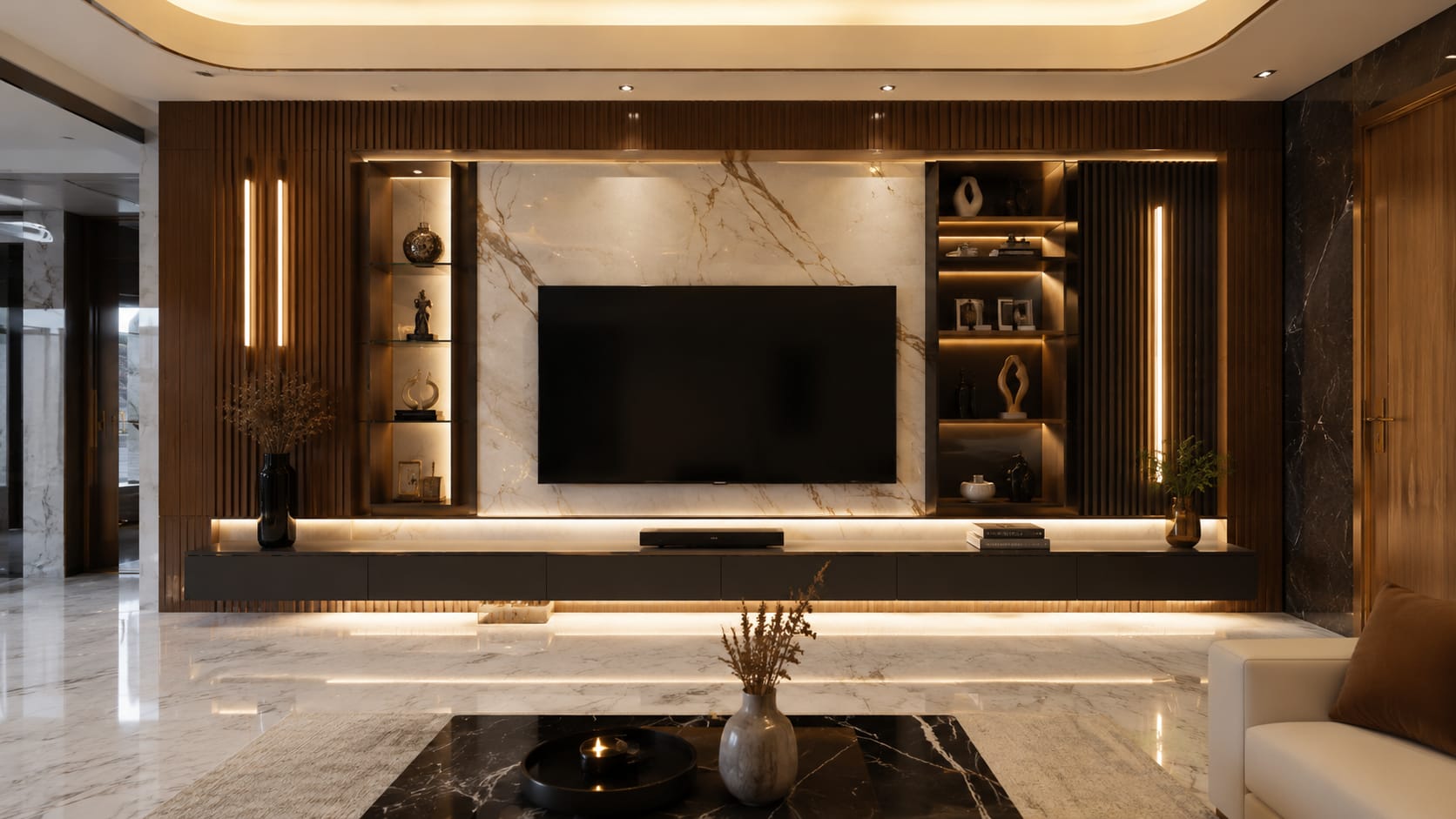
5. Let wood lead and marble play a cameo
 See the full design
 Here the ratio is flipped: fluted walnut covers the wall and the marble appears only as a framed inset. It is warmer to live with, noticeably cheaper, and the grooved timber even takes a little harshness out of the room's acoustics. Steal this: flutes need to be at least 15 mm deep, or they flatten out under downlights and lose all their shadow.
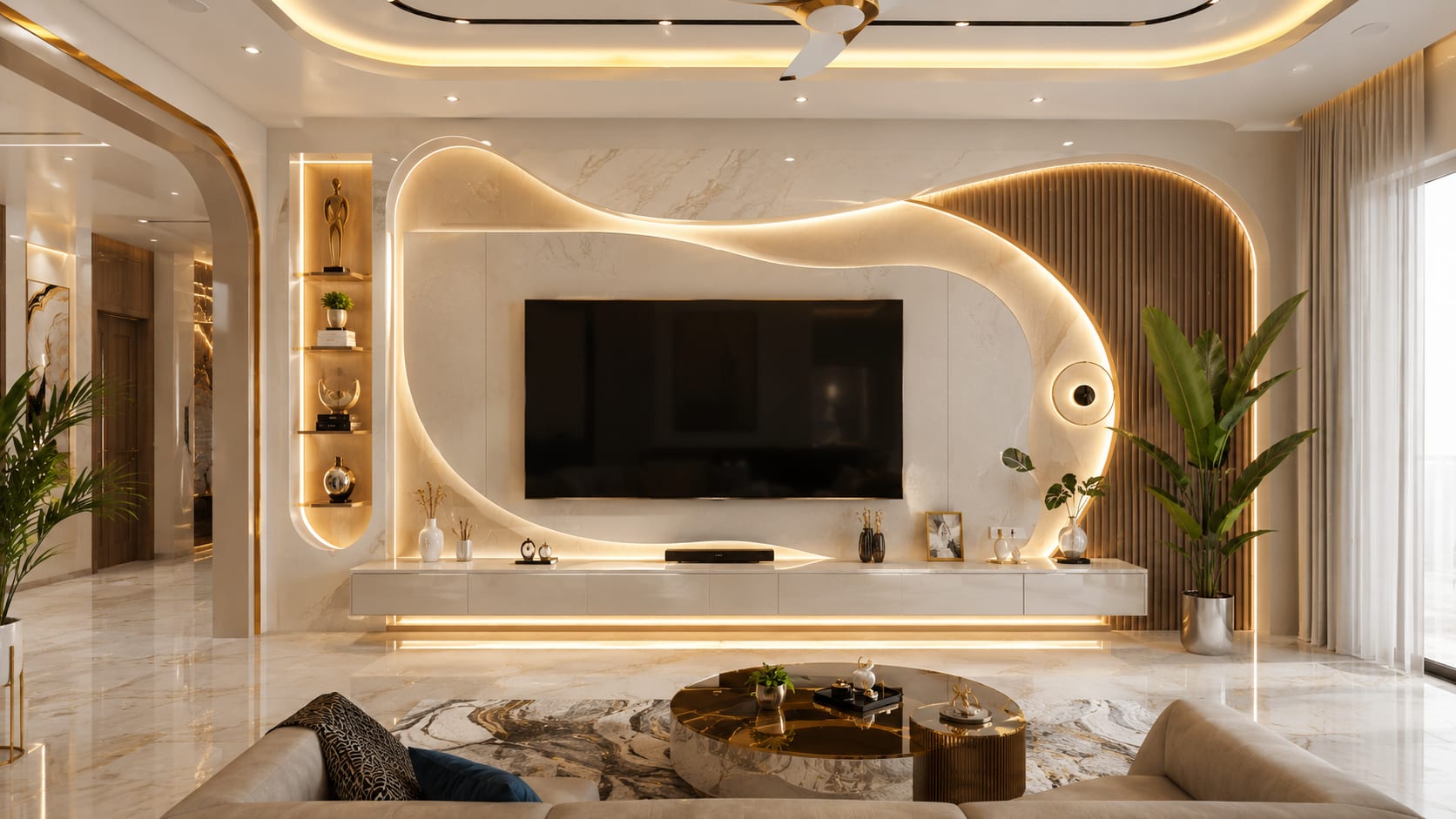
6. Prove that luxury doesn't have to be dark
 See the full design
 Nearly every sculpted media wall is moody. This one keeps the same flowing curve in cream and gold, and it works because the curve is deep enough to cast its own shadow, in a pale scheme, shadow does the job that contrast does in a dark one. Steal this: keep the LED warm, around 2700K. Cool white turns cream stone grey and clinical.
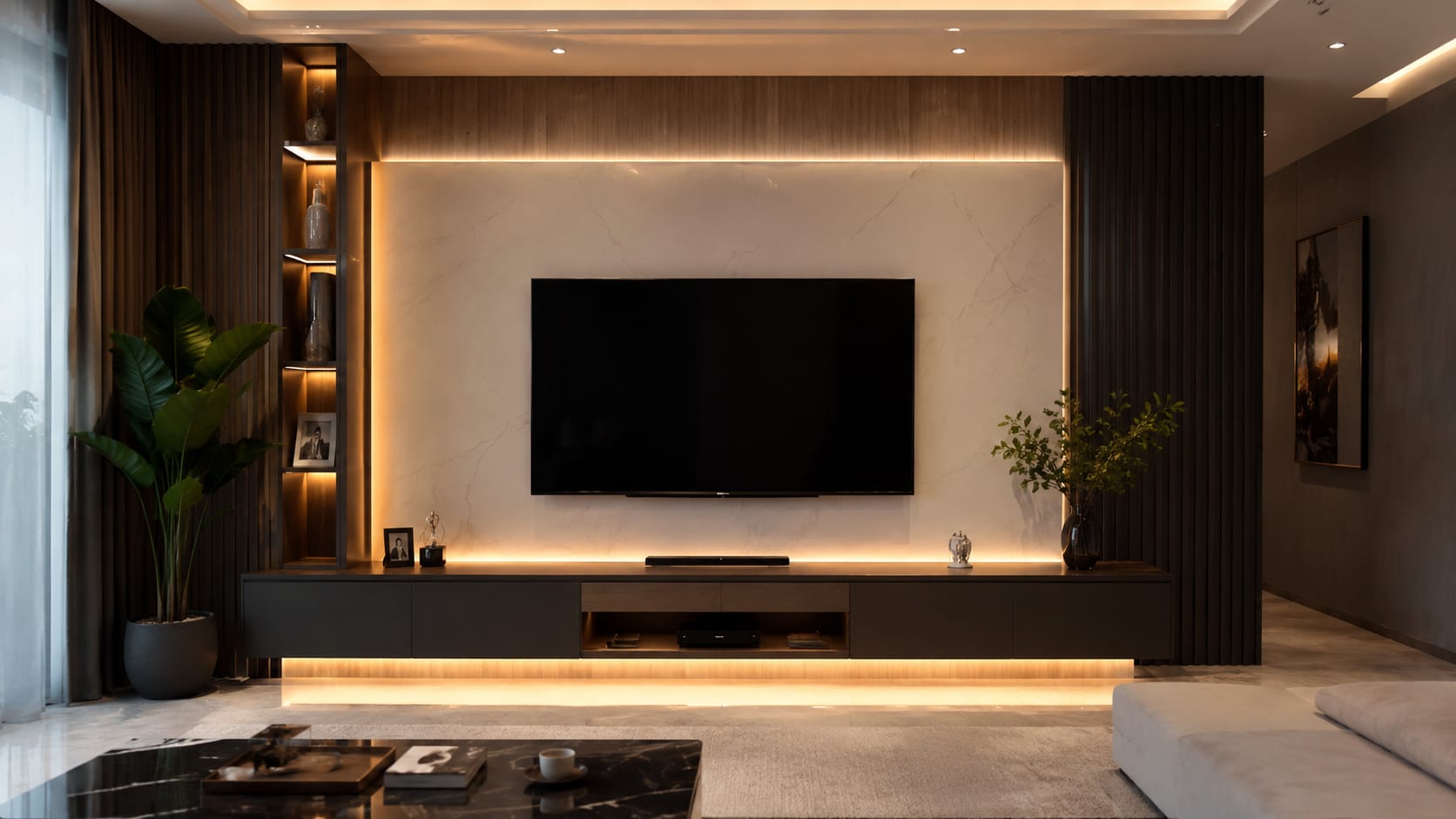
7. Outline the panel and stop there
 See the full design
 A single quiet slab with a light reveal running around all four sides, timber above and charcoal fluting to one side. That is the entire design, and it is the most buildable wall in this list. Steal this: keep the reveal gap identical on every side. Lit edges are unforgiving, and a couple of millimetres out at the top will show.
8. Turn the joints into the pattern
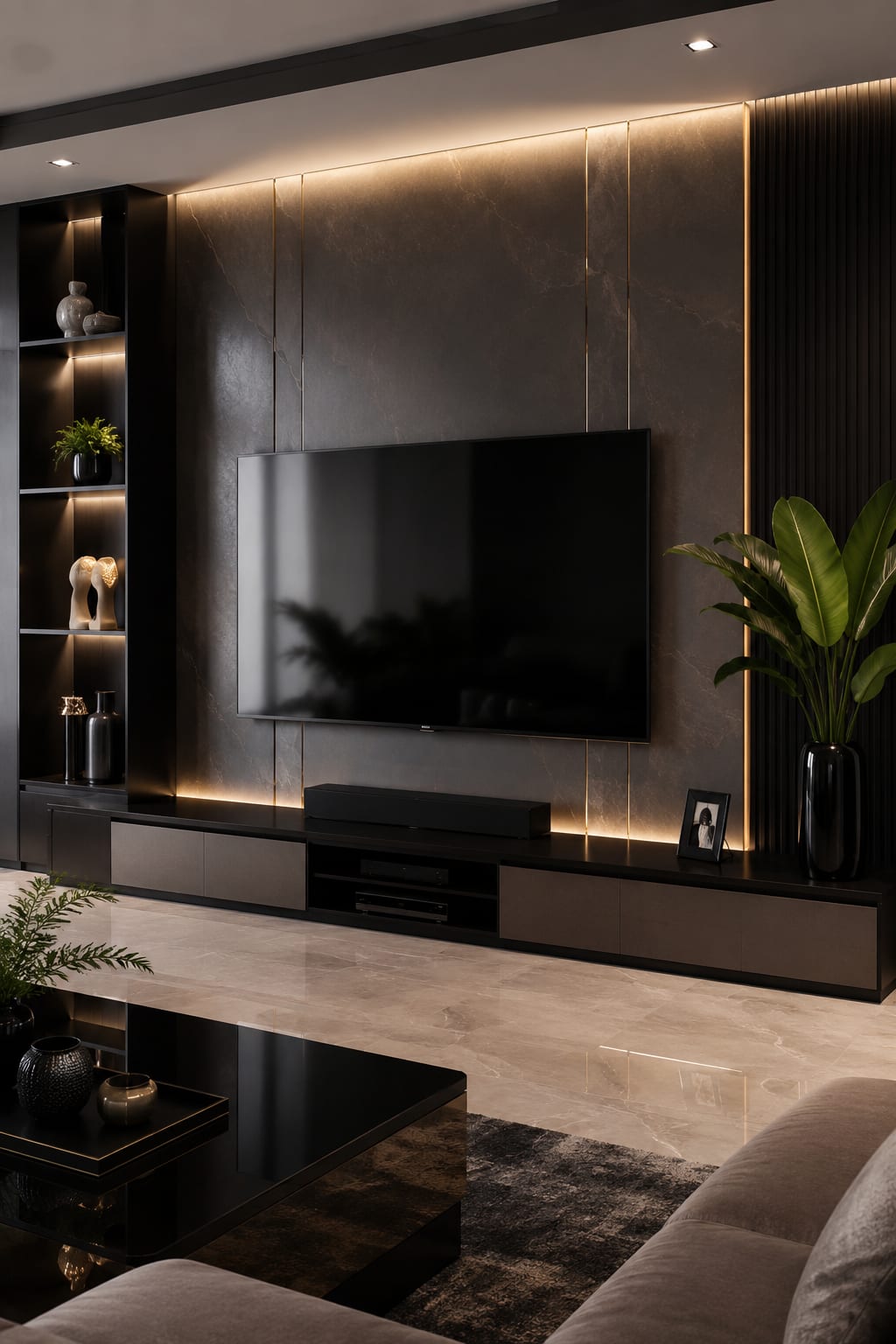 See the full design
 Large stone walls always have joints. Instead of hiding them, these have been widened and filled with brass, so the seams organise the surface into proportions someone actually chose. The edges are backlit rather than the whole panel, leaving the centre properly dark for viewing. Steal this: set out the joint positions on paper before ordering, because those lines will define the wall.
9. Cap the marble instead of running it to the ceiling
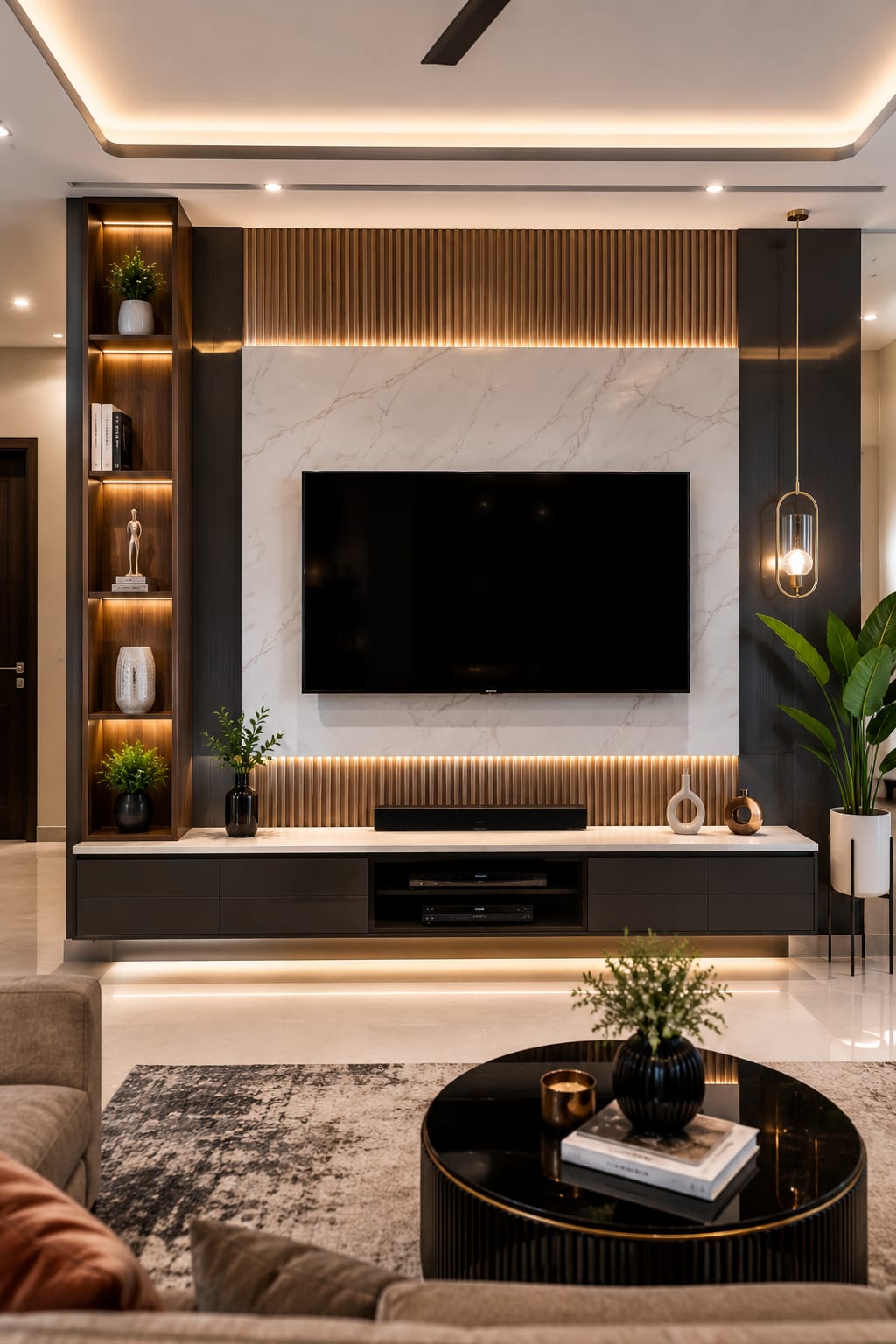 See the full design
 Bands of backlit oak fluting sit above and below the stone, holding it between two warm horizontal lines. It stops a normal-height room feeling top-heavy and uses considerably less marble. Steal this: light both bands to exactly the same brightness, the eye reads them as a pair, so any difference looks like a fault.
Before you commit to marble
Three things decide whether a marble TV wall looks expensive or merely busy. Choose quiet veining behind a screen and save the dramatic slab for somewhere nothing else competes. Light the edges, not the face, stone lit head-on goes flat, and dark stone lit head-on goes muddy. And specify honed rather than polished behind the television, because a polished surface will mirror every lamp in the room while you are trying to watch something. If the budget is tight, large-format porcelain in a marble pattern is an honest substitute: buy the biggest panel you can so the veining is not chopped up by joints.
Prefer wood, plaster and texture to stone? The companion guide covers the sculptural and natural-material side of the same collection.
Join the conversation
Share your thoughts on this room