

Choose the version of nostalgia you want to live with
There is no single retro-bedroom formula. Grunge-era rooms feel warm, layered and slightly improvised; early-2000s pop rooms use cleaner white furniture, brighter pink and playful storage; gaming rooms depend on darkness and controlled pools of coloured light. Pick one of those directions first. Then limit the palette to a timber tone or white base, two main colours and one lighting temperature. That simple boundary lets posters, textiles and memorabilia look collected without turning the bedroom into a themed display.
Nine nostalgic bedrooms, from quiet retro to full neon
Build a warm grunge room from things that feel collected
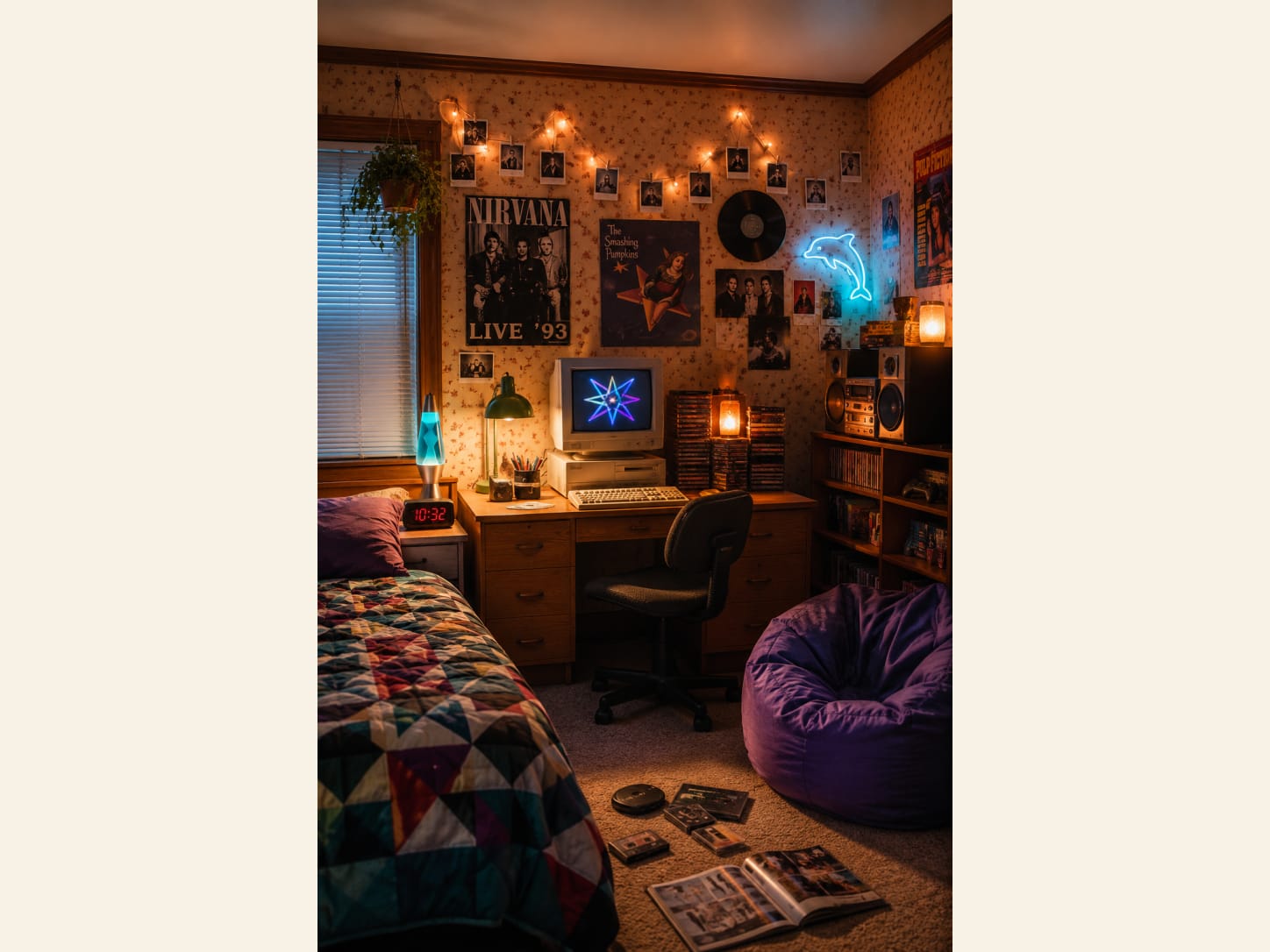
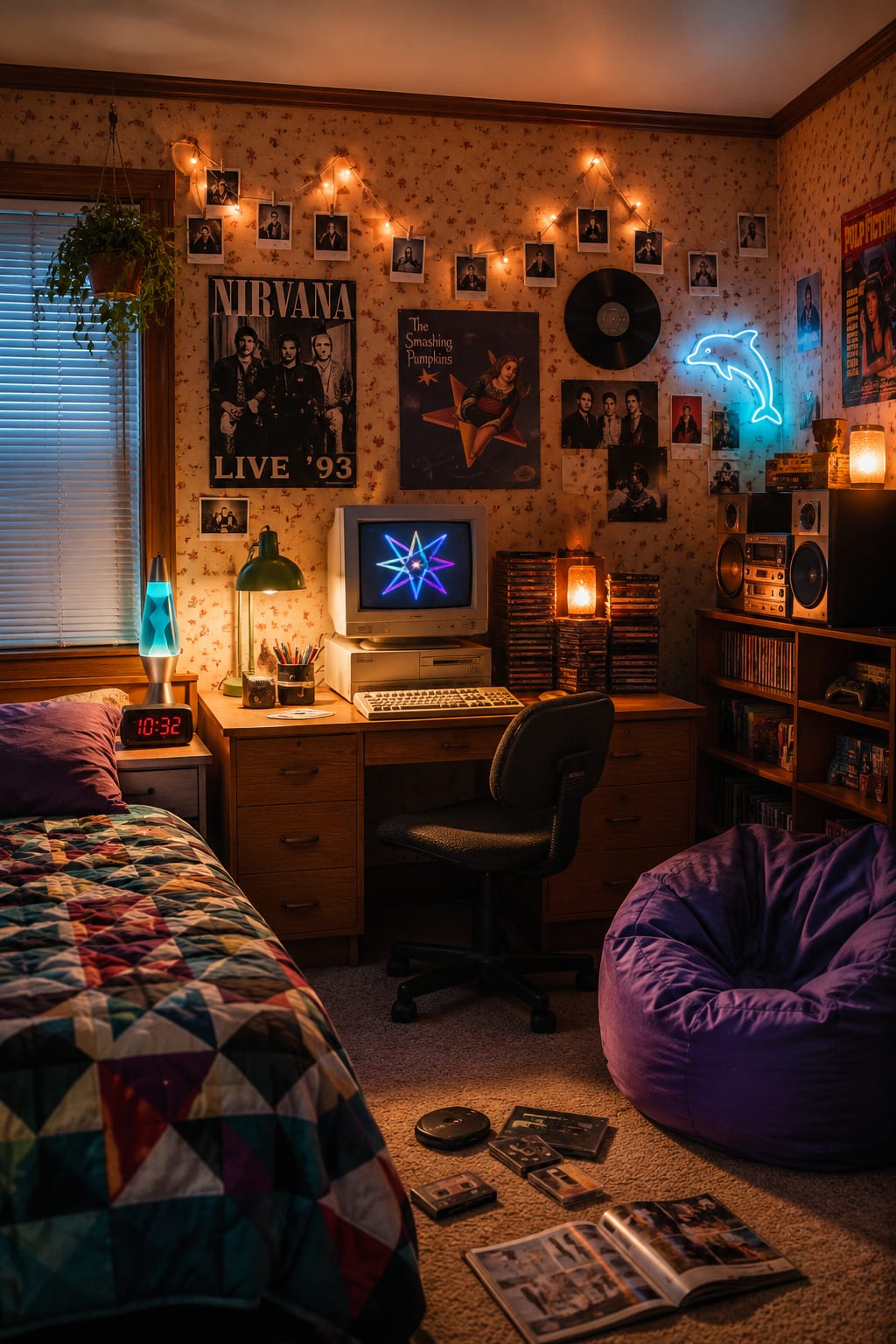
This room gets its character from accumulation rather than one statement purchase. Band posters and photo strips occupy the busiest wall, while the timber desk, patchwork quilt and faded beanbag give the eye larger, calmer shapes to rest on. The CRT computer, CDs and lava lamp make the period recognisable, but the room would still read as 90s without rare working electronics. Recreate the mood with second-hand wood furniture, warm-white fairy lights, a patterned quilt and prints tied to your own music rather than someone else's nostalgia. Keep cables off the floor and give the desk a usable patch of clear surface. The slight mismatch is part of the charm; grime, unsafe wiring and unusable clutter are not.
Let sunset colours connect posters, textiles and neon

The neon Saturn is memorable, but colour continuity is what holds this bedroom together. Orange sunset light, amber fairy lights, the lava lamp and the warmer notes in the patterned bedding all sit in the same family. That allows blue and purple accents to feel lively without breaking the mood. If your room does not receive golden evening light, use a shaded table lamp and dimmable warm bulbs instead of pushing every source toward orange. Give the neon one uncluttered outline so it remains readable, and place poster edges far enough away that paper cannot touch warm fittings. A single bright sign is usually stronger than several competing slogans.
Make one dense poster wall the room's visual soundtrack

Here the poster wall works almost like patterned wallpaper. The images vary in size, yet their darker backgrounds and repeated purple, red and cream stop the collage from becoming random. Before attaching anything, arrange the full composition on the floor and photograph it. Start with two large prints, fill the gaps with smaller pieces and keep the lower edge clear of pillows and desk lamps. The purple beanbag and geometric rug pull colour down from the wall, while plain wood prevents every surface from shouting. If you want the same energy in a rented room, mount the collage on one or two removable panels rather than covering freshly painted plaster with tape.
Use white furniture to sharpen a playful Y2K palette

A pink room can become visually heavy surprisingly quickly, so the white desk, shelving and bed frame do important work here. They separate the pink storage bins, pastel bedding and wall graphics into distinct moments. The green shag rug is a useful counterpoint because it prevents the palette from feeling like a single-colour set. Keep the largest surfaces pale, repeat pink in three or four places and choose one contrasting colour for the floor or chair. Closed bins are practical for school supplies and chargers, but label them discreetly so storage does not become a daily rummage. The result should feel cheerful and usable in daylight, not dependent on a neon light to make sense.
Anchor a maximal pink room with one unmistakable period shape

The translucent computer gives this room an immediate early-2000s reference, but it is the disciplined background that keeps the scene readable. Cream furniture forms one continuous base beneath the dense poster wall, and the blue beanbag breaks up the expanse of pink. An old computer can be decorative, but do not rely on untested vintage electrical equipment for daily use. A modern monitor or speaker in a rounded colourful shell can create a similar silhouette more safely and reliably. Keep magazines and CDs to one shelf or basket, place the vanity where its mirror receives even light, and leave a clear route between the bed, desk and door.
Give retro media a proper home instead of scattering props
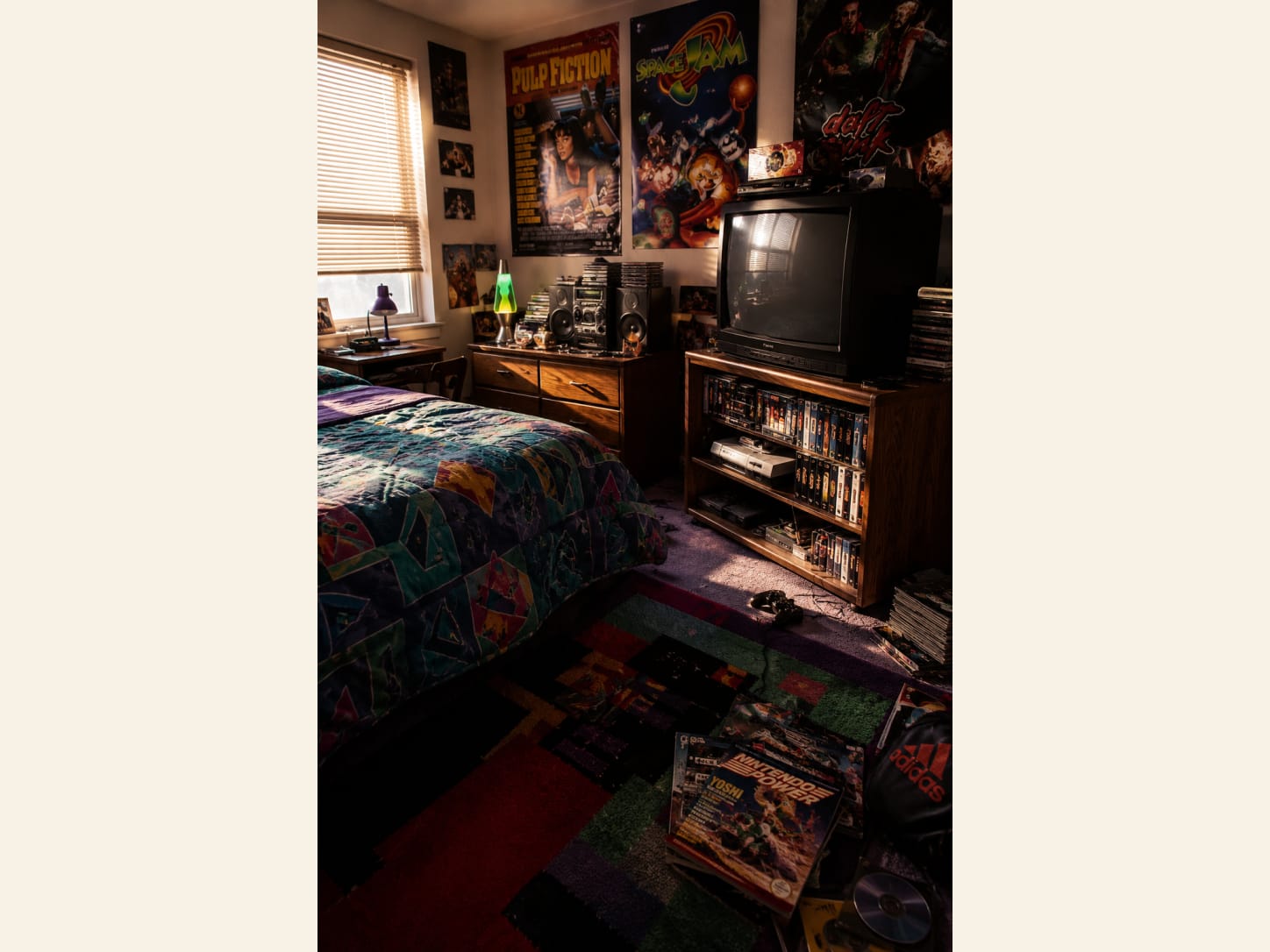
This is the closest room to a working 90s media den. The CRT sits on a substantial timber unit, tapes and games have dedicated shelves, and the boombox is positioned where it can actually be used. That organisation is what stops the objects from looking like a film-set pile. If you display a heavy television, use furniture rated for its weight and depth, keep ventilation openings clear and secure the unit where tipping is a concern. You can achieve the same visual rhythm with a modern screen set inside a deeper wood cabinet. Let the duvet carry the boldest geometric pattern, then choose a rug with related colours rather than an identical motif.
Edit the retro references for a calmer everyday bedroom

Not every nostalgic bedroom needs a wall covered from skirting to ceiling. This version keeps two or three framed posters, then relies on light oak, cream bedding and a striped natural rug for warmth. It suits someone who likes the music-room reference but needs a quiet place to sleep and study. The desk is sensibly placed near daylight, although a blind or curtain may be needed to control glare on a screen. Choose matching or similarly toned frames, align the art with the bed rather than the whole wall, and keep the shelf below it sparse. One plant, a compact lamp and the books currently being read are enough to make the room feel inhabited.
Design the gaming corner first, then add colour around it
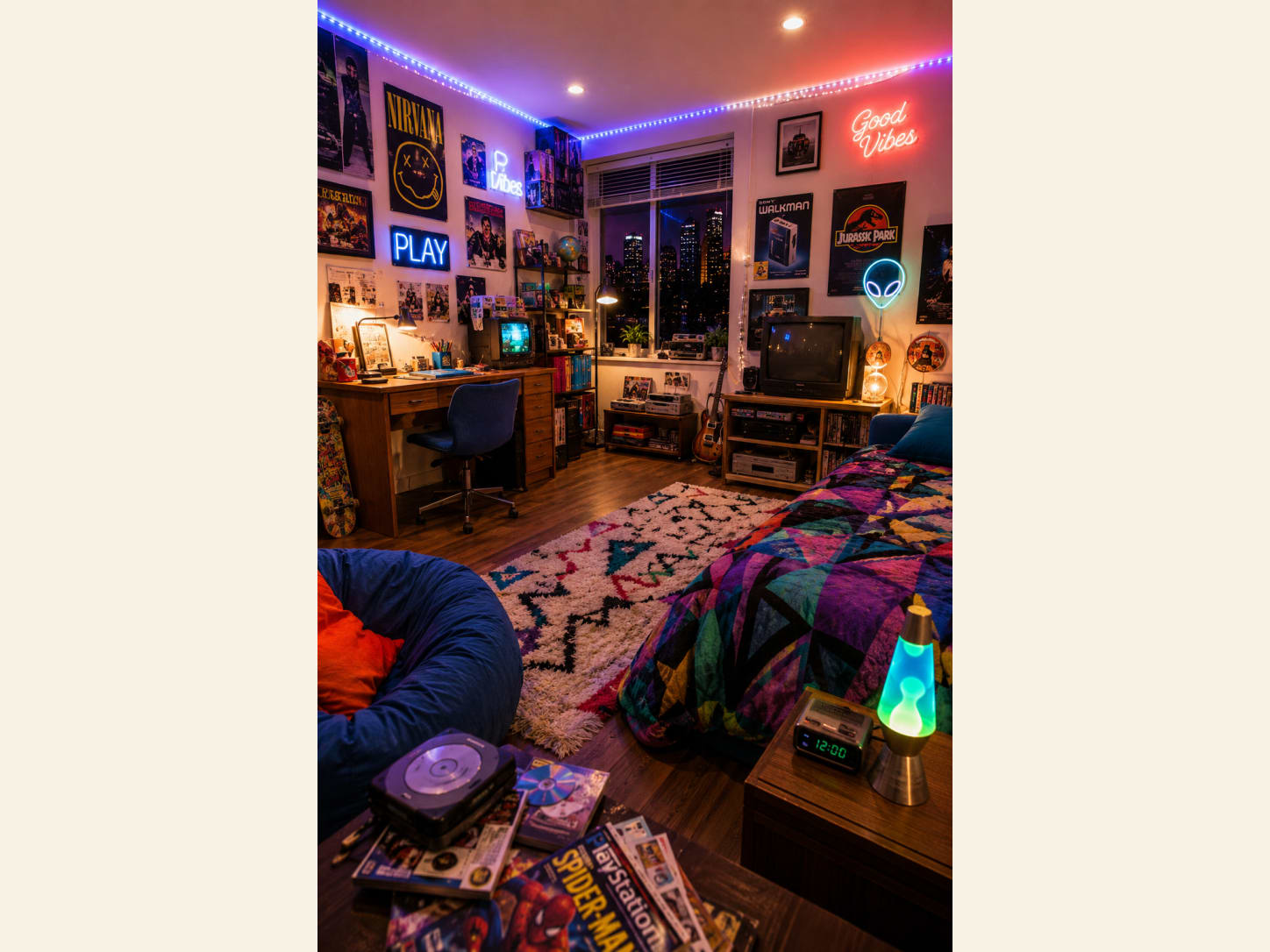
A gaming bedroom works better when the desk is planned as equipment, not decoration. Start with a comfortable chair, sensible screen height, accessible sockets and a route for power and data cables. Once that foundation works, use concealed LED strips to outline one architectural edge and let a single neon sign provide the brighter accent. The posters connect the desk to the sleeping area, while the beanbag creates a second place to sit without another rigid chair. Avoid placing intense colour directly behind the monitor, where it can cause distraction and eye fatigue. Preset one softer warm scene for winding down; a bedroom that only looks good under saturated blue and magenta light is difficult to live in.
Use darkness deliberately in a late-night retro setup

This room is moodier than the brighter gaming scheme because the desk glow and warm lamp do almost all the visual work. It feels cinematic, but a real bedroom still needs practical ambient and task light. Add a dimmable ceiling or wall source for cleaning and dressing, then keep the desk lamp shielded so its bulb is not reflected in the screens. Blinds provide privacy against the city view, though lined curtains would improve light control for sleep. The patterned duvet prevents the dark bed from disappearing, and a few poster colours repeat the amber glow. Keep magazines and tapes off the walking route; styled floor clutter quickly becomes a trip hazard in low light.
Plan the poster wall before the first print goes up
Measure the available rectangle above the bed or desk and build the layout inside that boundary. Two large anchors plus several smaller pieces are easier to read than twenty prints of equal size. Repeat a colour every few images and leave a small, fairly consistent gap where you want a more orderly Y2K look; overlap edges when the goal is an improvised grunge collage. Keep paper away from hot lamps, heaters and open flames. Original artwork, licensed prints and your own photographs also make a room more personal than downloading a wall of images chosen only because they appear in a trend.
Make coloured lighting useful as well as atmospheric
Neon and LEDs are accent light, not a complete bedroom lighting plan. Pair them with a warm bedside source for reading, a focused desk lamp for homework or gaming controls and an ambient fitting bright enough for everyday tasks. Put coloured strips inside a diffuser channel so the room sees a clean glow rather than a dotted ribbon. Position power supplies where they can breathe and be reached later. Most importantly, create a quiet evening setting with lower brightness and less blue light; the room should help its occupant settle even when the full gaming scene is switched off.
Buy the feeling, not a pile of fragile props
A genuine CRT, old console or translucent computer can be a satisfying collectible, but it is not required to make the room work. Second-hand timber furniture, a well-chosen patterned textile and art tied to the occupant's actual interests will do more for authenticity. If vintage electronics are used, inspect condition, ventilation, plugs and load requirements, and seek professional advice where appropriate. Never turn damaged equipment into a working lamp or charger. Nostalgia is most convincing when the bedroom supports present-day sleep, study and storage instead of sacrificing them to recreate a photograph.
Join the conversation
Share your thoughts on this room