

Sculptural console table ideas for an entryway
Combine fluted storage with a horseshoe base
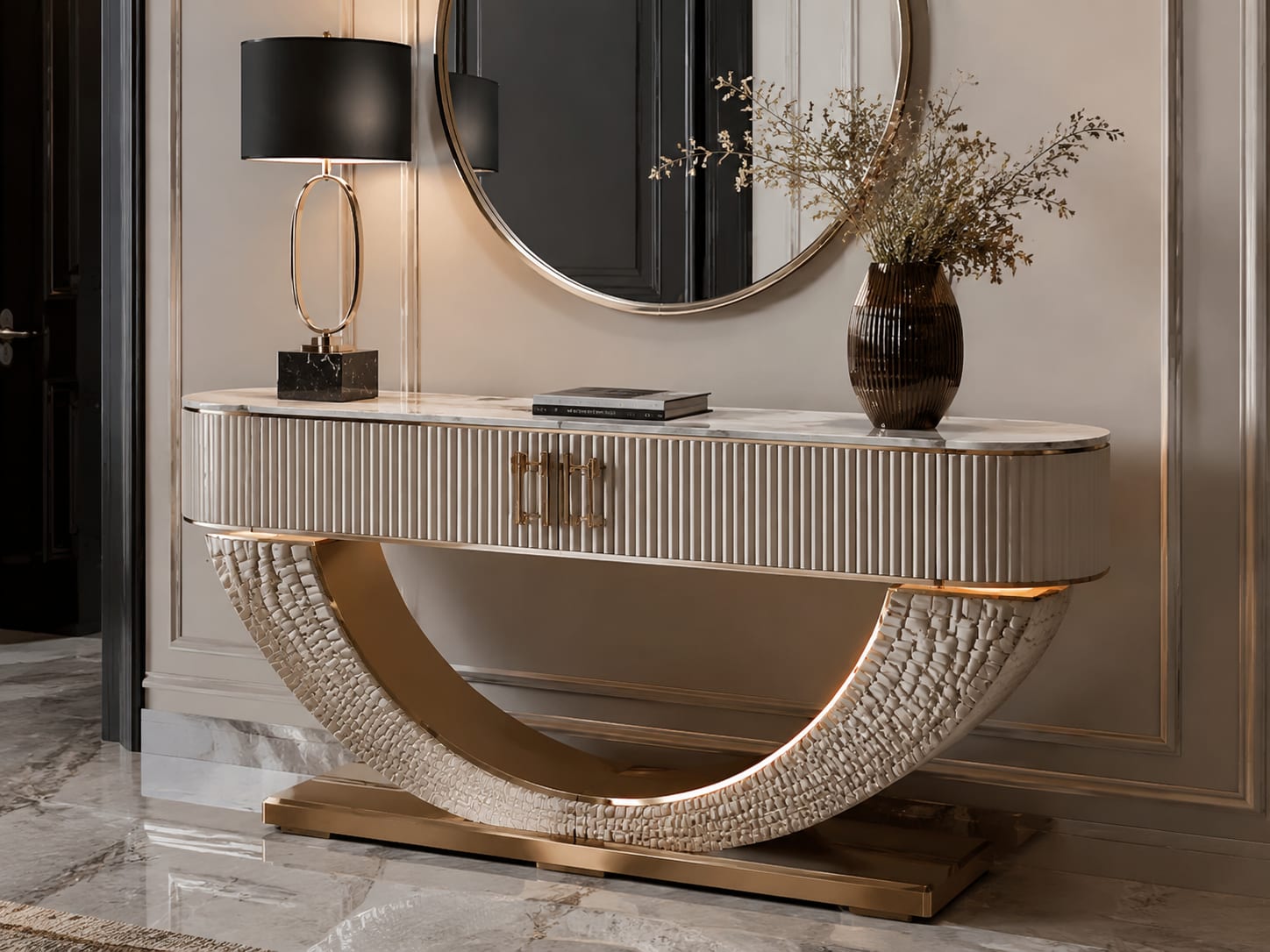
This concept balances function and theatre. A rounded cream cabinet hides shallow drawers, while the textured horseshoe base gives the piece a memorable silhouette. The pale marble top and thin gold details keep the large form from feeling heavy. Copy the idea: put practical storage in a visually quiet upper section and reserve the strongest shape for the base. Check that the curved supports do not project beyond the top where feet could catch them.
Use a faceted gold base like folded sculpture
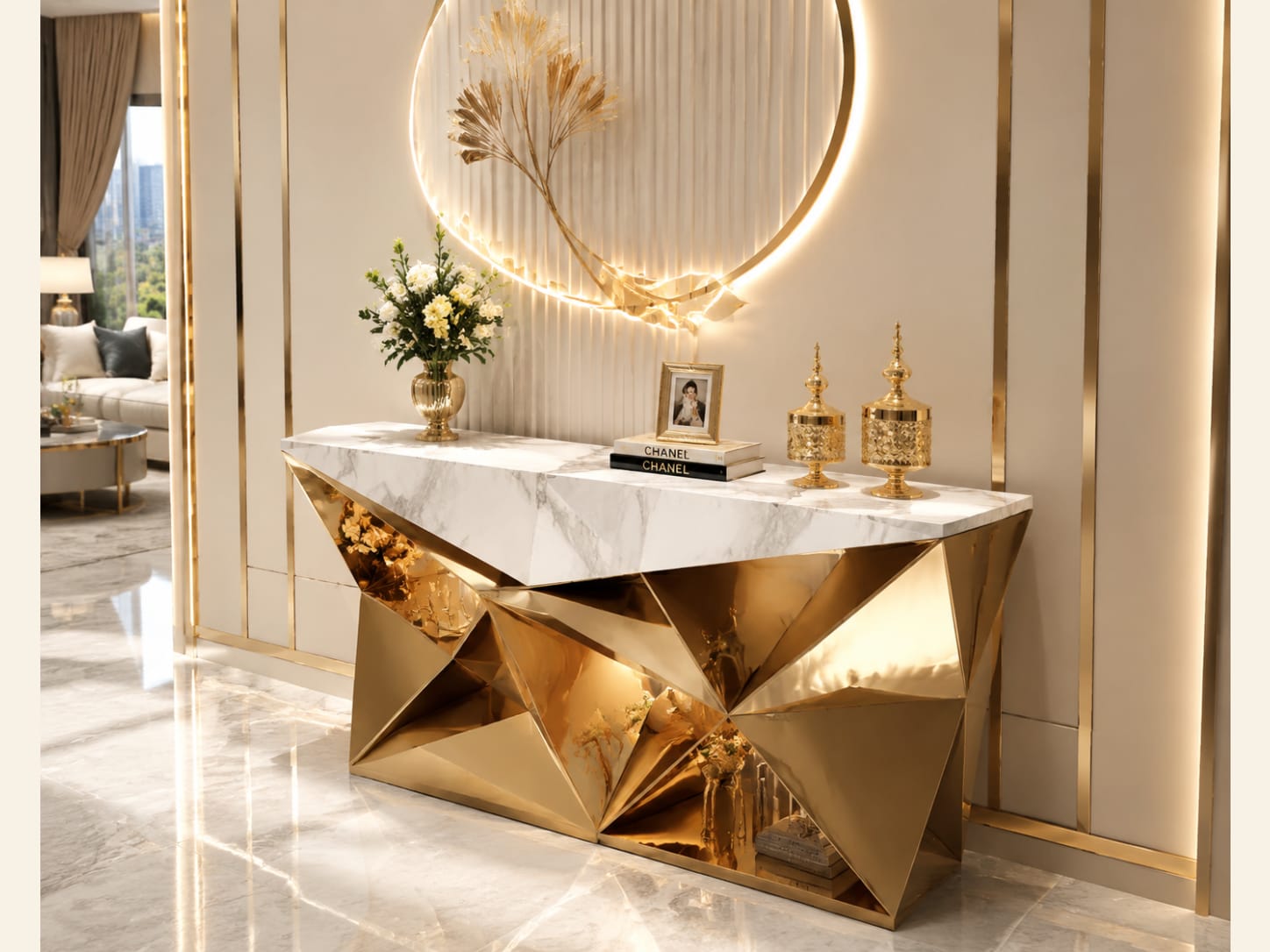
Angular mirrored planes make this base look like folded metal or an oversized gemstone. The simple white marble slab above is important because another complicated surface would compete with the geometry. Copy the idea: when the base reflects the room, keep the wall and styling pale and restrained. Before buying a highly polished finish, consider fingerprints, distorted reflections and whether direct sunlight will create distracting glare.
Pair rounded fluting with marble cylinder legs
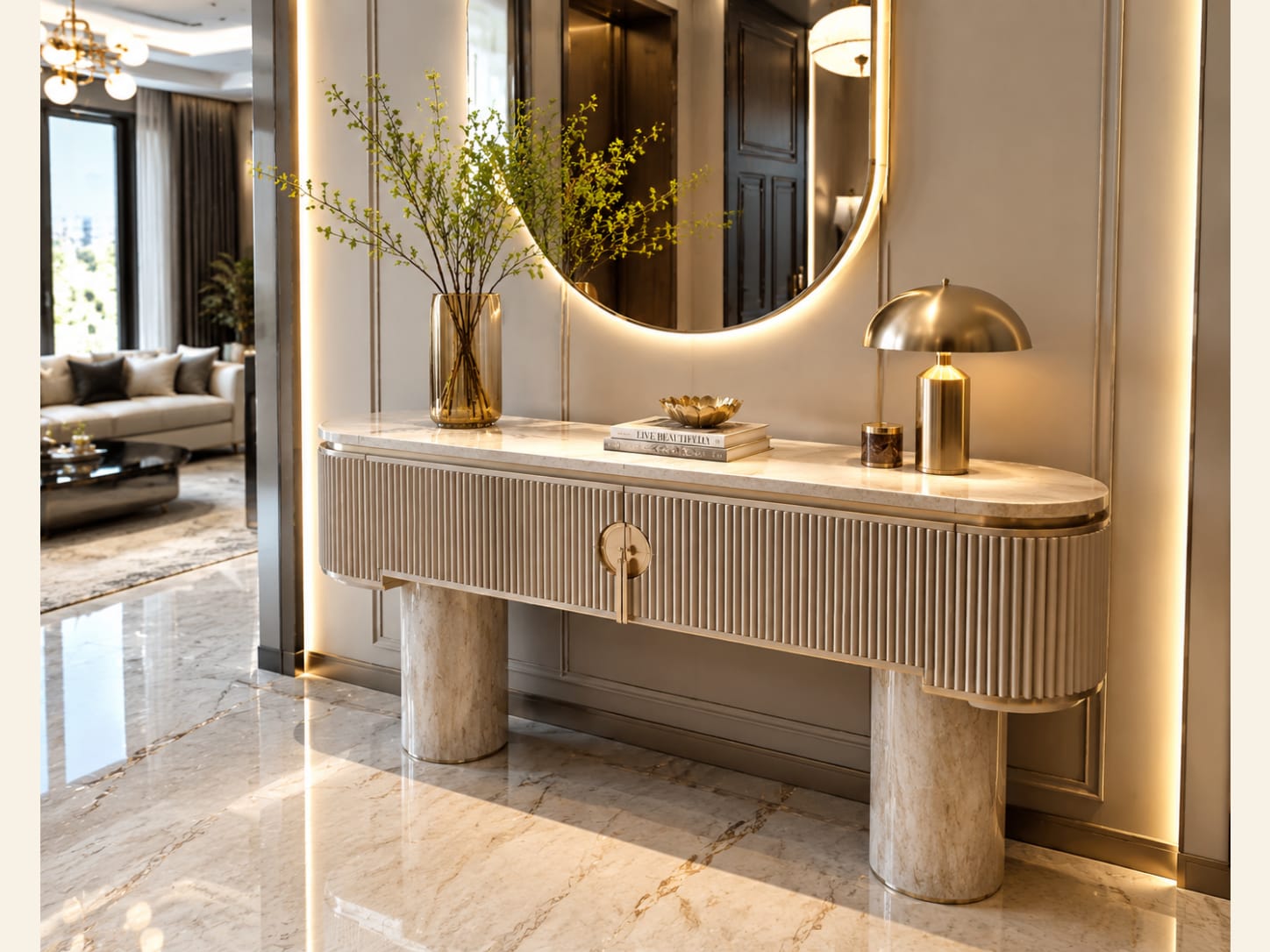
Not every statement console needs an exposed metal sculpture. Here, soft corners, narrow vertical fluting and two substantial stone-look cylinders create the interest. The continuous drawer front makes it useful in a working entryway, and the oval top removes sharp corners from the route. Copy the idea: repeat one shape family, rounded top, round mirror and cylindrical legs, then use a single circular pull as the visual centre.
Set a live-edge wood top on a black wave base
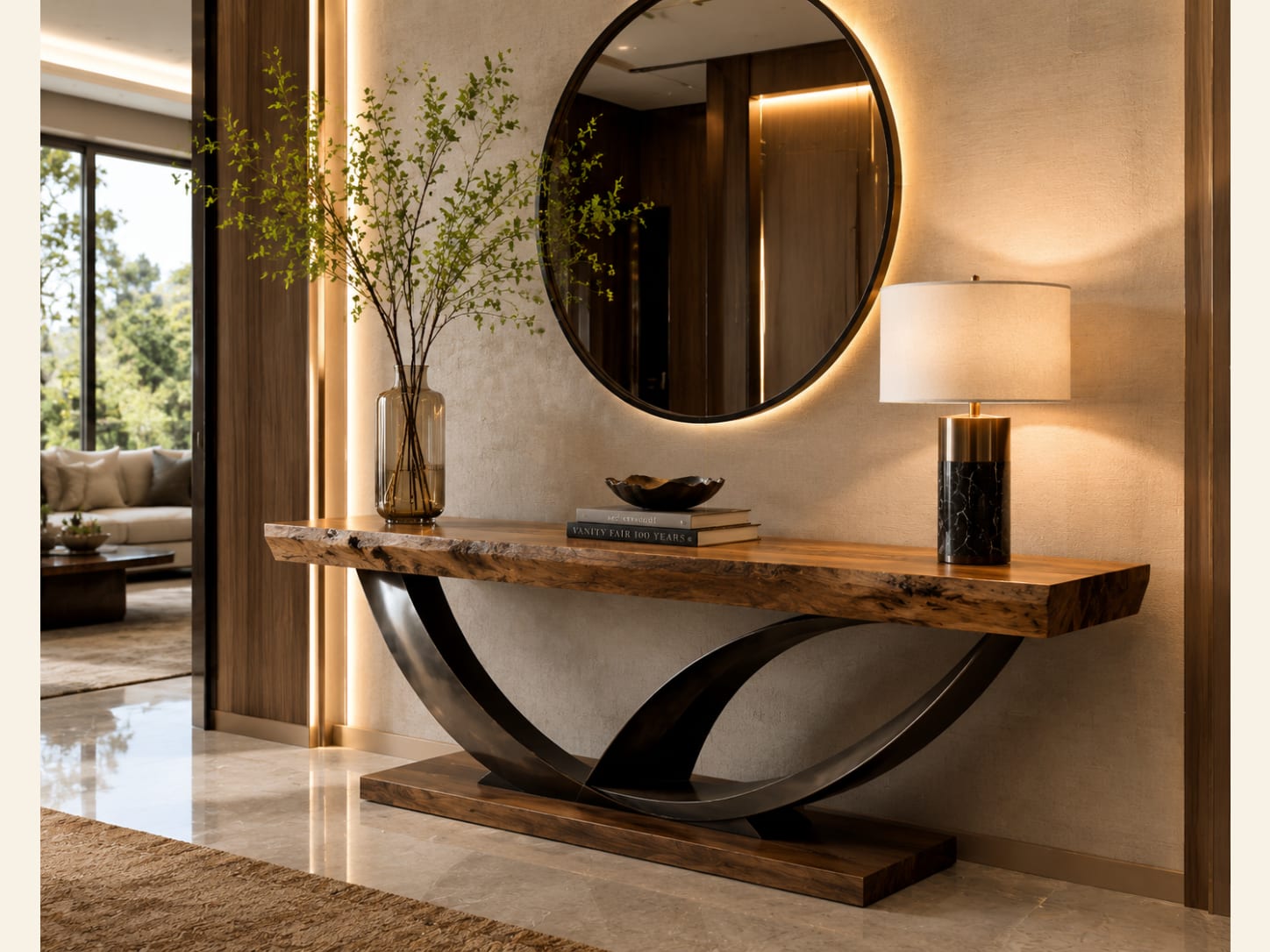
The warm live-edge slab and sweeping black base give this table an organic-modern character without relying on gold. The two curved supports cross and separate like ribbons, while the timber edge preserves the irregularity of the original material. Copy the idea: contrast one natural surface with one precisely fabricated base. Ask how the slab is sealed, how seasonal wood movement is allowed for and where the top connects to the metal.
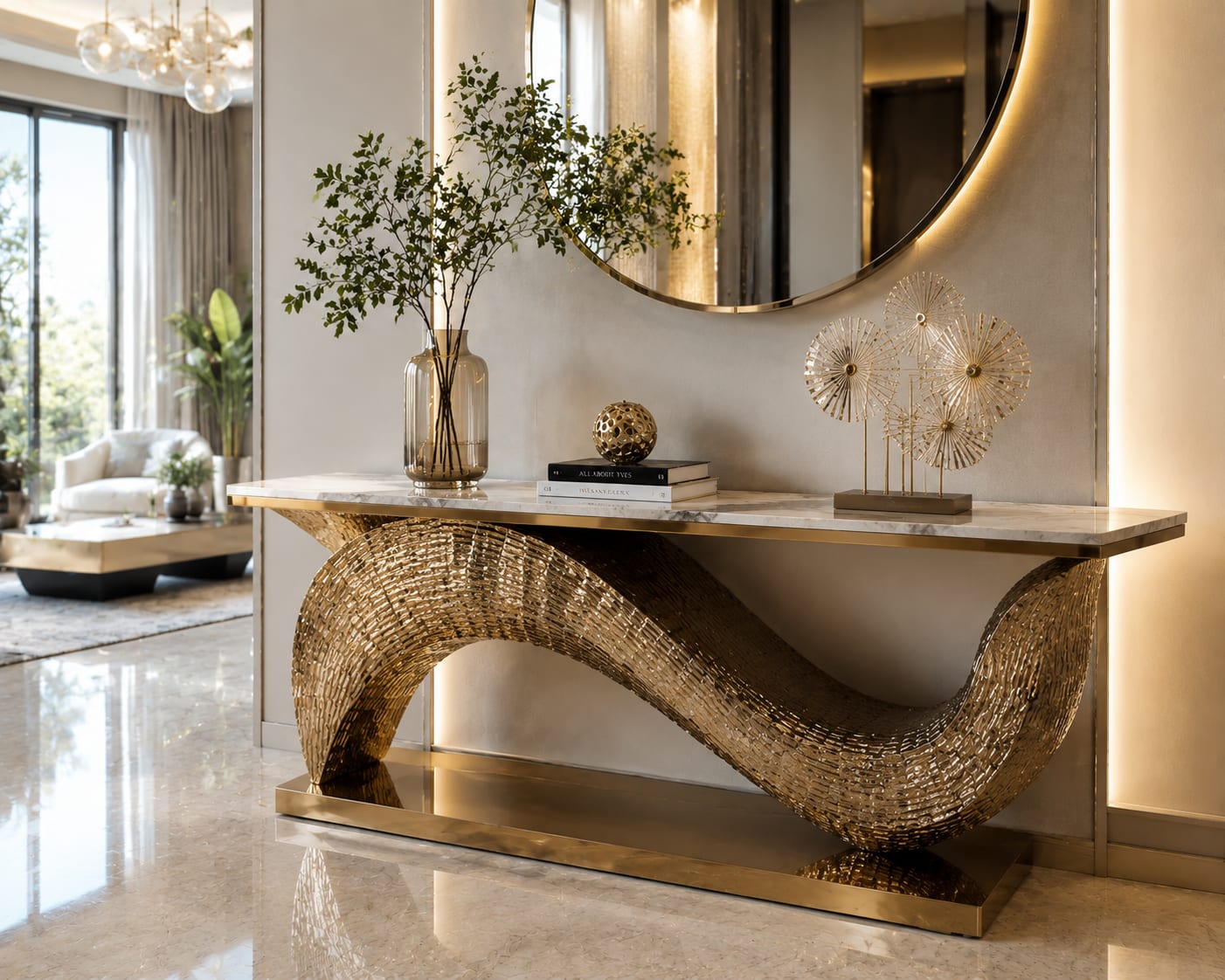
Make a textured gold wave the entire artwork
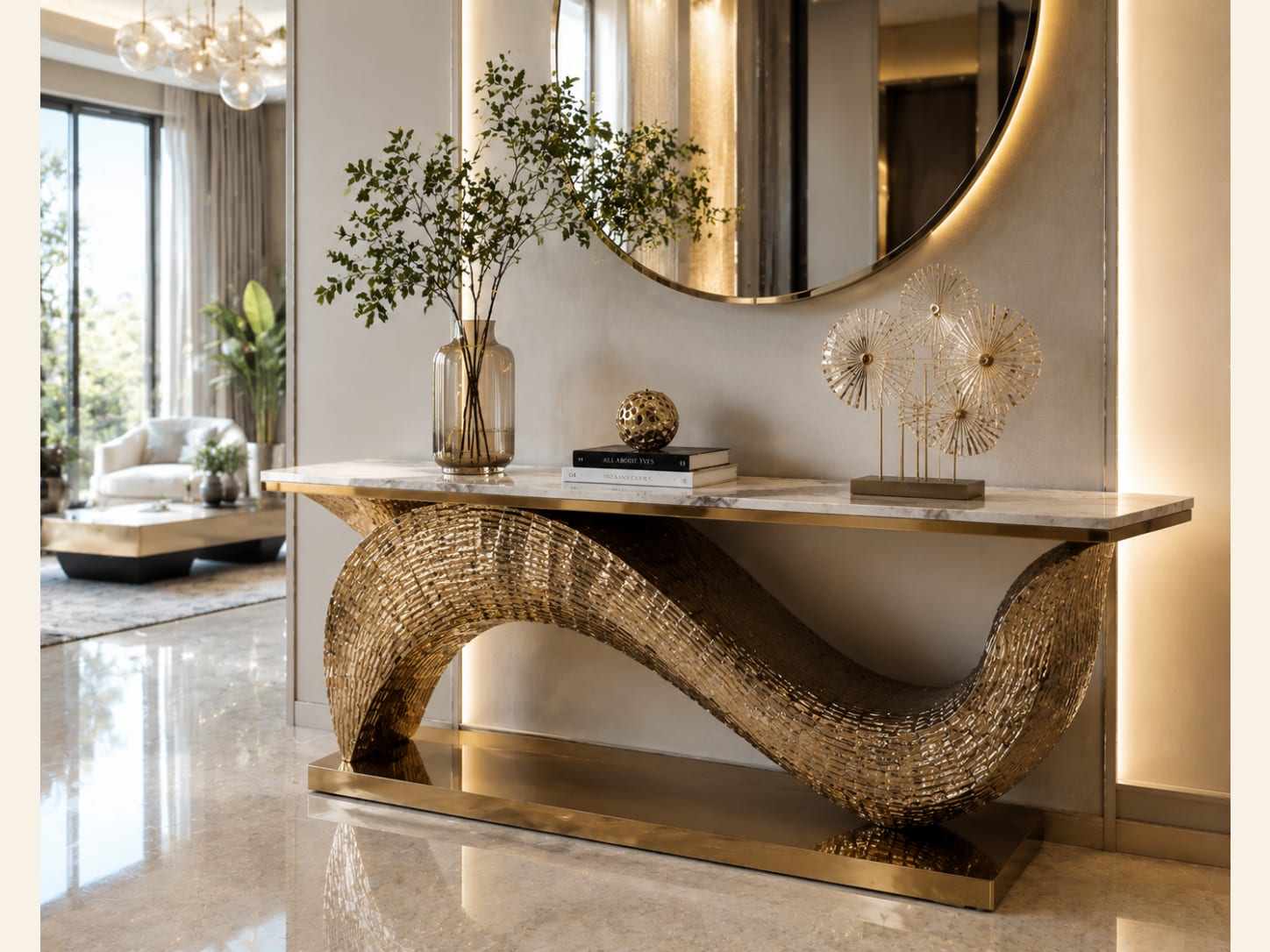
A single hammered wave travels from one side of the console to the other, so the base reads as a continuous piece rather than separate legs. The thin marble top gives it a usable surface without hiding the form. Copy the idea: let one large gesture lead, then keep the accessories light, one vase, a short book stack and a delicate sculpture. A design this open needs an uncluttered wall and no baskets underneath.
Echo an infinity base with a round backlit mirror
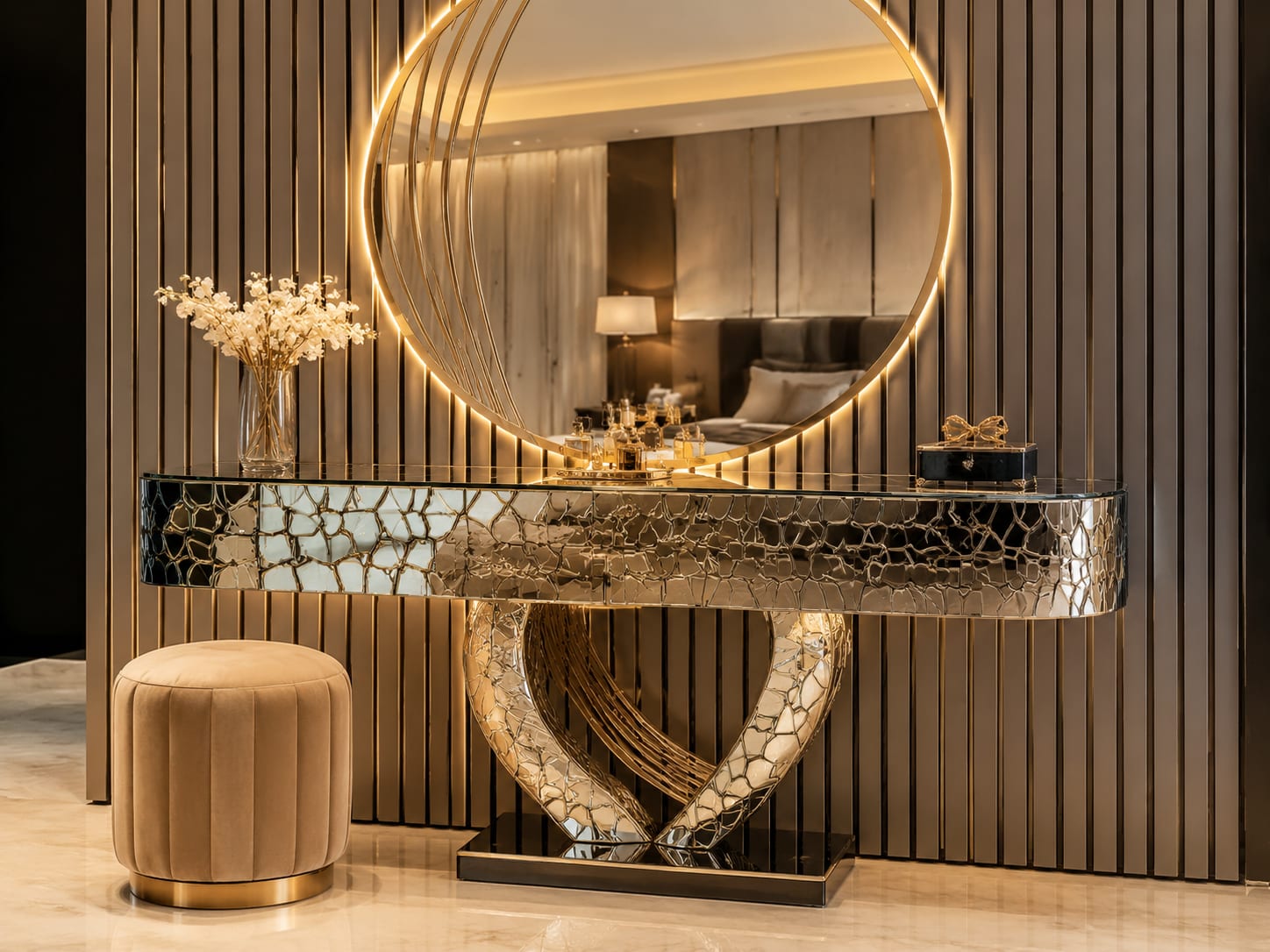
Two metallic loops cross beneath the top to form an infinity-like base. A large round backlit mirror repeats the curves at a calmer scale, and the stool shows how a console can double as an occasional vanity in a wide hallway or dressing area. Copy the idea: repeat curves, not every detail. If you add a seat, confirm knee clearance and keep it fully tucked in so it never narrows the walking route.
Build storage into a continuous walnut U-frame
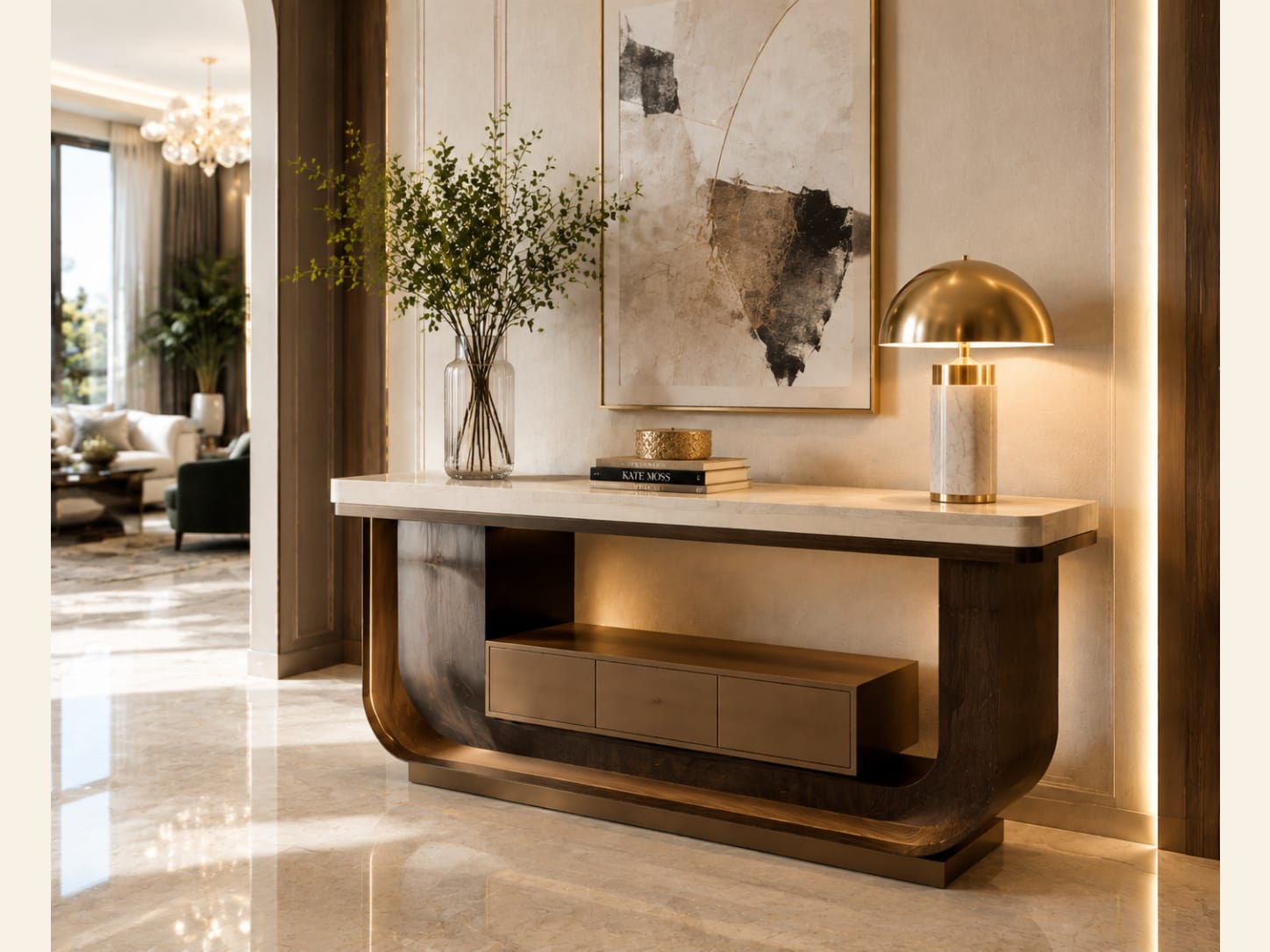
A thick walnut frame curves around the sides and floor, creating one continuous outline. The small drawer box appears to float inside it, giving storage without filling the opening. A pale stone top brightens the dark timber and connects it to the wall. Copy the idea: keep drawers shallow and visually detached from the frame. Confirm that the low timber base will not clash with skirting boards or sit unevenly across a change in flooring.
Create rhythm with staggered gold bars
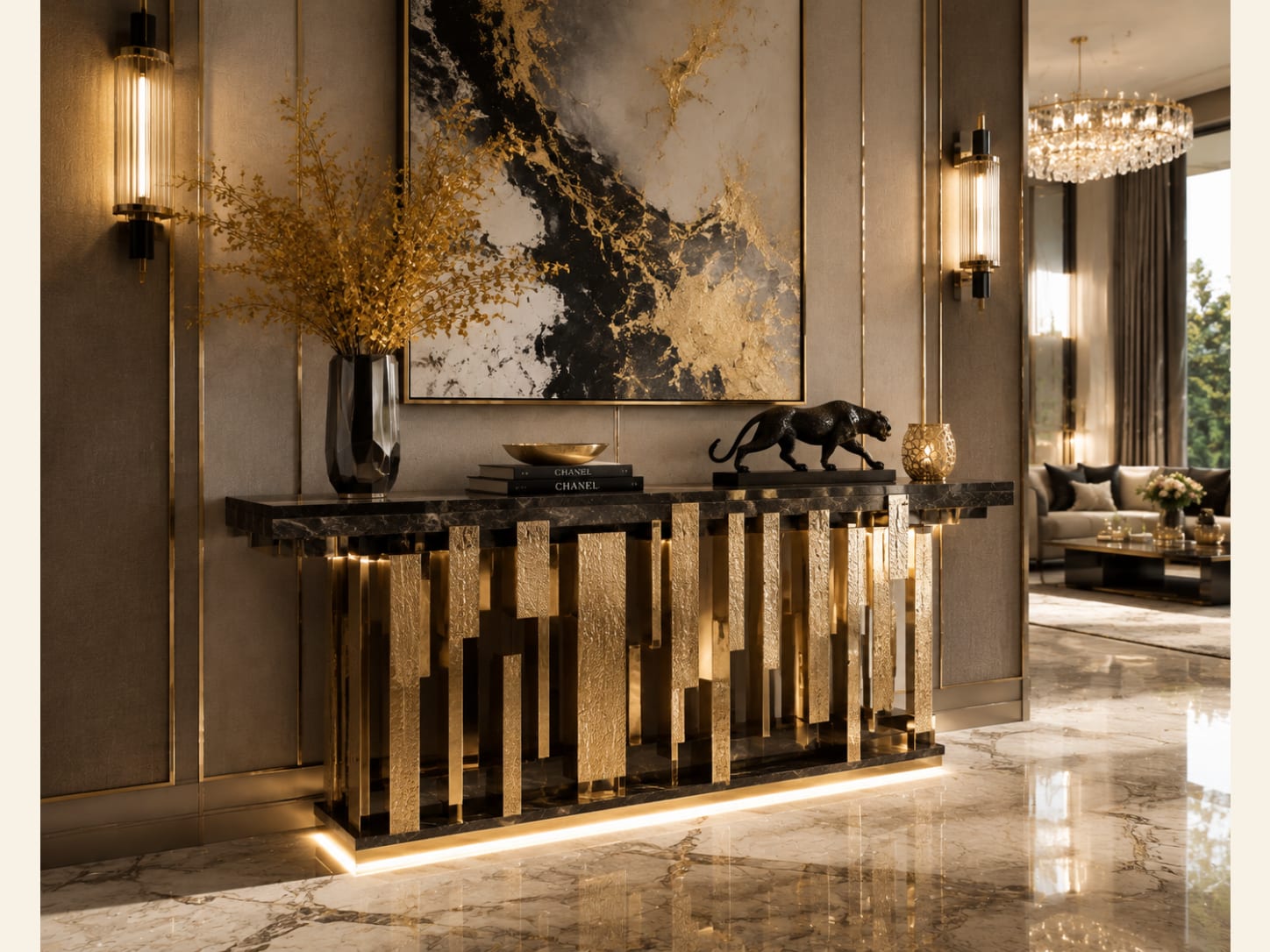
Dozens of vertical bars at different heights turn this base into an architectural screen. The black marble top and plinth contain the composition, while the artwork above repeats the black, cream and gold palette. Copy the idea: use variation inside a strict boundary. This base will collect more dust than a simple frame, so make sure there is enough space between the bars for cleaning and that the bottom lighting can be accessed later.
Keep the form slim with tiered gold legs
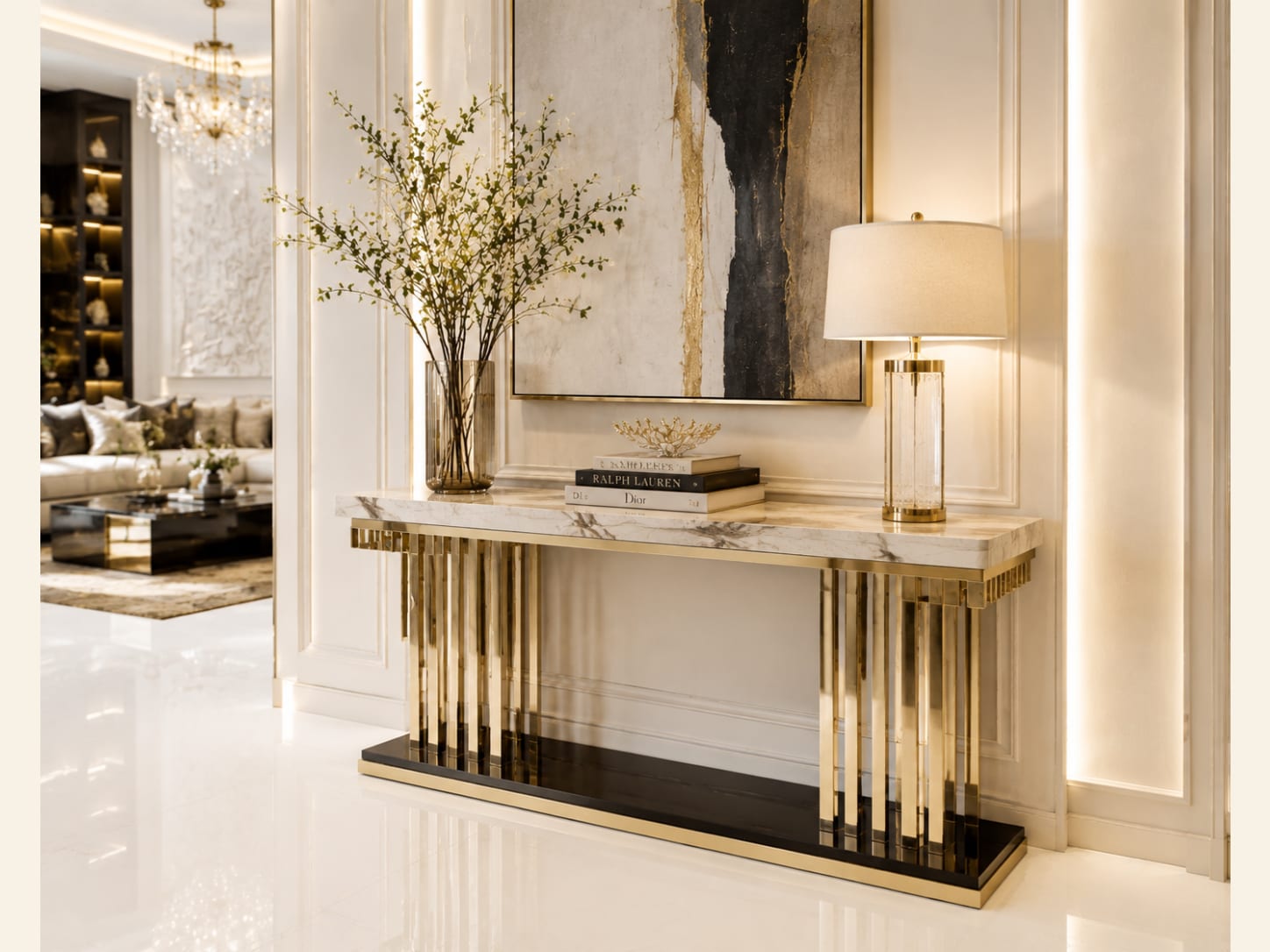
This final design is the easiest statement look to translate into a narrower entry. A straight marble top rests on grouped gold uprights that step down toward the centre, creating rhythm without a bulky solid base. Copy the idea: choose one repeated metal detail and keep the top visually calm. The open centre preserves floor space, but the grouped legs should still sit inside the edge of the top to reduce bumps in a busy passage.
Choose the silhouette after measuring the route
Start with the space people need to move, not with the table you like most. A console around 25 to 35 cm deep is usually easier to place in a narrow hallway; a generous foyer may take 35 to 45 cm. Aim to preserve roughly 90 cm of clear passage, and more where two people pass or a door swings nearby. Tape the table's full footprint on the floor, including any curved or angled base that extends beyond the top, then live with the outline for a day.
Width matters visually too. A table that occupies around two-thirds to three-quarters of the usable wall often feels intentional without being wedged between trims or doorways. Sculptural bases need extra empty space around their outline, so a slightly shorter statement piece can look stronger than a wider one squeezed into every centimetre.
Questions to ask before buying or commissioning one
- How is the top fixed? A heavy stone slab should be mechanically secure, not simply balanced on a decorative base.
- Where is the weight carried? Curves and offset supports need a stable footprint that will not rock when someone leans on the edge.
- Can it be delivered through the door? Confirm the packed dimensions, lift access and whether the top or base separates.
- How is the finish maintained? Polished brass, textured metal, marble, engineered stone and live-edge timber need different cleaning methods.
- Can lighting and drawers be serviced? Concealed LEDs, runners and transformers should remain accessible after installation.
- Does it need wall restraint? In homes with children or pets, ask whether the console should be anchored against tipping.
Mirror, artwork or a quiet wall?
A round mirror is useful when the console base has hard angles or when the entryway needs reflected light. Large abstract artwork works well over polished metal because it adds colour without doubling every reflection. A backlit wall feature can suit a dark foyer, but the light should be warm, dimmable and hidden from direct view. Whatever you choose, avoid making the wall piece wider than the console, and keep enough gap above the top for a lamp or branches to rise without covering the focal point.
Match the material to real life
- Marble and natural stone feel substantial, but ask about sealing, staining and the total delivery weight.
- Engineered stone or porcelain can give a similar pale surface with more predictable maintenance.
- Polished metal creates maximum drama but shows fingerprints and reflections; brushed or textured finishes are more forgiving.
- Timber warms a metallic scheme and ages naturally, though live-edge slabs need careful sealing and stable construction.
- Fluted drawer fronts add texture and conceal storage, but their grooves need regular dusting.
Storage or sculpture? Decide by how you enter the house
If this is the door your household uses every day, one or two shallow drawers can be more valuable than the most dramatic open base. They keep keys, mail and charging cables out of sight. If the console sits in a formal foyer and mainly needs to create a first impression, an open wave, loop or bar base can do more visually. The useful middle ground is a sculptural outer frame with a small floating drawer box, which preserves negative space while giving essentials a home.
Which sculptural console will age best?
The strongest long-term choice is the one whose shape relates to the room rather than to a single trend. Repeat a curve already present in an arch or round mirror, connect timber to nearby doors or flooring, and limit metal to one consistent finish. A statement table can be bold without being disposable: clear proportions, honest materials, safe circulation and enough empty space around the silhouette will outlast a base chosen only because it looks dramatic in one photograph.
Join the conversation
Share your thoughts on this room