

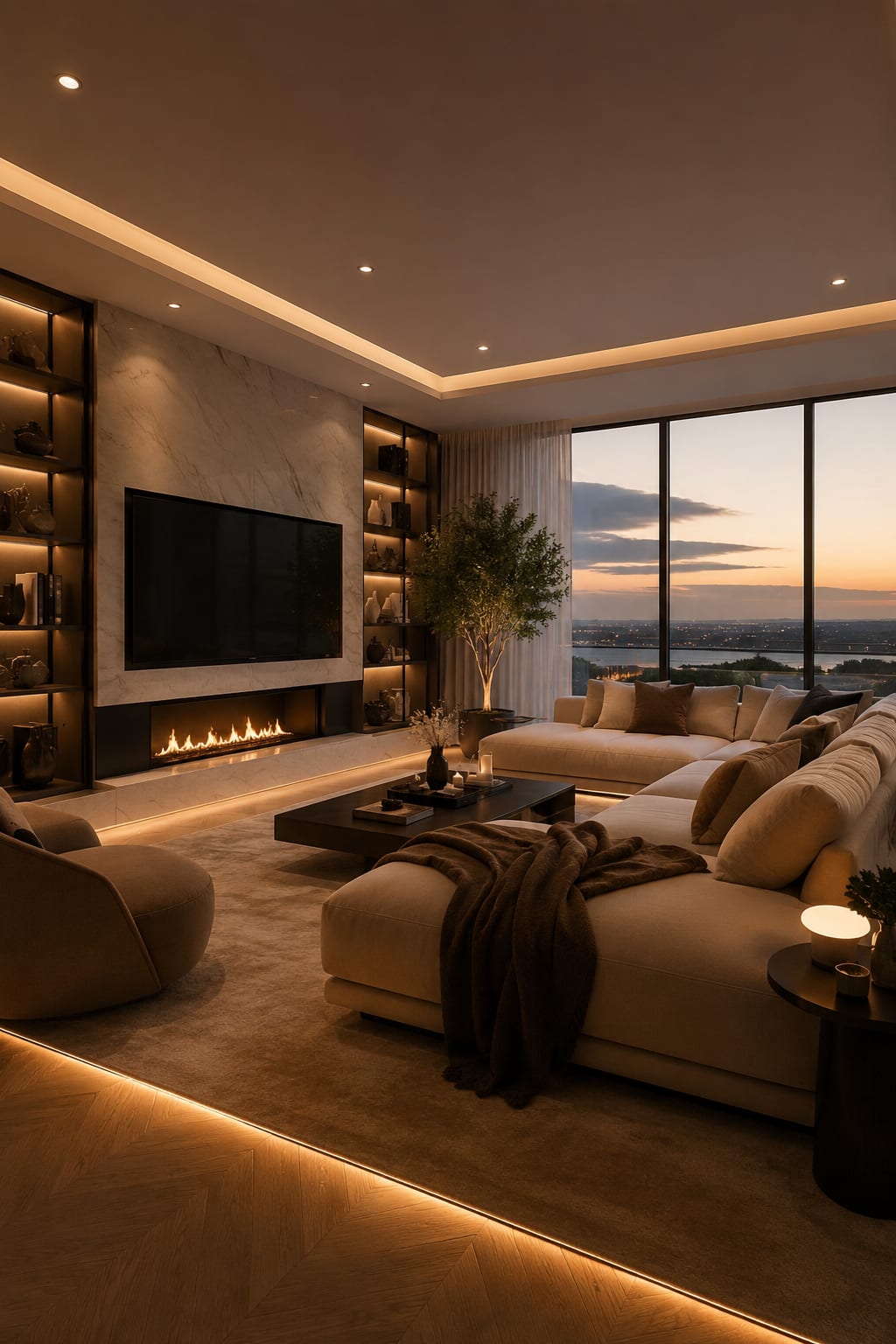
You don't need to knock down a wall. You need to stop fighting the room's size and start using the tricks that make the eye read 'open and considered' instead of 'small and stuffed'.
Why small rooms feel cramped (and what actually fixes it)
A room feels small for two reasons: the eye hits a wall too quickly, and there's too much visual 'noise' competing for attention. Almost every trick below works by fixing one of those two things, either drawing the eye up and across to create a sense of space, or removing clutter and contrast so the room feels calm. Keep that lens in mind and you can judge any decor decision yourself.
1. Lift the eye with vertical lines
When the eye is pulled upward, a room instantly feels taller and more generous. Use floor-to-ceiling curtains hung high above the window (not at the frame), tall narrow shelving, vertical wall panelling or fluting, and tall plants in the corners. The single biggest win here is curtains: mount the rail close to the ceiling and let the fabric drop all the way to the floor. It tricks the eye into reading the whole wall as one tall window.
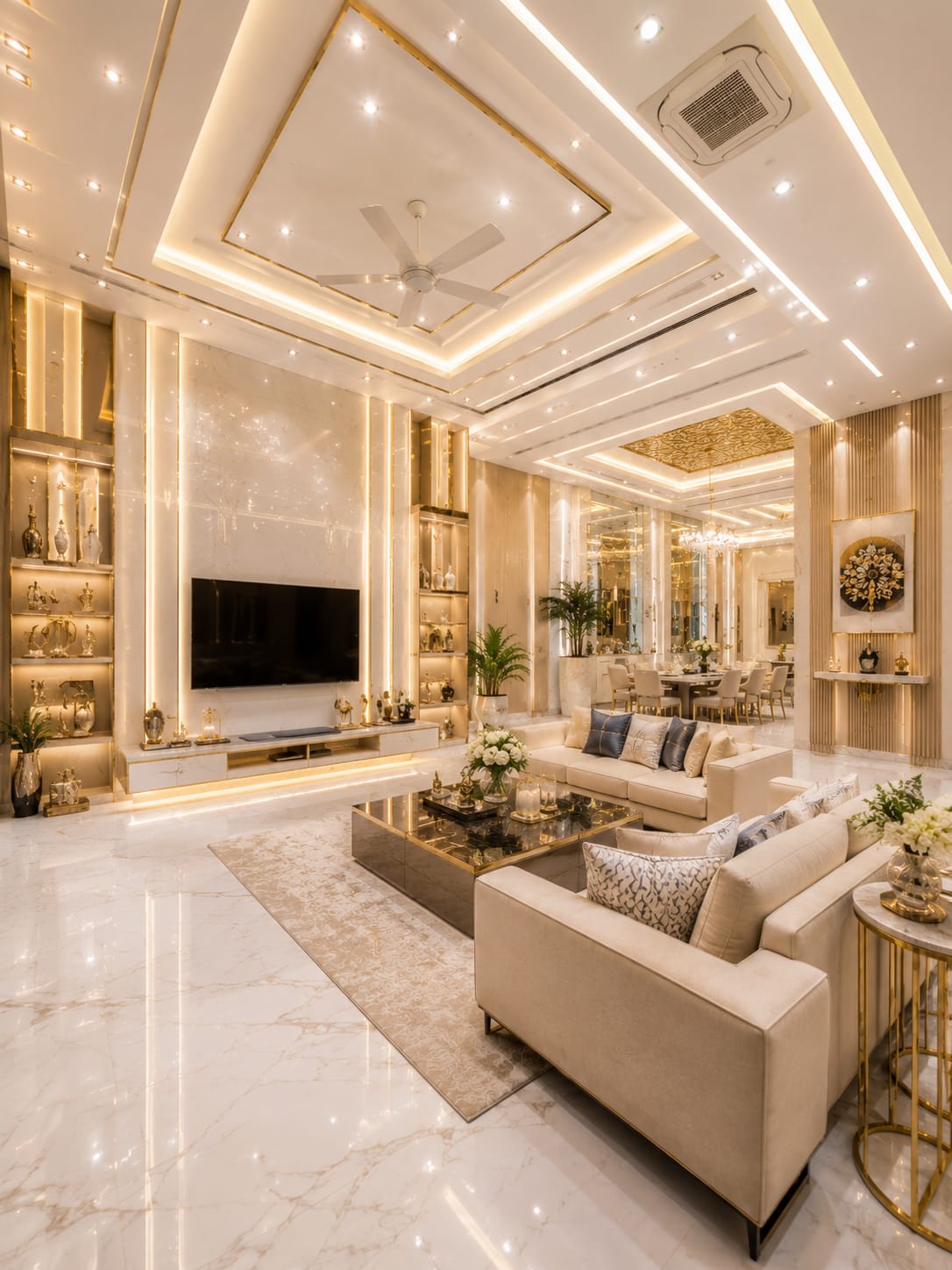
2. Float your furniture
Furniture with visible legs, and pieces mounted on the wall, let light and floor show through underneath, and visible floor reads as space. A sofa on slim legs, a wall-mounted (floating) TV console, and a glass or open coffee table all make the room breathe. Solid pieces that sit flat on the floor, like a boxy storage unit pushed to the ground, do the opposite and visually eat the room.
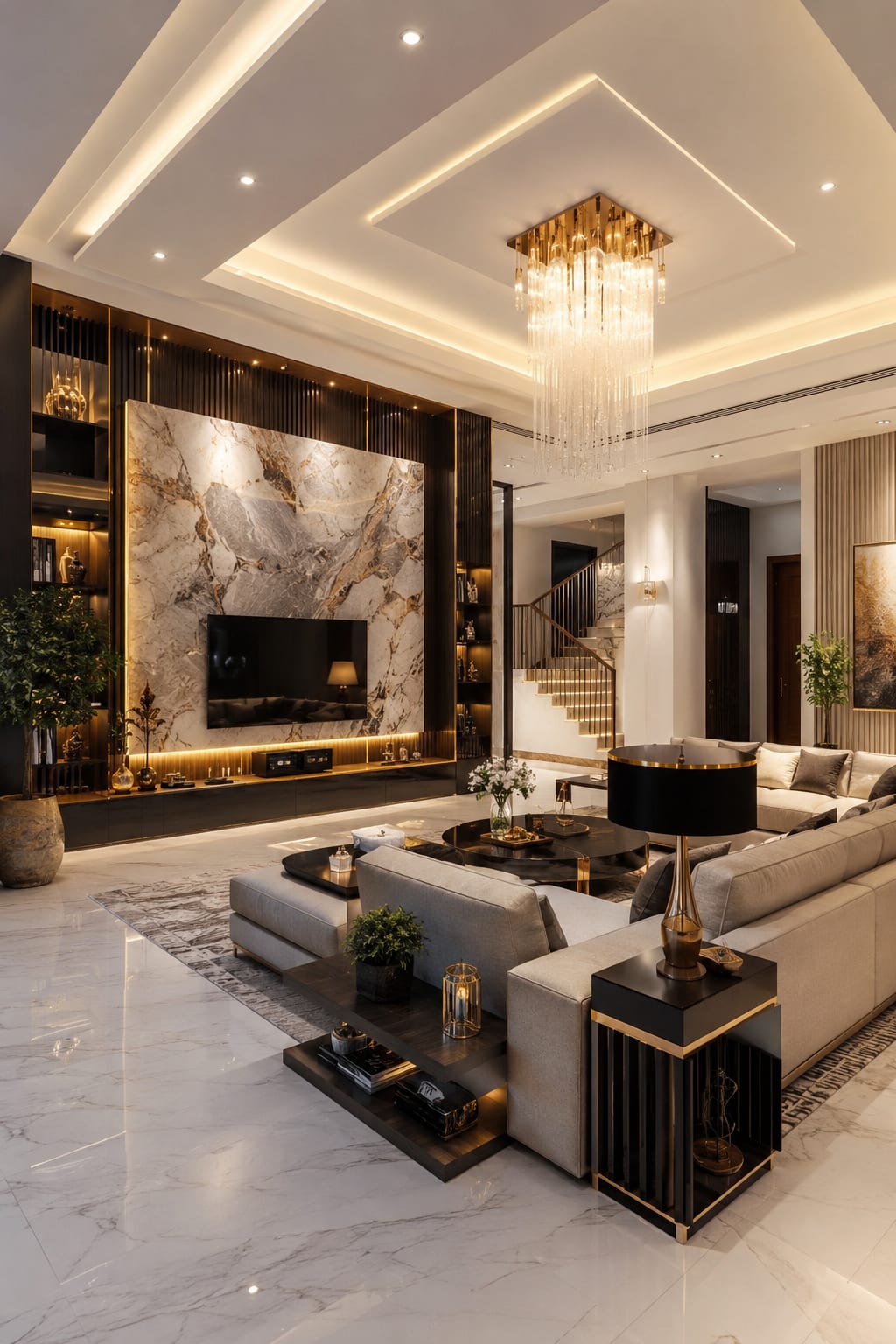
3. The one big mirror trick
Mirrors are the oldest small-space trick for a reason: they double the light and the apparent depth of a room. But there's a right way to do it. One large mirror, ideally placed to reflect a window or a light source, makes the room feel like it continues beyond the wall. Several small mirrors scattered around just add clutter and busy reflections. Go big, go singular, and aim it at the light.
4. Stick to a tight, warm palette
Contrast chops a small room into pieces and makes it feel smaller. A tight, tonal palette, think warm whites, soft beiges, greige, gentle wood tones, lets the eye glide across the room without interruption, which reads as more space and more calm. This is also the single easiest way to make a cheap room look expensive: restraint always reads as luxury.
That doesn't mean boring. Add interest through texture instead of clashing colour, a chunky knit throw, a boucle chair, a linen cushion, a soft rug. You get depth and warmth without the visual chaos that shrinks a space.
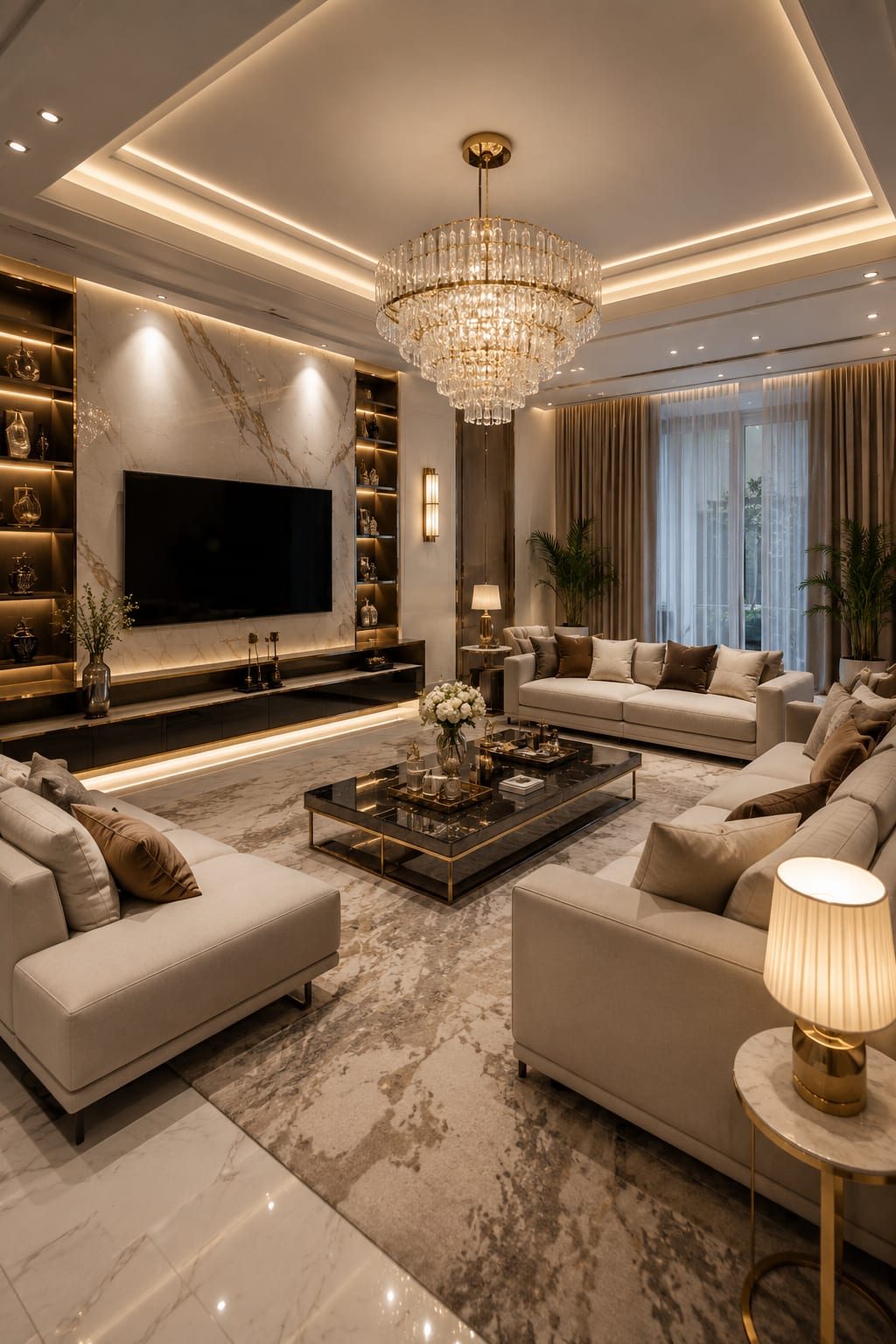
5. Scale down, but not too far
Oversized furniture obviously overwhelms a small room. But the opposite mistake is just as common: filling a small room with lots of tiny pieces, which makes it feel like a doll's house and adds clutter. The sweet spot is fewer, appropriately-scaled pieces. One properly-sized sofa and a single good coffee table beat a sofa plus two armchairs plus three little side tables crammed in around it.
6. Hide the clutter (storage that disappears)
Nothing makes a small room feel cheaper than visible clutter. The fix is closed, built-in-looking storage: an ottoman that opens, a console with doors instead of open shelves, baskets that corral the mess. The goal is clear surfaces. A small room with clean, calm surfaces always feels bigger and more expensive than a larger room covered in stuff.
7. Light it in layers
A single ceiling light flattens a small room and makes every wall feel close. Layered, warm light, a couple of lamps, a glow behind the TV, a softly lit corner, creates depth and pools of light that make the space feel larger and far cosier. (We go deep on exactly how to do this in our warm hotel-lighting guide, it's the highest-impact upgrade for any small space.) Above all, light your dark corners: a shadowy corner pulls the walls inward, while a small lamp or an uplit plant pushes them back out.
Quick wins checklist
Short on time? Start with these five, each one moves the needle on its own:
- Hang curtains high and let them drop to the floor.
- Swap a floor-standing TV unit for a wall-mounted floating one.
- Add one large mirror facing the window.
- Pull the palette tight and warm, kill the clashing colours.
- Replace the single ceiling light with two or three warm, layered sources.
None of this requires more square metres or a big budget, just decisions that work with a small room instead of against it. Get these right and people will swear your living room is bigger than it is. For finished rooms that use every one of these tricks, take a look through the compact, light-filled living spaces in our design gallery and lift the layouts straight into your own home.
Join the conversation
Share your thoughts on this room