Room Designs You Can Recreate Palettes, Lighting and Styling Tips Honest and Independent · No Sponsored Posts Room Designs You Can Recreate Palettes, Lighting and Styling Tips Honest and Independent · No Sponsored Posts

10 Small Room Decor Ideas That Look Expensive (Budget-Friendly Guide for 2026)

Mohsin ShahzadMohsin Shahzad | May 08, 2026
10 Small Room Decor Ideas That Look Expensive (Budget-Friendly Guide for 2026)
Back to all guides

Walk into any hotel room you have stayed in that felt nicer than your own bedroom, even though it was probably smaller. There is a reason for that. Designers know a quiet truth most people miss: looking expensive has almost nothing to do with how much was spent. It comes down to ten small choices that get repeated over and over in luxury rooms, and almost never get applied in regular ones. Below are those ten, each one rewritten as a 5-minute weekend swap, with the exact reason it works and what to actually buy.

The cheapest way to make a small room look expensive is not buying more, it is removing, lighting, and layering what is already there.

1. Lean a Full-Length Mirror Against the Wall
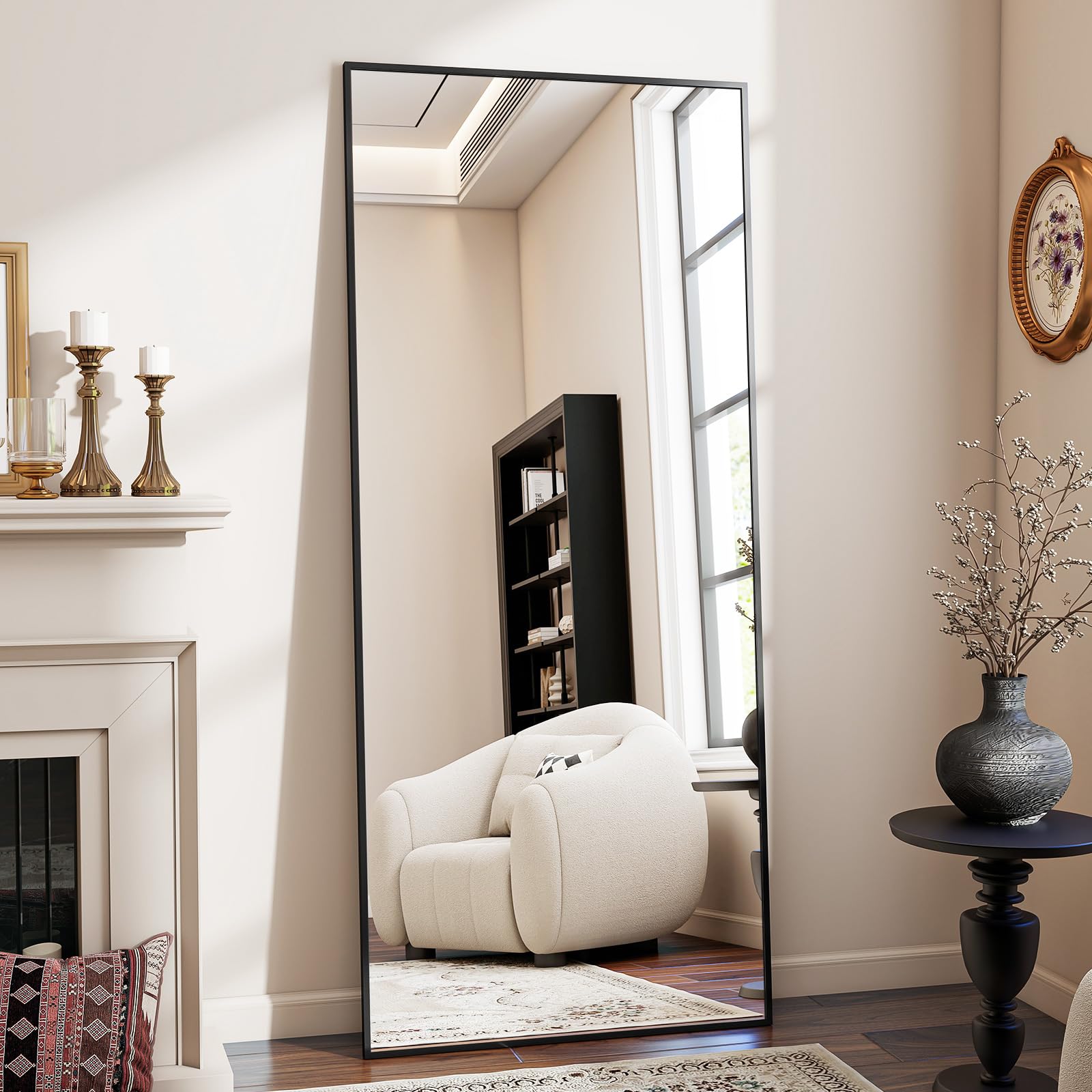
A leaning mirror reflects the window across the room and roughly doubles the perceived light.

If you only do one thing on this list, do this. A floor-leaning mirror placed across from a window is the single most expensive-looking trick in interior design, and it works in any room over 70 square feet. The mirror reflects natural light into corners that never see daylight, makes the wall feel like it goes further than it does, and gives the room that hotel-suite finish nothing else delivers as cheaply.

What to buy: A 65-inch arched leaning mirror in matte black or brushed gold runs $35-55 on most marketplaces. Lean it. Do not drill. The casual lean is part of what makes it look intentional.

2. Throw the Overhead Light Out (Metaphorically)
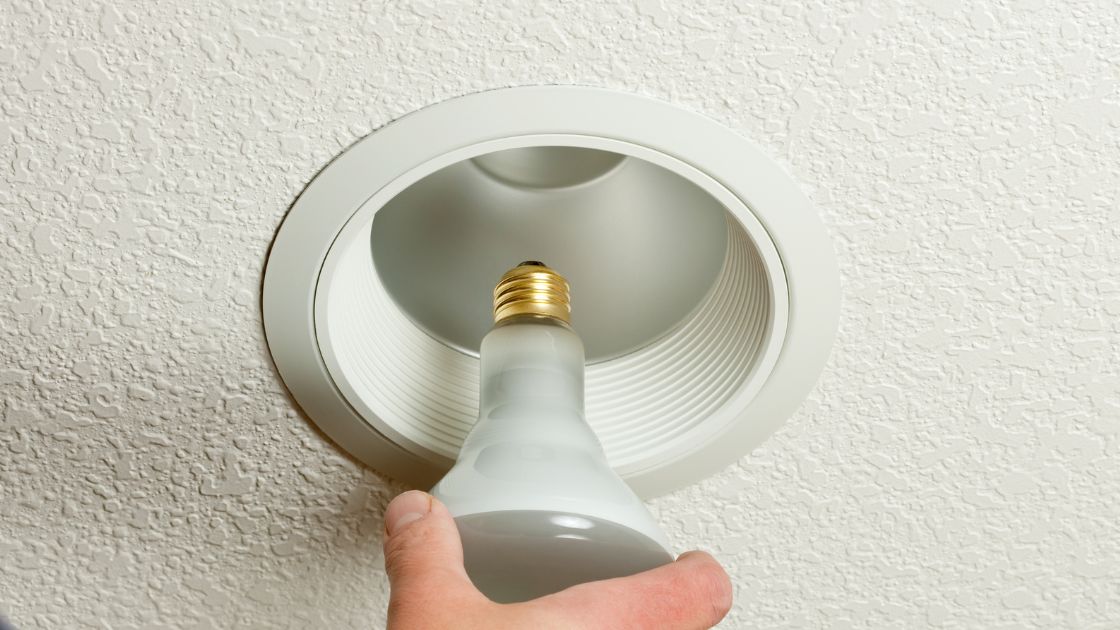
Warm-tone lamps and concealed LED strips replace overhead lighting in nearly every aesthetic room photo on Pinterest.

Cold overhead ceiling light is what makes small rooms look like Airbnbs from 2014. Notice that almost no hotel room uses a single ceiling light, they layer two or three warm-tone sources at eye level and below. Adding a single 2700K table lamp or a warm LED strip behind the headboard accomplishes the same effect for under $15.

Stay away from: RGB color-changing strips. They scream gaming setup, not luxury. Single warm-white tone only, ideally 2700K-3000K. The strip should never be visible, only the glow.

3. Remove One Piece of Furniture (Whichever You Use Least)

Negative space, the gaps between furniture, reads as expensive. Crowded floor plans read as cheap.

Walk into your room and identify the one piece of furniture you used least this week. Get rid of it. That bookshelf you do not use, the chair nobody sits in, the second nightstand piled with junk, gone. The space it leaves behind is worth more than the piece itself ever was. Pinterest-perfect rooms are not full. They are intentionally half-empty.

The rule designers use: If a piece does not serve a daily purpose or anchor a corner visually, it is filler. Filler furniture is the loudest signal of a small, cheap-looking room.

4. Pick Three Colors. Stop.

Three colors, one base neutral, one wood tone, one accent. Anything beyond that starts to look chaotic.

The fastest tell that a room was decorated without a plan is when it has six or seven colors fighting on the same wall. Hotels, designer apartments, and every Pinterest room you have saved use the same simple system, one base neutral (warm beige, soft grey, or cream), one wood tone (warm oak or walnut), and one accent (terracotta, sage, dusty blue). That is it. Three colors total.

  • Walls and large surfaces: the base neutral
  • Furniture and frames: the wood tone, and keep it consistent (do not mix warm oak with cool ash)
  • Cushions, throw, one art piece: the accent, used sparingly, not everywhere

5. Hang One Big Piece of Art Above the Bed
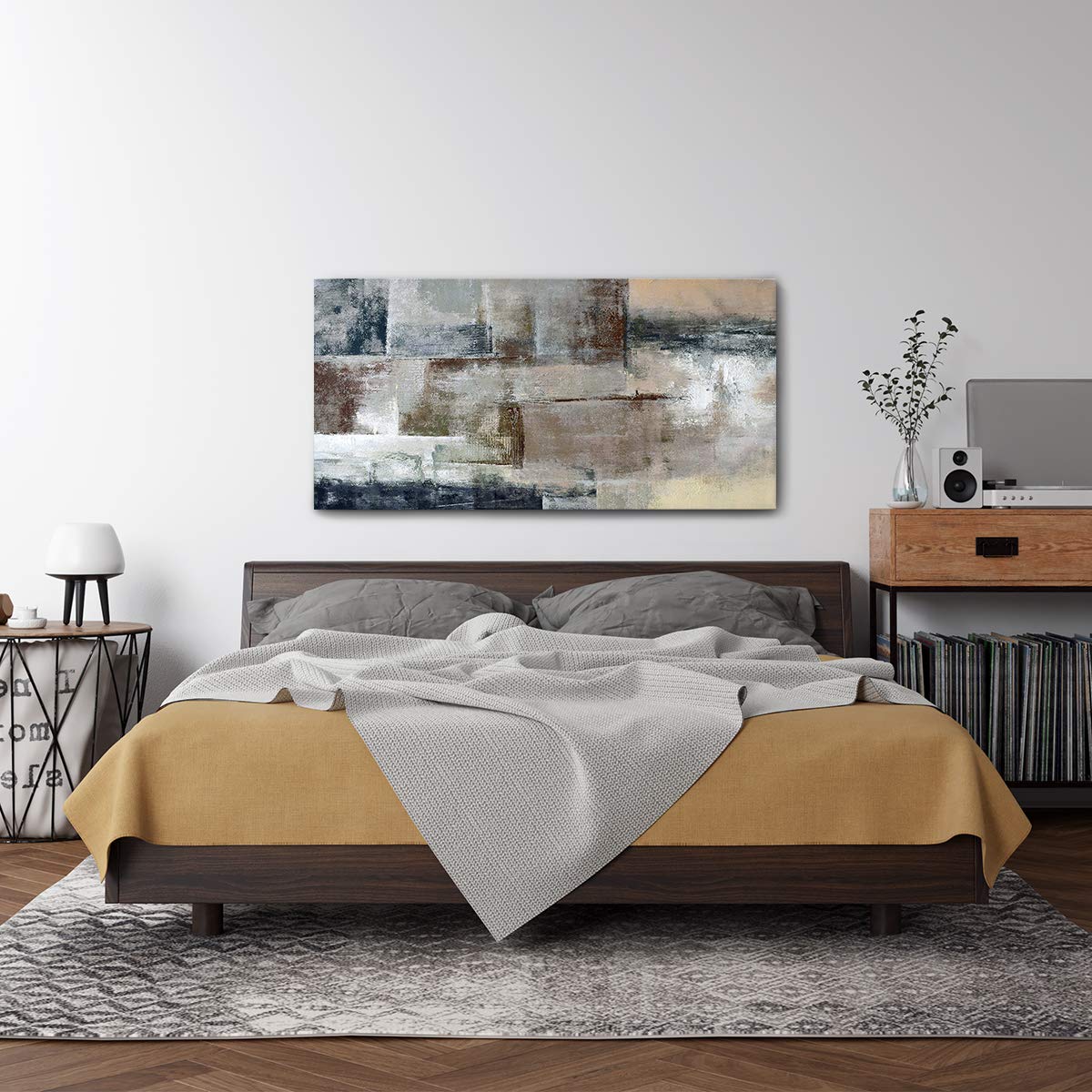
One large statement piece beats three small mismatched frames every time. Aim for art roughly two-thirds the width of the bed.

There is a specific kind of cheap-looking decor mistake that almost everyone makes: small framed prints scattered around the wall. Designers do the opposite. One large statement piece above the bed, roughly two-thirds the width of the headboard, hung at eye level (about 57 inches from floor to center). Black-and-white photography, abstract line art, or a single landscape, anything that holds the wall on its own.

Cheapest version: Print a free Pinterest aesthetic poster at any local print shop on matte paper (about $5), buy a simple natural-wood or matte black 24x36 frame ($20-25), done. Total $30. Looks like $200.

6. Float Two Shelves on One Wall

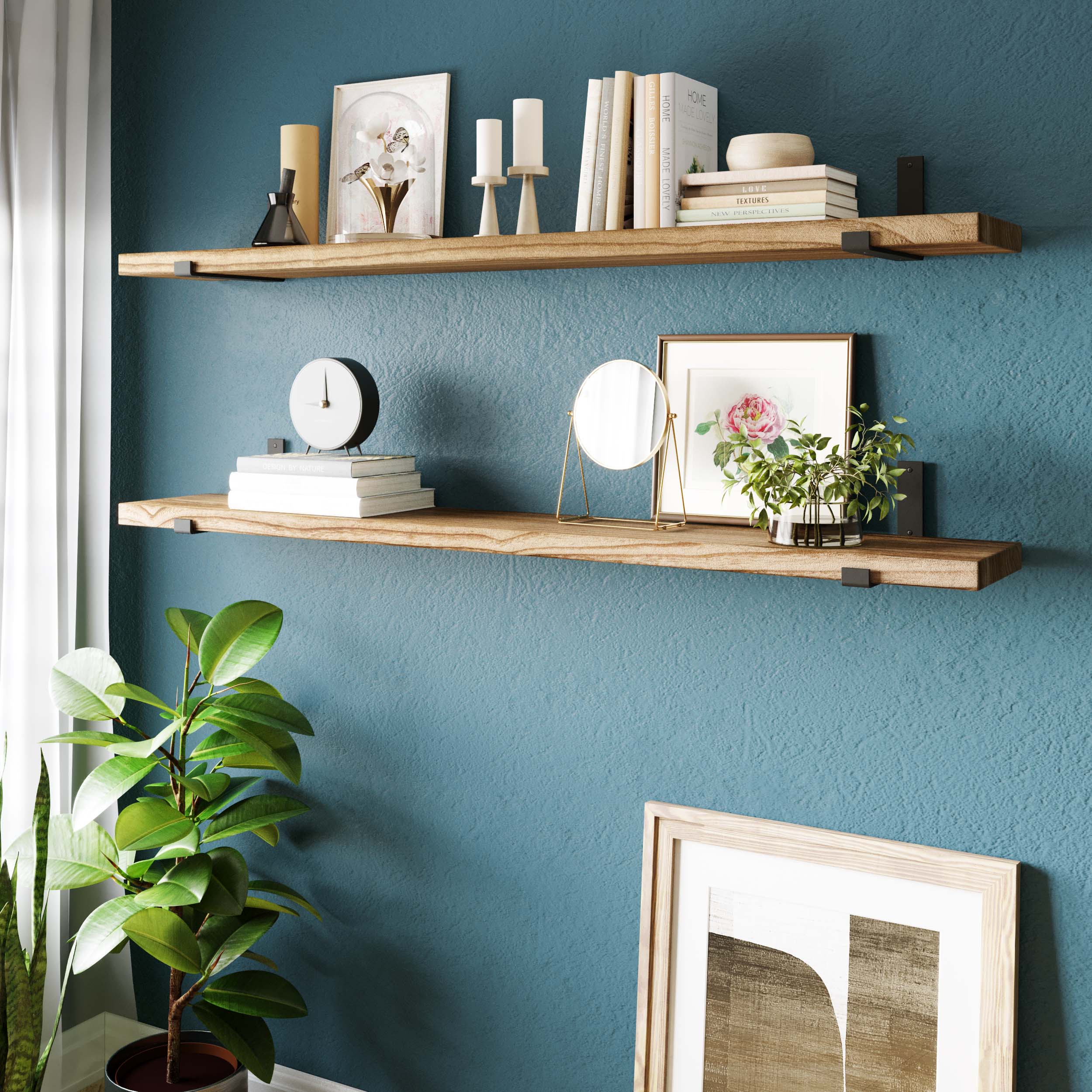
Floating shelves give you display surface without eating floor space. Two slim ones beat one bulky bookcase.

Bookcases were a great idea in 2008 and are a terrible idea in a small room in 2026. They eat floor space and visually chop the room in half. Two slim floating shelves on a single wall, stained natural oak or painted matte black, hold the same books, plants, and small ceramics. The floor stays open. The eye stays calm. The room reads larger.

Styling rule: Group in threes, mix heights, leave roughly a third of each shelf empty. The empty space is the styling, not the items. Cluttered shelves are how rooms lose the expensive look.

7. Make the Bed Like Someone Else Is Going to See It

A boutique-hotel-style bed: layered linen, two accent cushions, one folded throw at the foot.

The bed is roughly 40 percent of the visual weight of a bedroom. A poorly made bed cancels out every other decor choice in the room. A boutique-hotel bed has a specific recipe: tucked fitted sheet, slightly oversized duvet that drapes off the sides, two accent cushions in front of the standard pillows, and one folded throw at the foot.

  • Linen or washed cotton over polyester, texture is what reads as expensive, not thread count
  • Stick to two neutral tones, cream plus beige, or grey plus white. Never both at once
  • One textured chunky-knit or waffle throw folded across the foot adds the depth that ties it all together

8. Add One Big Plant. Not Five Small Ones.
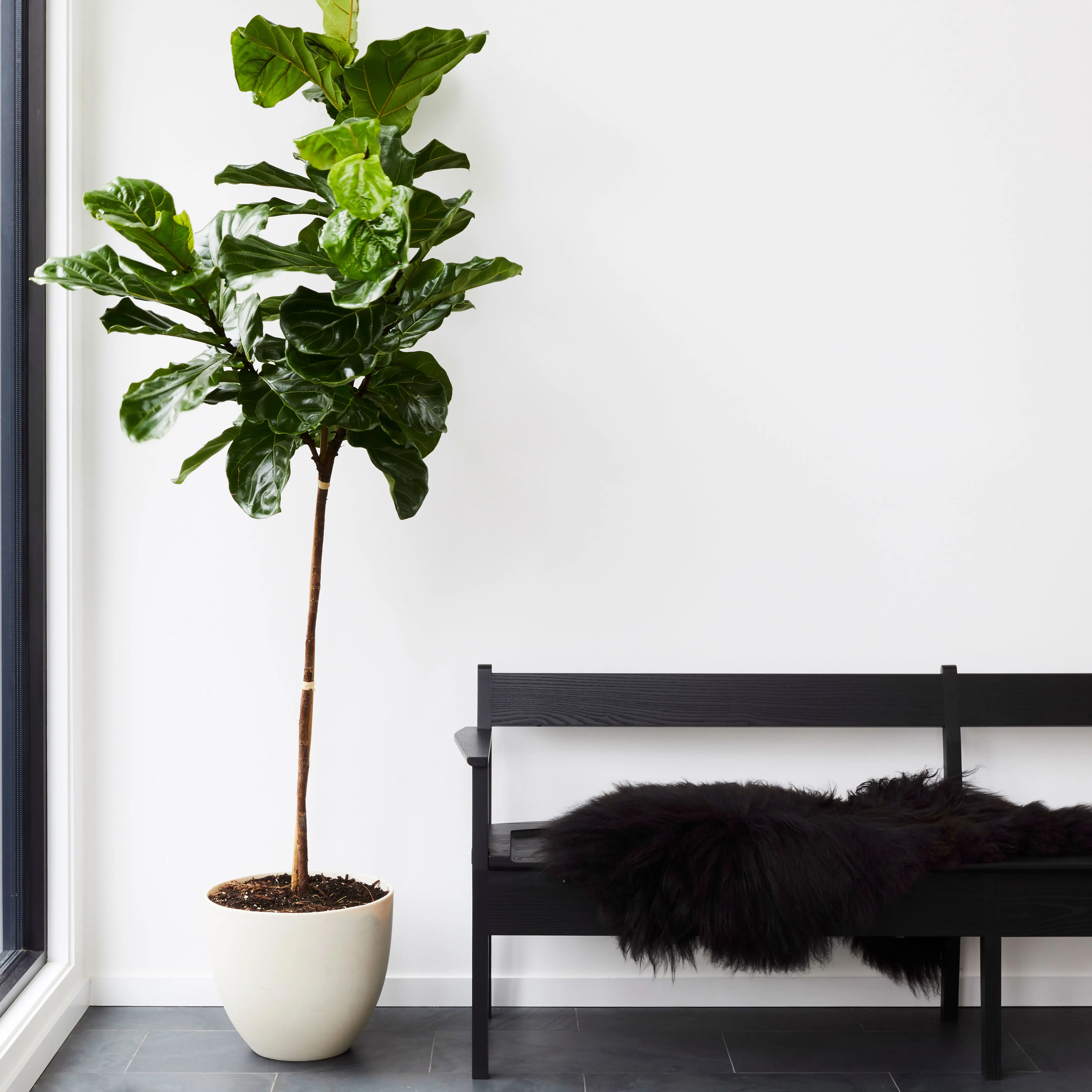
One sculptural plant in a clean planter always reads more expensive than a cluster of small succulents.

Many small plants scattered around look like a hobby. One large statement plant in a clean planter looks like a design choice. A snake plant in a matte ceramic pot. A medium monstera on a simple wooden stand. A tall fiddle leaf in a corner that was dead before. Any one of these does what five succulents on a windowsill cannot, give the room a single, calm focal point.

Cheapest version: A medium snake plant in a matte cream ceramic pot runs $18-25 total. It survives low light, missed waterings, and roughly five years of indifference. Skip the woven basket overlay, the bare pot looks cleaner.

9. Hide Everything Plugged In

Clear surfaces, every charger, cable, and stray item out of sight, is what separates designer rooms from regular ones.

Clutter is the loudest possible signal of a cheap-looking room, and the worst kind of clutter is the modern kind: chargers, cables, water bottles, half-burned candles, mail, packaging. Walk into any expensive-looking room and the surfaces are clear. The room is not empty, it just hides its function.

  • Matching woven or fabric storage bins on shelves swallow daily clutter without looking like storage
  • Pick nightstands and desks with at least one drawer, open shelving is a clutter trap
  • Adopt the 60-second clear rule: every evening, clear surfaces. Takes one minute. Changes the entire room

10. Buy a Rug That Is Too Big for the Bed
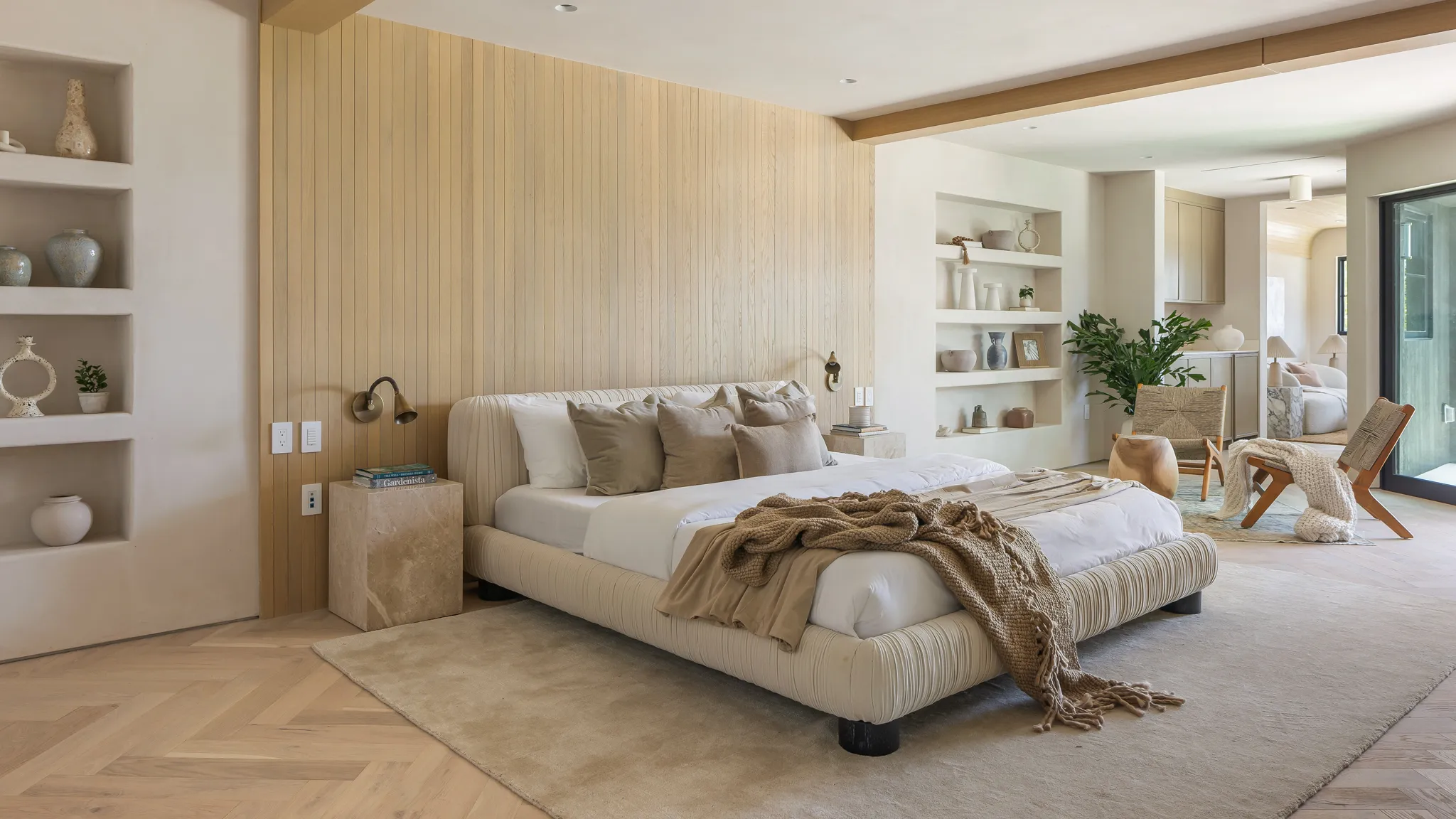
The rug should extend at least 18 inches past the sides of the bed. Smaller rugs make the room feel smaller, not bigger.

Most people pick rugs too small. A rug under a bed should extend at least 18 inches past either side, running perpendicular underneath. A 5x7 rug looks like a bath mat. An 8x10 rug under the same bed transforms the room. Jute, low-pile wool, or a flat-weave in cream or oatmeal, that combination shows up in nearly every expensive-looking bedroom you have ever saved.

Pattern rule: Solid neutral or low-contrast geometric only. Busy patterns shrink small rooms visually. The rug is supposed to anchor, not perform.

The Bottom Line

Five of these done well over a single weekend will make the room feel like a different space. Three would still make a noticeable difference. None of them require more than $100, and most of them require less than $50. The expensive feeling is not in the price tag, it is in the discipline of removing more than you add.

Luxury is not the things you can see. It is everything you decided to take out., Zaihsin Home Decor Editors

Frequently asked questions

What single change gives the biggest improvement for the least money?

Turning off the overhead light and putting two warm lamps at low level in its place. It costs the price of two lamps and bulbs, needs no permission in a rental, and changes how expensive a room looks more than anything else at that price.

What size should art above a bed be?

Roughly two-thirds the width of the bed, hung so the bottom edge sits about 15 to 20 cm above the headboard. One large piece at that scale looks deliberate; several small frames spread across the same wall read as filling space rather than decorating it.

How do I hide cables without drilling into walls?

Adhesive cable channels painted the wall colour, cable sleeves behind furniture, and a box or basket for the plug block. None of it needs a drill or leaves marks. Visible cable is one of the details that makes an otherwise tidy room look unfinished.

Can a rug be too big for a room?

It can, but almost nobody errs that way. The usual guide is 20 to 30 cm of bare floor left around the edges. The far more common mistake is a rug so small that it makes the furniture look like it is floating away from it.

Does the three-colour rule count neutrals?

Yes, white, beige and black all count. The point is limiting how many distinct hues compete, not banning neutrals. What you can add freely is variation in texture and in the shades of those three colours, which is what stops a tight palette looking flat.

Join the conversation

Share your thoughts on this room

  • No comments yet, be the first to share how you would style this room.