

1. Claim every inch under the stairs
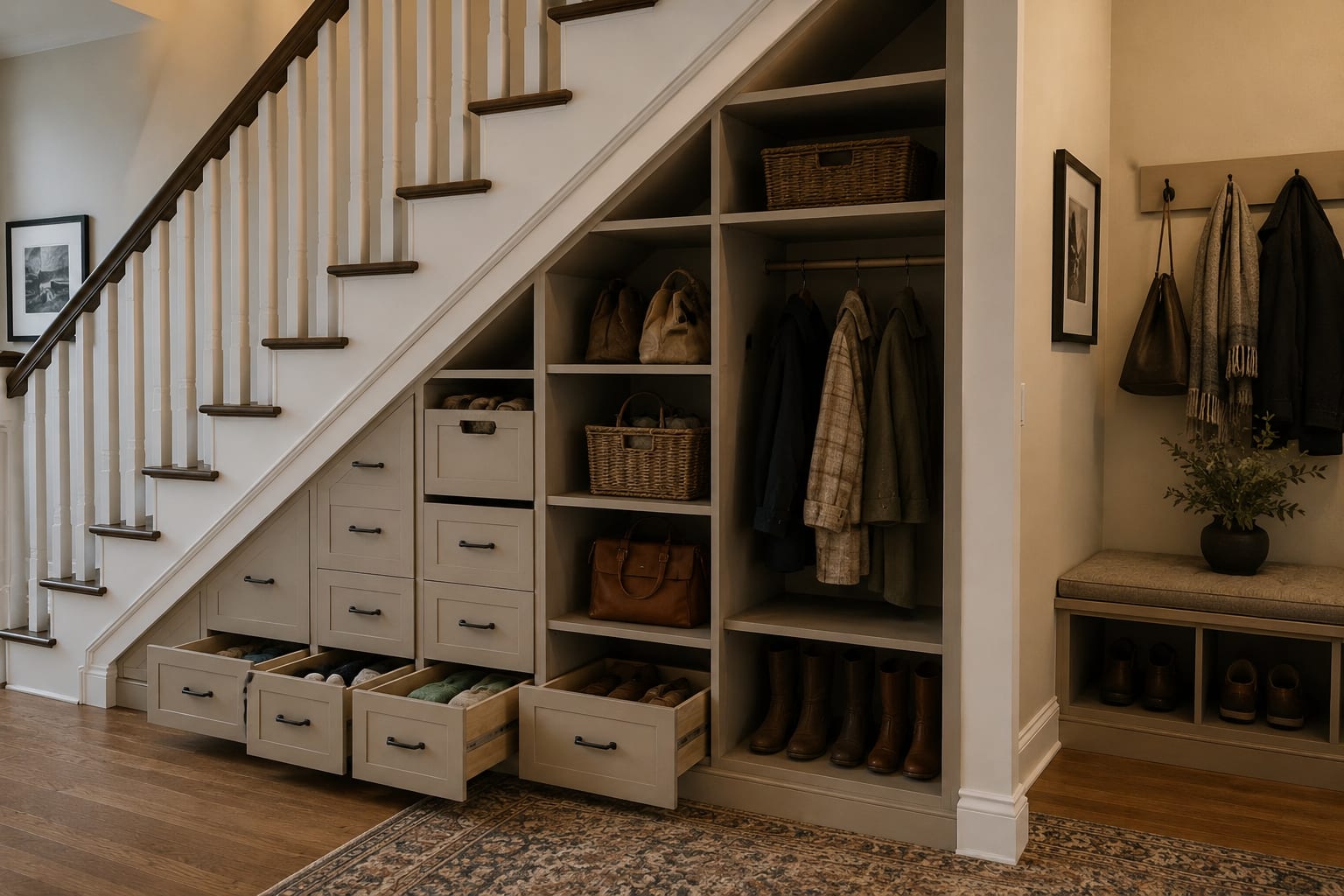
In a small home the void under the staircase is the biggest piece of free storage you own. Mix the types so it works hard: pull-out drawers at the front for shoes, open cubbies for bags and baskets, a short hanging rail for coats, and a low shelf for boots. Everything you use on the way out of the door lives in one tidy wall instead of piling up on the floor.
Try this: put the tallest hanging section at the high end of the slope and step the drawers down to follow the stairs, so not a single centimetre of height is lost.
2. Build a proper drop-zone by the door
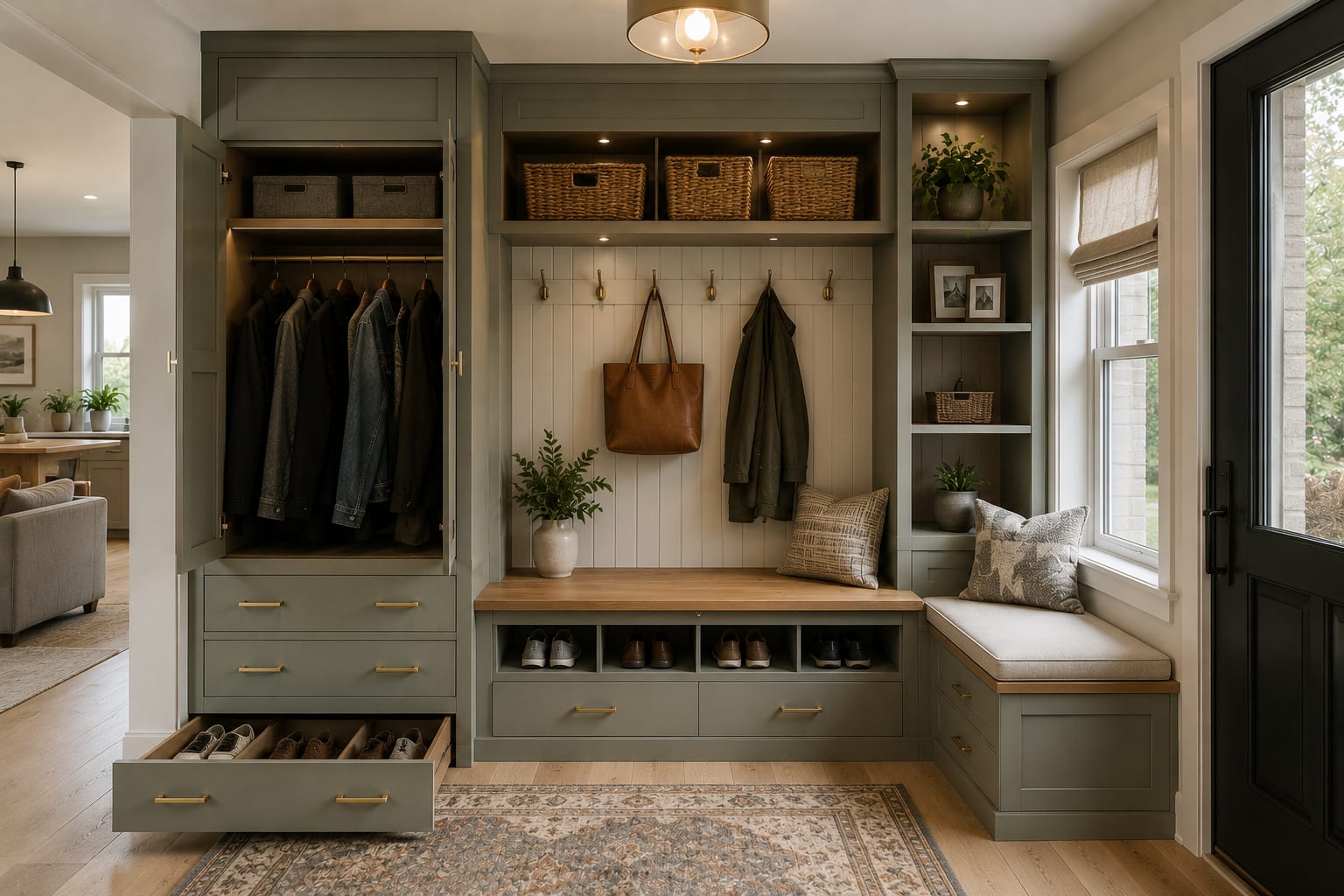
Most clutter in a small home lands within a metre of the front door. A built-in drop-zone catches it: a row of hooks for coats and bags, a bench to sit and take off shoes, cubbies and a pull-out drawer underneath for footwear, and baskets up top for hats and gloves. Once everything has a spot right where you drop it, the hallway simply stays clear.
Try this: give every family member one hook and one cubby of their own; ownership is what keeps a shared drop-zone tidy without any nagging.
3. Hide a guest bed inside a wall of storage
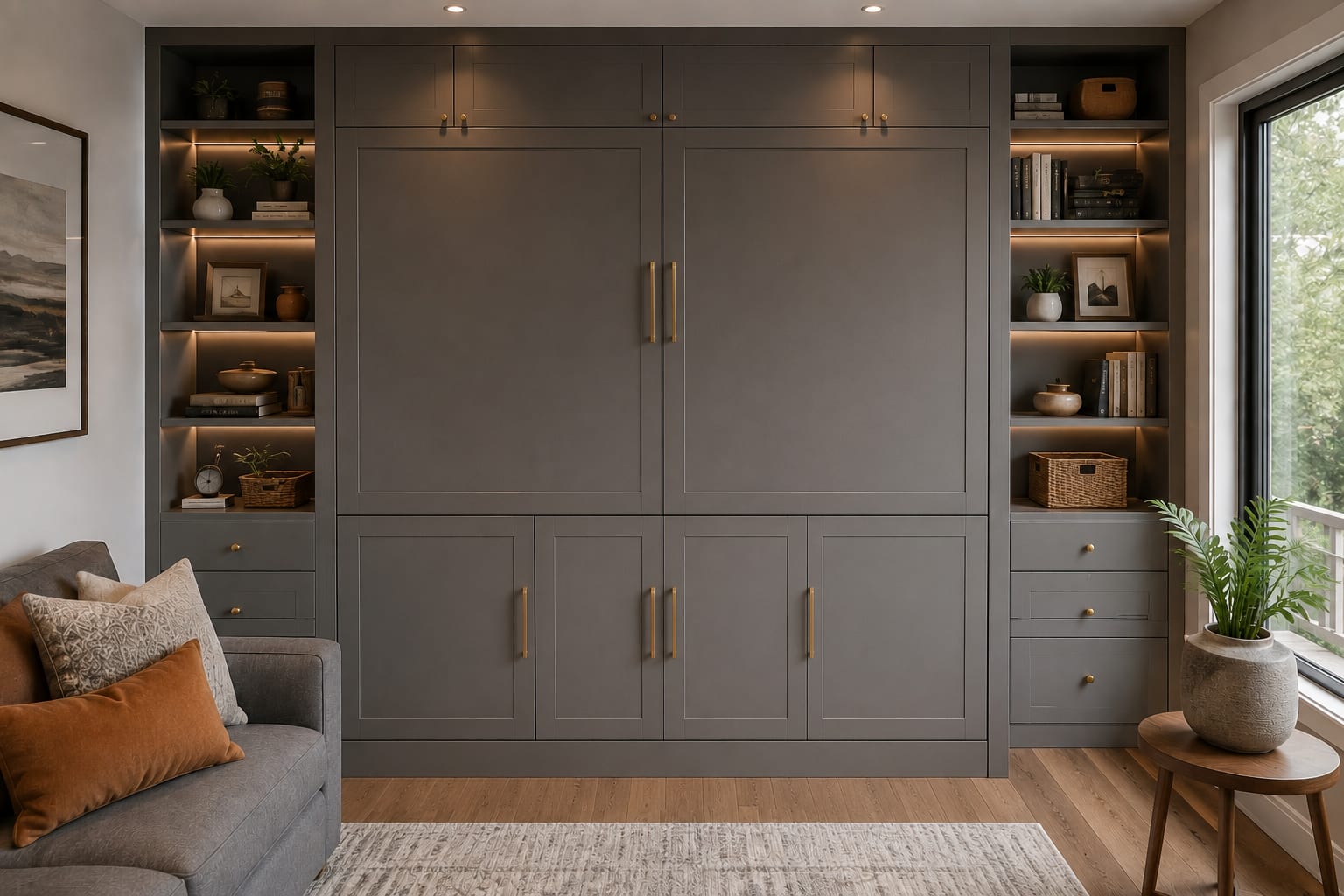
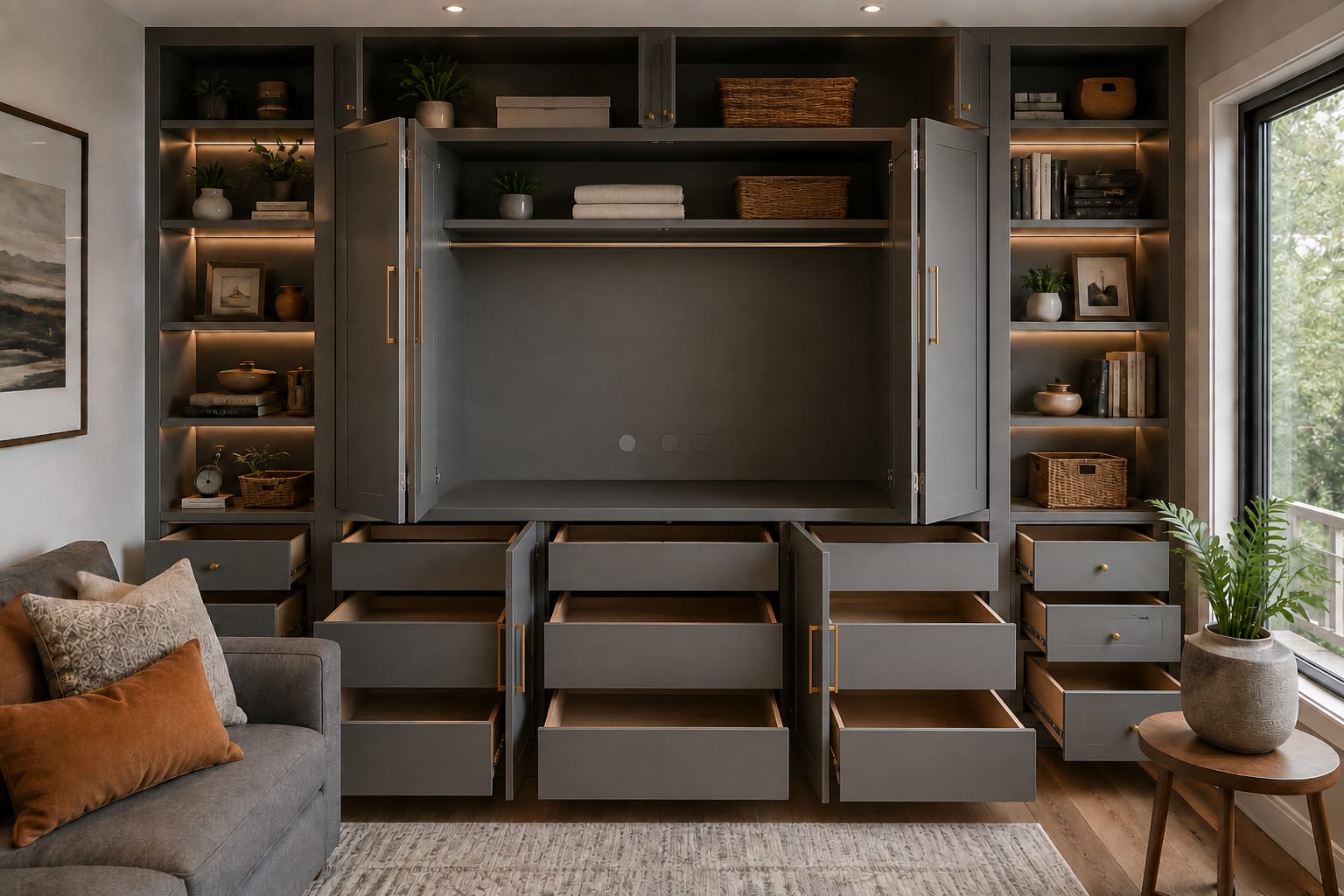
This is the ultimate small-space trick: a wall that is a study or lounge by day and a spare bedroom at night. Closed, it reads as smart built-in shelving and drawers. Pull it down and a comfortable guest bed appears, with storage tucked into every surrounding panel. One room quietly does the job of two, which is priceless when floor space is tight.
Try this: keep the bedding stored in the drawers right beside the bed frame, so making up the guest bed takes a minute and nothing has to be carried in from another room.
4. Make the TV wall do the storing
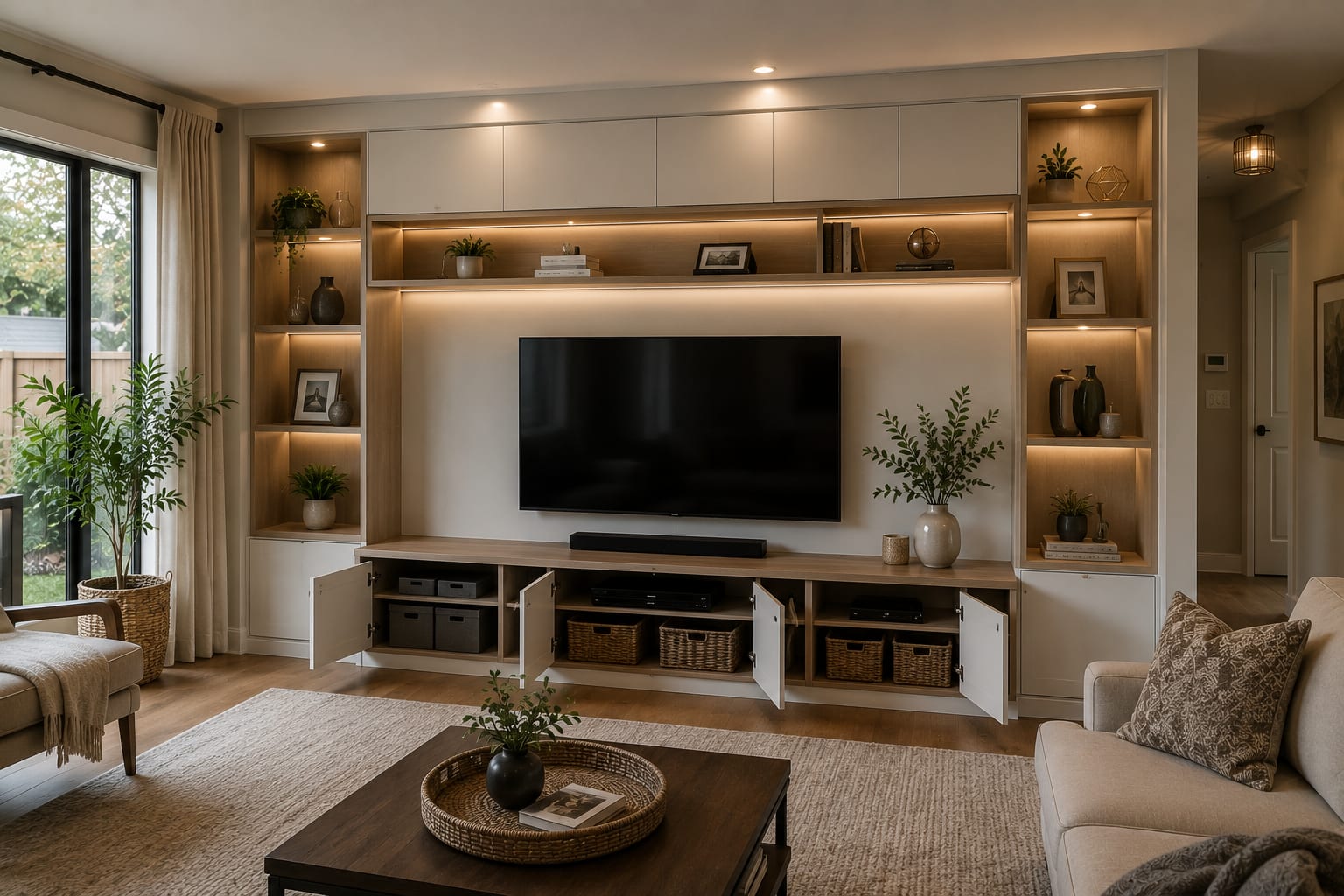
In a small lounge the media wall is often the only big surface you have, so let it hold more than the television. Keep the open, lit shelves for a few nice pieces, and put the real clutter, remotes, games, cables and chargers, behind closed doors in labelled baskets below. The room looks styled and calm while everything messy stays completely out of sight.
Try this: run one basket for each category (remotes, chargers, games) so tidying the lounge is just a case of dropping things into the right box.
5. Find hidden storage in the bathroom mirror and vanity
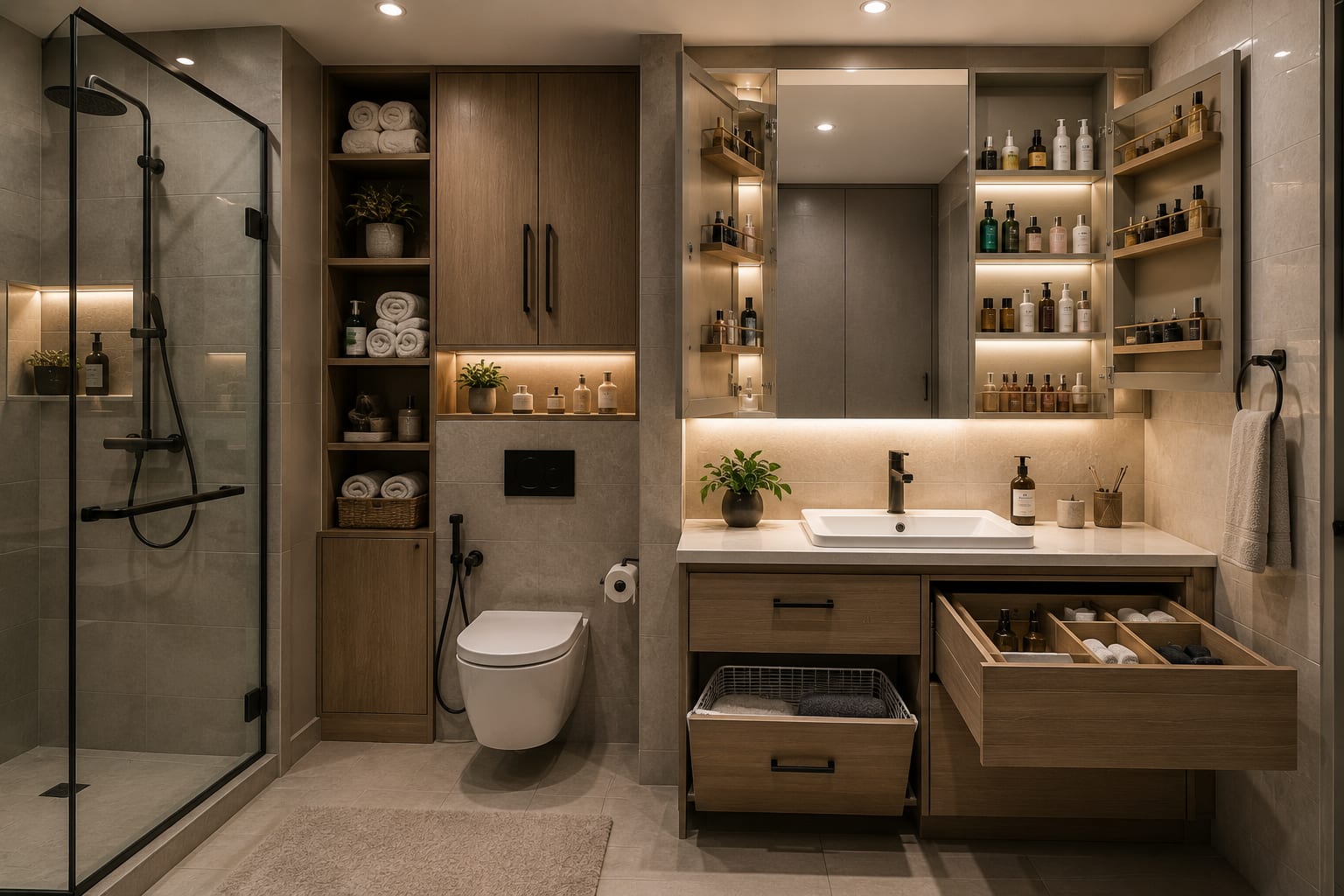
Small bathrooms waste storage in the walls and around the plumbing. A mirror cabinet with slim pull-out sides turns the space behind the glass into rows of neatly held bottles, while drawers that notch around the pipes use the awkward space under the sink. Add one tall, narrow shelf tower for rolled towels and even a tiny bathroom stops feeling cramped.
Try this: store daily toiletries in the mirror cabinet at eye level and keep the vanity drawers for backups and bulky items, so the things you reach for every morning are always front and centre.
6. Turn every kitchen cupboard into a pull-out
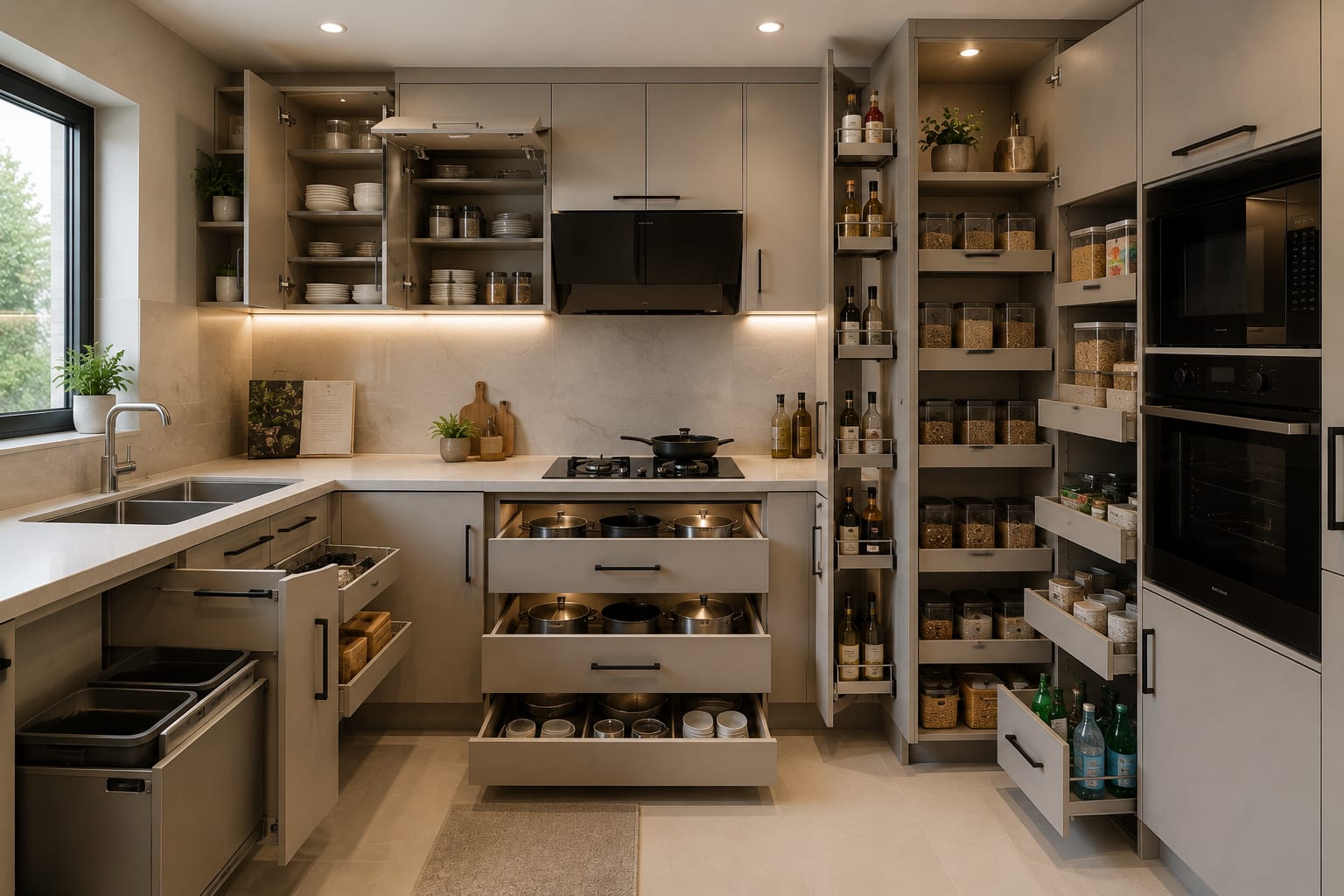
A small kitchen almost doubles in capacity when static shelves become pull-outs. A full-height pull-out larder brings every jar and bottle out to you at once, deep drawers hold heavy pans far better than a low cupboard you have to crouch into, and a concealed pull-out bin frees the floor. Nothing gets lost at the back, because there is no back you cannot reach.
Try this: keep the heaviest pans in the deep drawers nearest the hob and the everyday dry goods in the pull-out larder, so the things you use most move the shortest distance.
How to plan storage in a small home
Walk your home and note where clutter actually lands, by the door, on the kitchen counter, on the bathroom sink, and give each of those spots dedicated storage first. Then hunt for dead space you are not using: under the stairs, the full height of a wall, the void around bathroom pipes. That is where the easy wins are, because you are not stealing space from the room, you are finding space that was always there.
Want more ideas? These pair perfectly with my guide to modern home storage, which covers storage beds, walk-in pantries and more across the whole house.
Join the conversation
Share your thoughts on this room