

Start with activities, not decorative fittings
Before choosing pendants or LED profiles, list what happens in the room after sunset. A bathroom needs honest face light and safe shower illumination. A kitchen needs shadow-free worktops. A bedroom needs a gentle route to the wardrobe without waking the whole room. A living room needs enough background light for comfort without putting reflections across the television. Once those needs are covered, architectural accent light can reveal marble, timber or display objects. Reversing that order produces a dramatic photograph but an inconvenient home.
1. Dark bathroom lighting: separate grooming from atmosphere
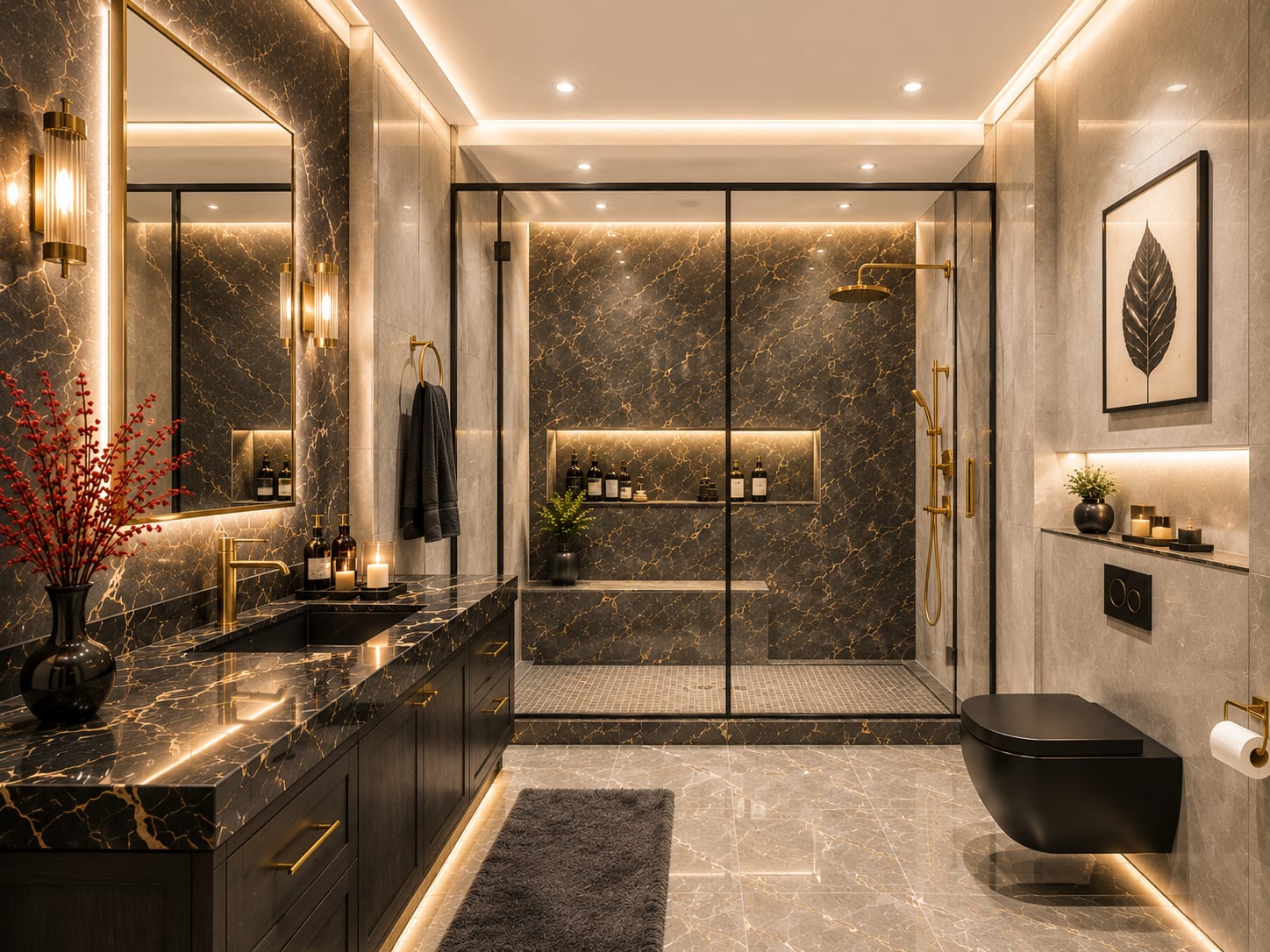
The bathroom makes its hierarchy easy to read. Vertical sconces beside the mirror illuminate the face, a ceiling wash supports general movement, and the shower niche creates a lower focal line at the far end of the room. Under-vanity and low wall lighting are atmospheric additions; they should never be the only light available for cleaning or inspecting wet surfaces. The pale wall and floor stone also matter because they return light into a scheme dominated by dark marble.
For the mirror, use diffused light on both sides of the face or a properly specified illuminated mirror with strong colour rendering. A downlight directly above the head creates shadows beneath the brow, nose and chin. Shower fittings must have a rating suitable for their location, and transformers or drivers must remain accessible rather than being sealed behind stone. Put grooming light, general light and night-level ambience on separate controls so the room works at 7am and midnight.
2. A dark kitchen needs light on the work, not just the cabinets
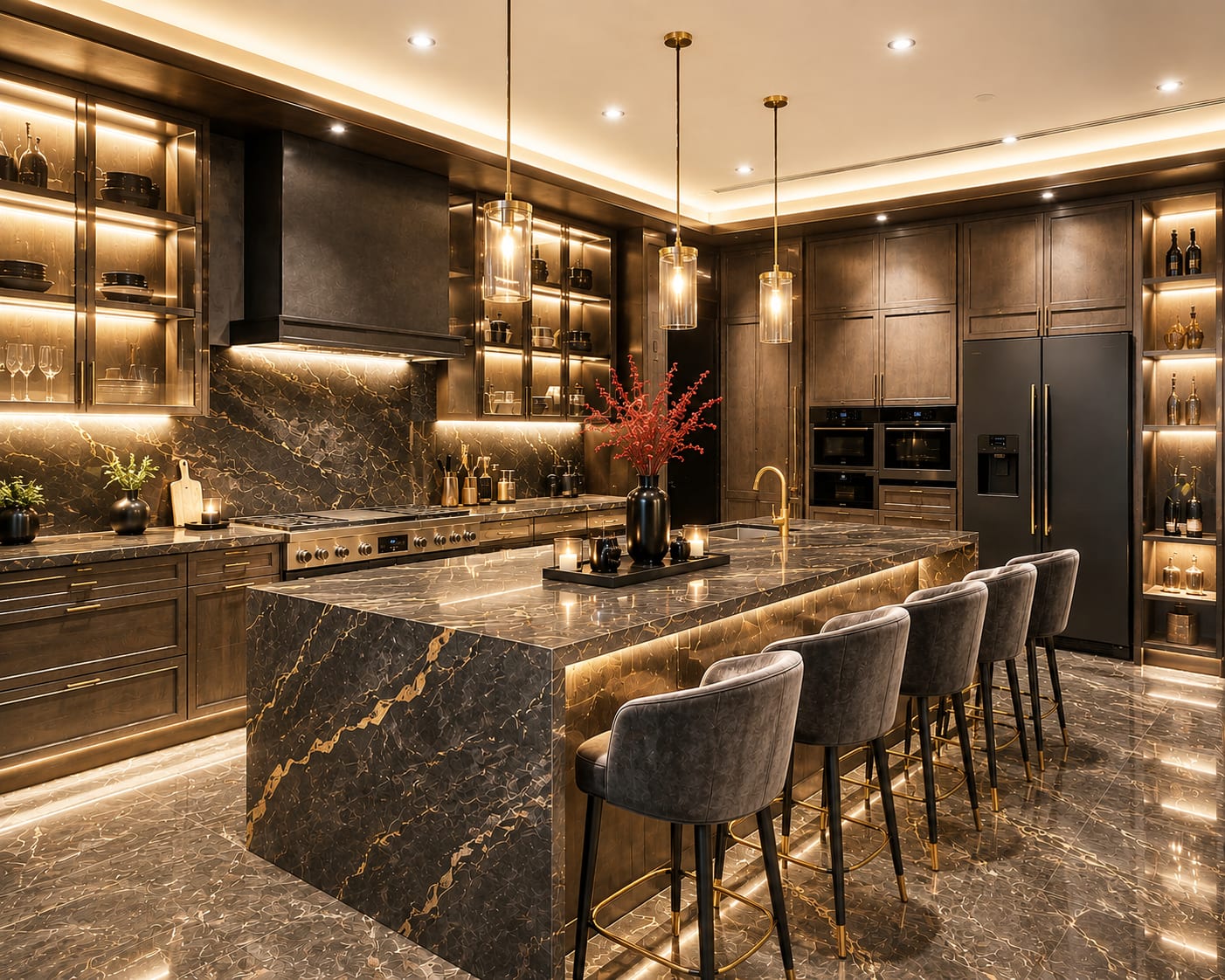
Dark kitchens expose weak lighting plans immediately. This room uses continuous under-cabinet light to wash the splashback and work surface, while pendants define the island and illuminated cupboards break up tall runs of cabinetry. The ceiling cove softens the overall contrast, but it is not responsible for food preparation. That distinction keeps the room from becoming a bright ceiling floating above dark, unusable counters.
Position worktop lighting toward the front of the cabinet so the user's body does not cast a shadow over the chopping area. Use a diffuser to prevent reflected dots appearing in polished stone. Pendants should support the island rather than block sight lines or dazzle seated people; test their height with a temporary mock-up. Light only the display cupboards you can keep visually ordered. If every shelf is equally bright, storage becomes visual noise and the room loses its focal point.
3. Entryway backlighting should guide the eye inward
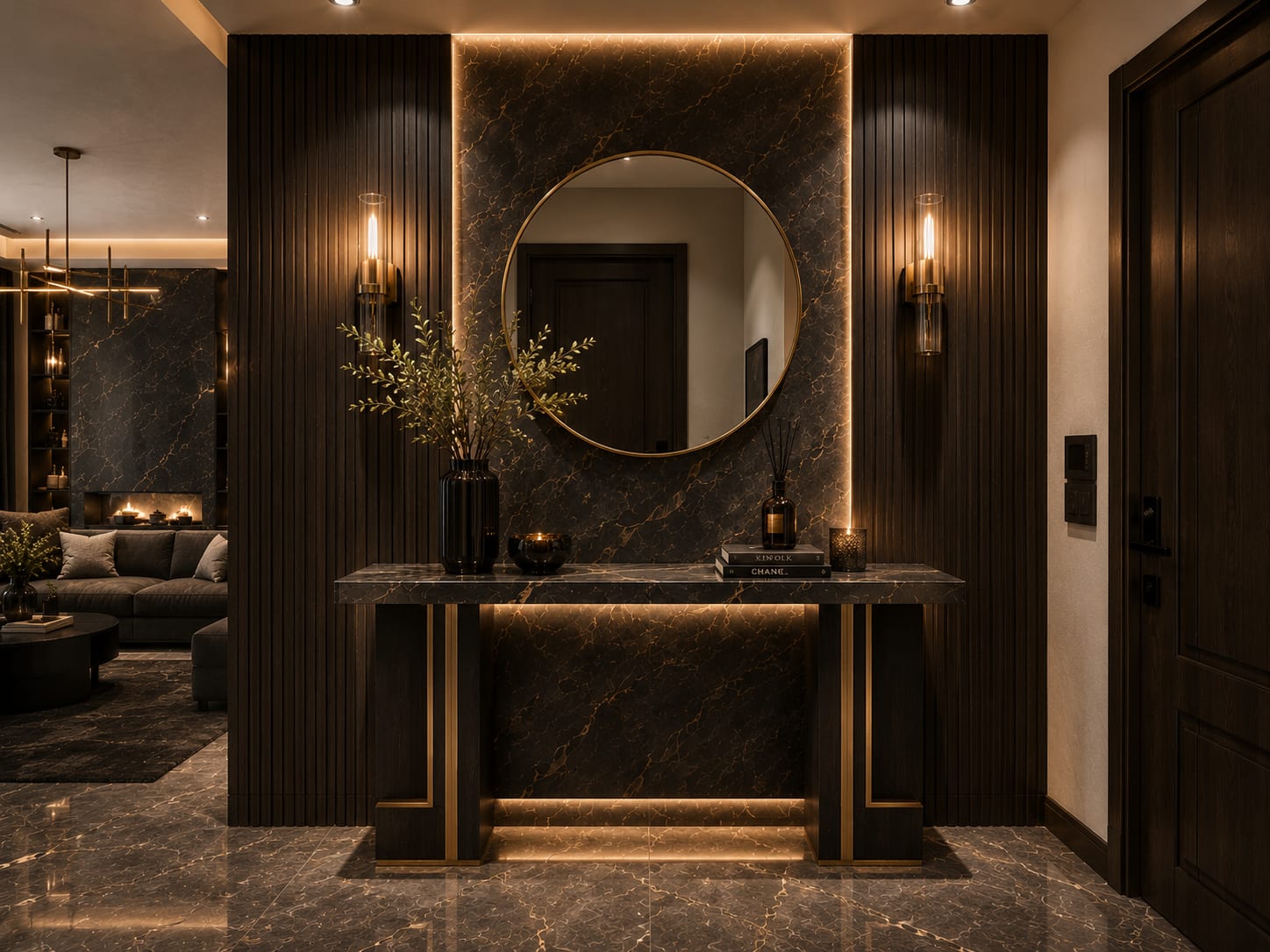
An entryway is viewed in motion, so it benefits from one clear illuminated destination. Here the marble panel and round mirror form a vertical beacon, while the fluted timber stays mostly in shadow. Slim sconces reinforce the symmetry and a concealed line below the console lifts it from the floor. Lighting every groove and perimeter would weaken the effect; the dark pauses are what make the focal panel legible from the adjoining room.
Keep wall light away from eye level where people enter directly toward it, and check what the mirror reflects from the doorway. A bright bare source doubled in a mirror is uncomfortable. If the console is used for keys or mail, add enough downward light to make that surface functional. Put decorative backlighting on a dimmer or timer, and preserve a normal general-light option for cleaning and practical tasks.
4. Bedroom lighting needs an evening sequence
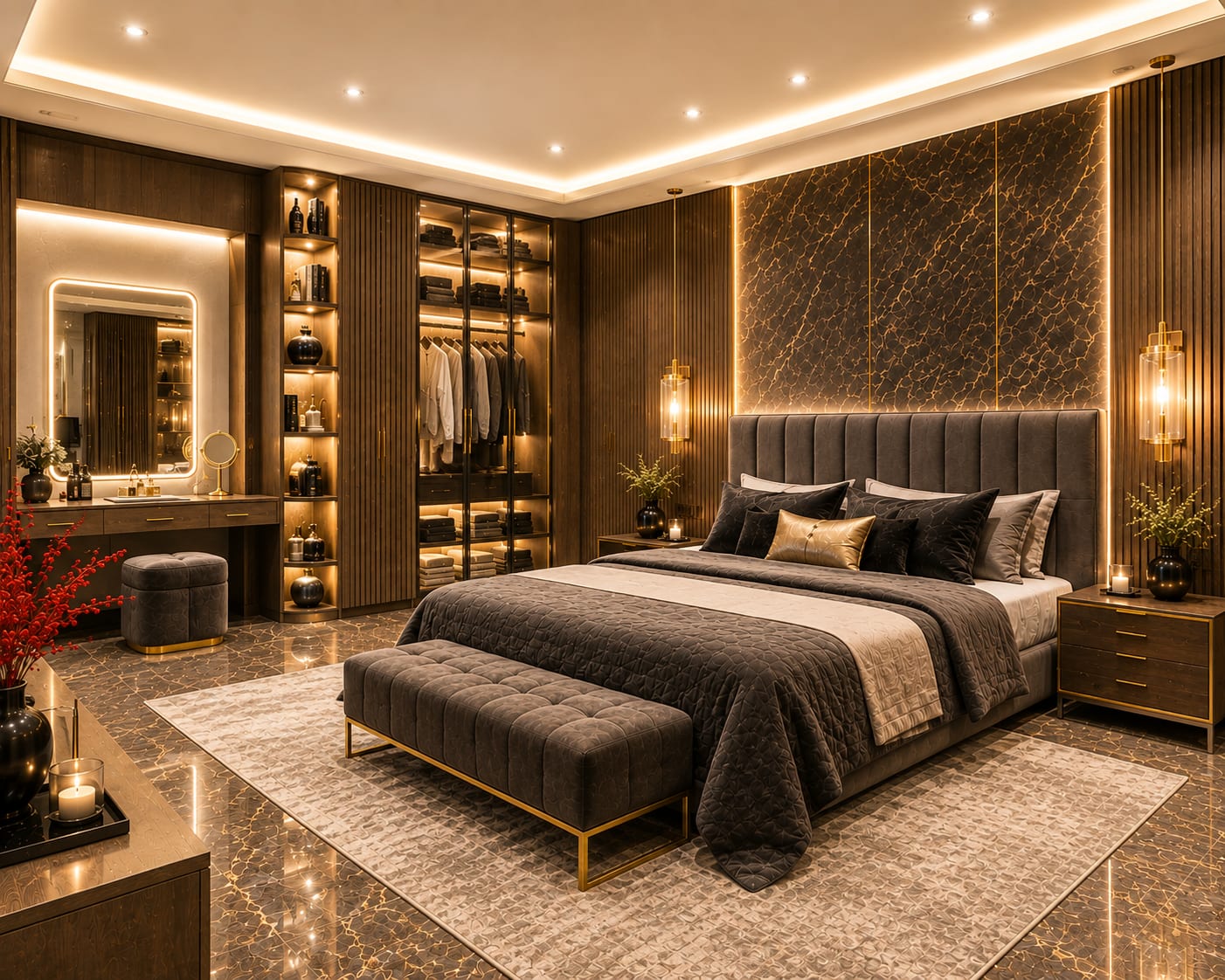
The strongest idea in this bedroom is not the glowing headboard; it is the number of useful lighting zones. The wardrobe is lit internally, the vanity has its own mirror source, bedside pendants free the tables and the ceiling cove provides broader ambient light. Those layers allow an evening sequence: wardrobe light while dressing, bedside light while reading, then one low source before sleep. Switching everything on together should be reserved for cleaning or photography.
Wardrobe sensors should turn off reliably when doors close, and the fittings should not heat clothing or create inaccessible wiring. Bedside pendants need careful placement so the bottom of the fitting is not in the user's direct sight line. Backlit headboards look best when the source is hidden deeply enough to create a wash rather than a hard outline. Keep bedside controls within reach and include at least one route light that does not require crossing a dark room.
5. Light a dark TV wall without fighting the screen
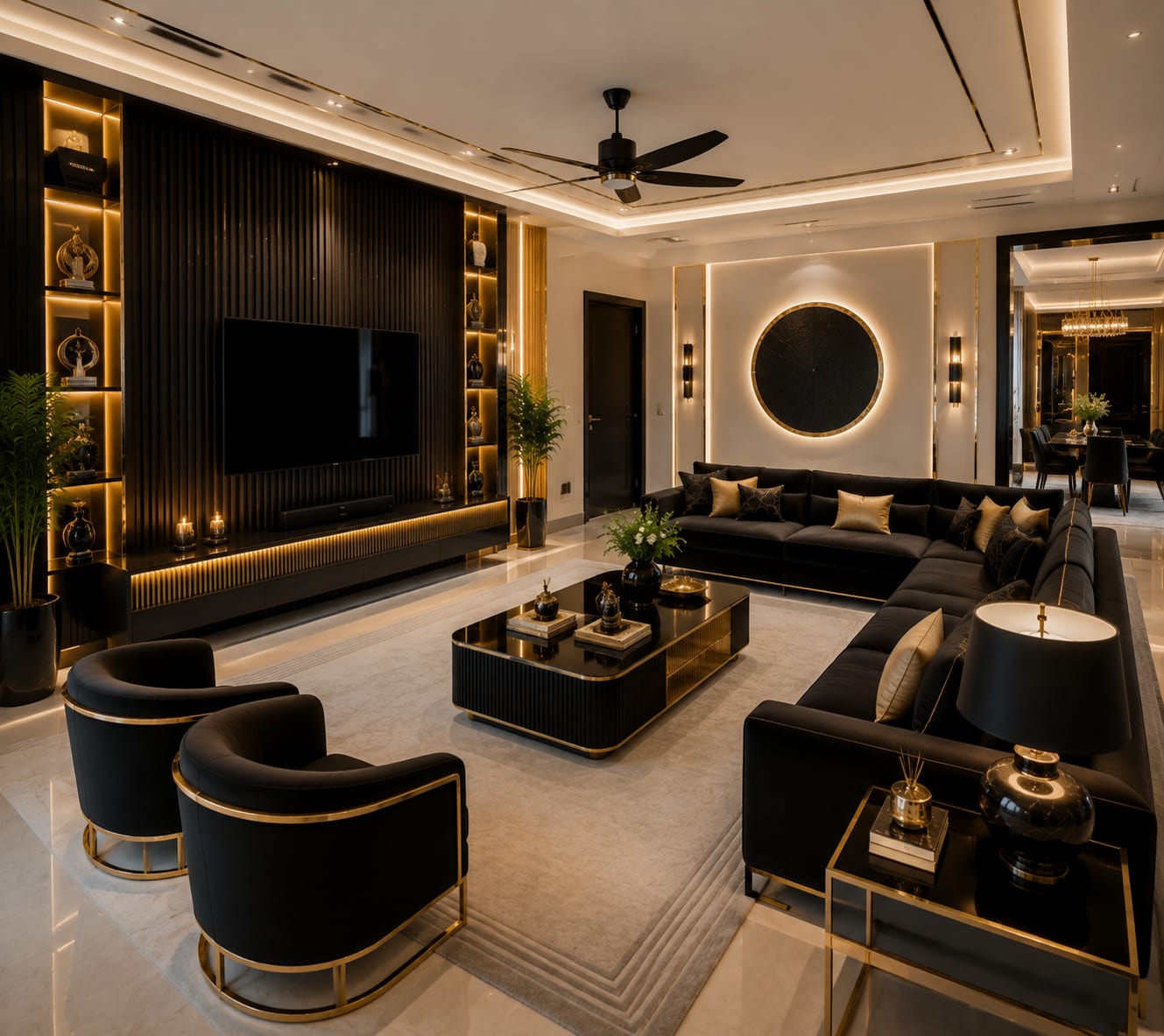
A television already produces a bright rectangle, so the surrounding light should reduce contrast rather than compete for attention. This room keeps the strongest accent lighting in the side shelves and below the long media console. The fluted panel behind the screen stays comparatively dark, and the ceiling cove raises the background level across the wider room. The result is easier on the eyes than a spotlight aimed at the wall or a bright decorative strip reflected in the screen.
Sit in every main viewing position before fixing lights. Polished tables, framed art and glass cabinet doors can return glare even when the source is outside the screen itself. Use dimmable circuits and create a viewing scene with low ambient light, restrained shelf illumination and no direct beam crossing the television. Leave ventilation around equipment, keep drivers accessible and plan cable routes before installing fluted panels or built-in cabinetry.
Choose 2700K or 3000K by material and task
There is no universal luxury-lighting number. Around 2700K creates a softer evening mood and often suits bedrooms and living rooms. Around 3000K remains warm but can feel clearer on kitchen counters, at a vanity or in a bathroom. Consistency matters within connected sight lines, but task zones can be slightly clearer if the transition is controlled. More important than chasing a Kelvin label is using high-CRI products from a reliable manufacturer and viewing the actual finishes under sample lights. Dark timber, brass and marble can shift noticeably between products carrying the same nominal temperature.
A useful circuit plan for layered lighting
- Give essential task lighting its own circuit: counters, mirror lights, reading lights or desk light.
- Separate general ambient light from decorative coves and shelf lighting.
- Group related accent sources rather than putting every niche on an individual switch.
- Use compatible dimmers and drivers specified together, especially for long concealed LED runs.
- Keep drivers ventilated and accessible for replacement without removing finished joinery or stone.
- Create named scenes for arrival, task use, entertaining, television viewing and late night.
- Test glare and brightness from the actual seated, standing and mirror positions before final sign-off.
Join the conversation
Share your thoughts on this room