

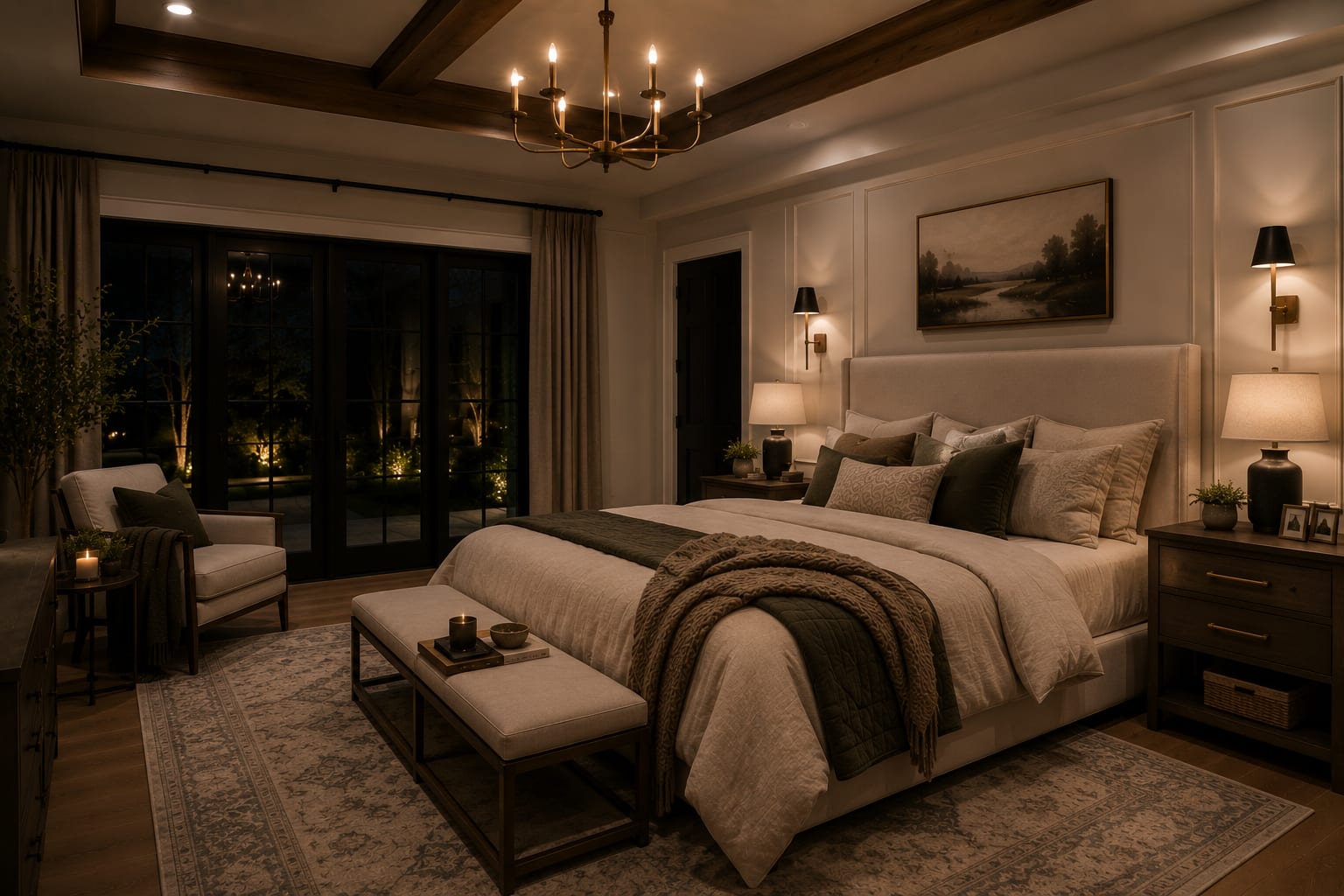
The formula is tight: one warm green, one wood, one metal, and beams overhead. Everything else is a warm neutral.
1. The kitchen, colour below the eye line
 See the full design
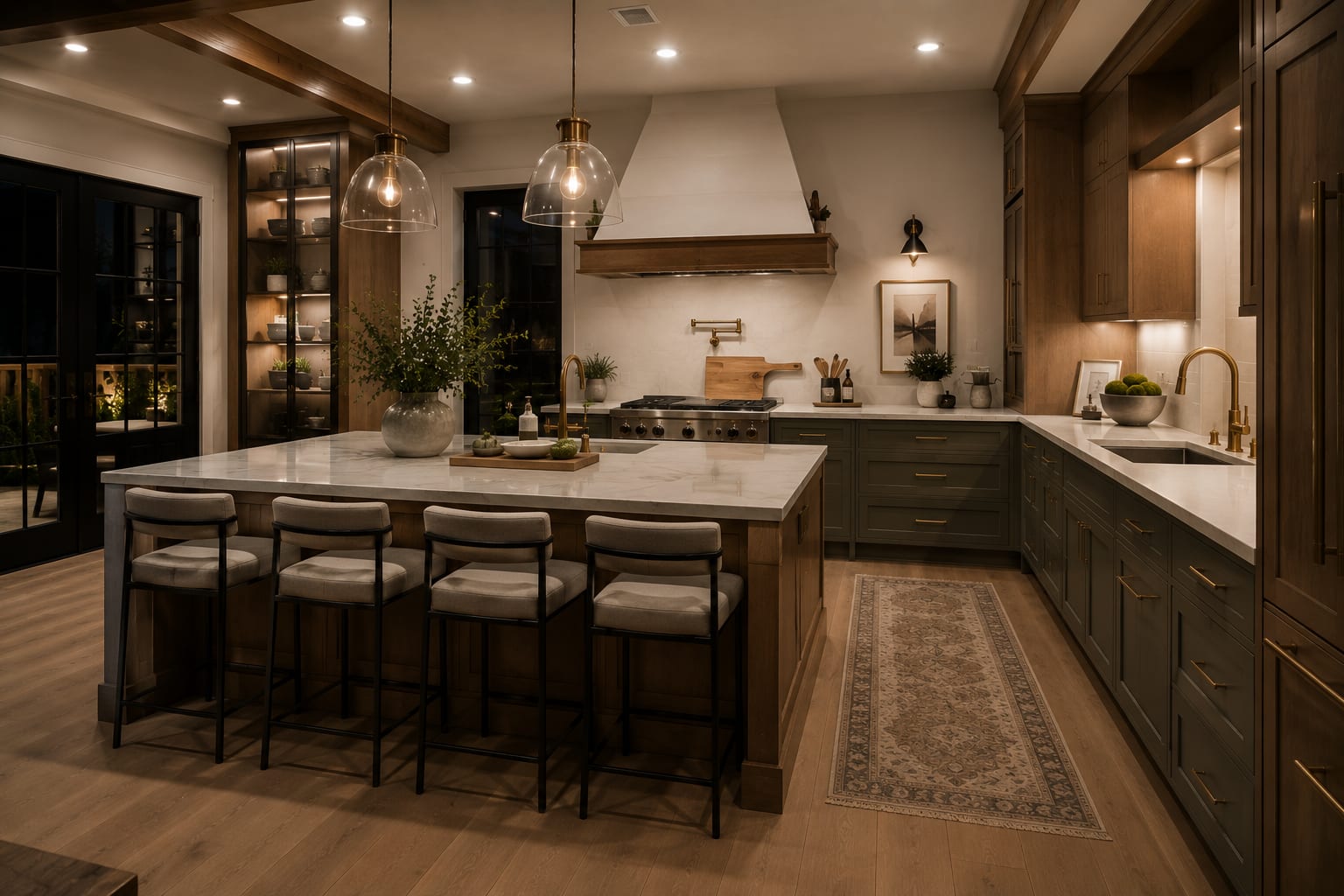
 Olive on the base cabinets, oak up top, marble in the middle. Steal this: keep the colour on the lower cabinets and the uppers oak or pale, dark top and bottom closes a kitchen in. A grey-green olive behaves like a warm neutral, so it won't date the way a bright colour would.
2. The open-plan living room, give the sofa an anchor
 See the full design
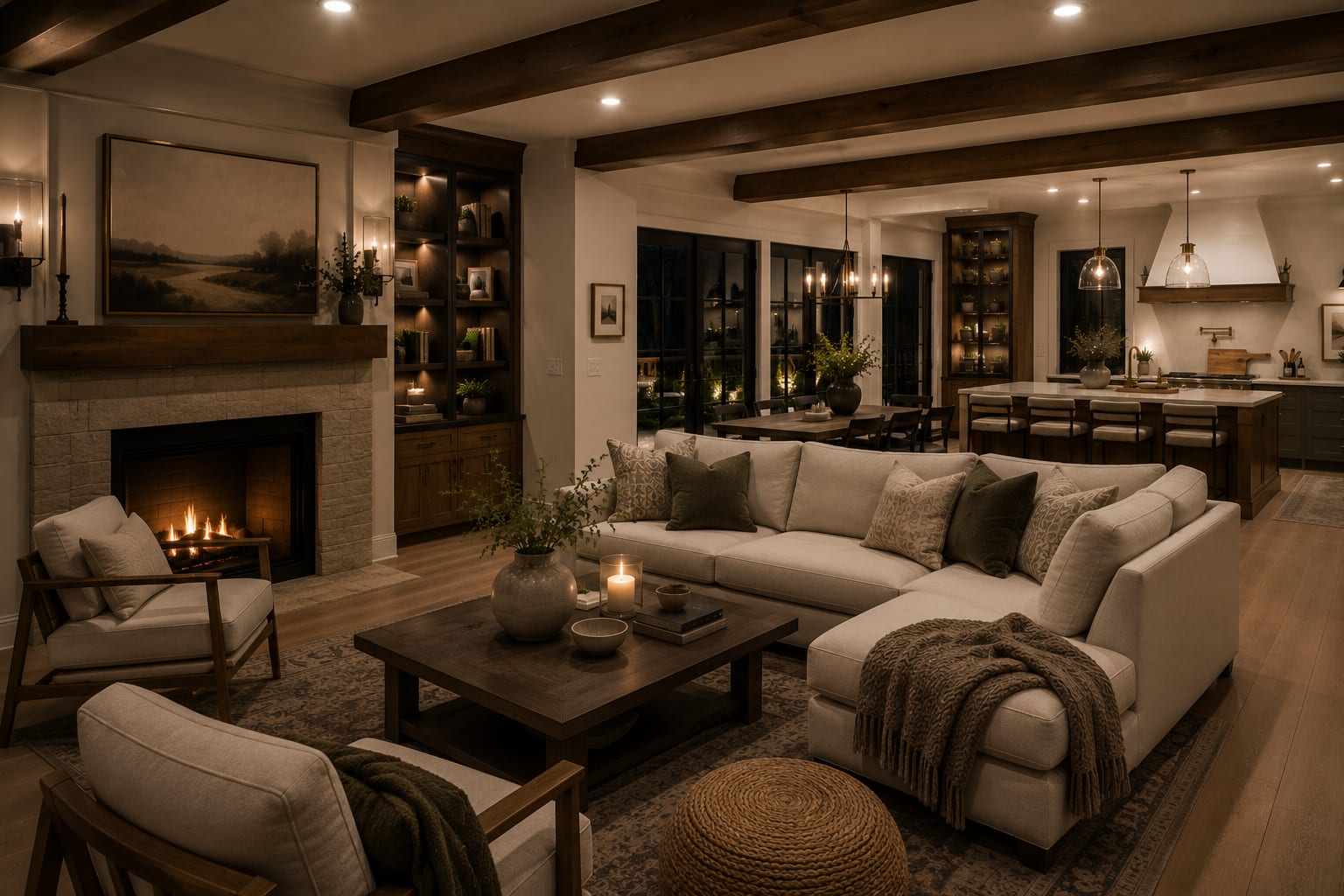
 A stone fireplace anchors the seating so it doesn't float in the open plan, with the kitchen just beyond. Steal this: zone an open plan with a large rug and a fixed anchor (a fireplace, a media wall), and repeat one accent colour from the adjoining room so the two zones read as one home.
3. The master bedroom, carry the palette upstairs
 See the full design
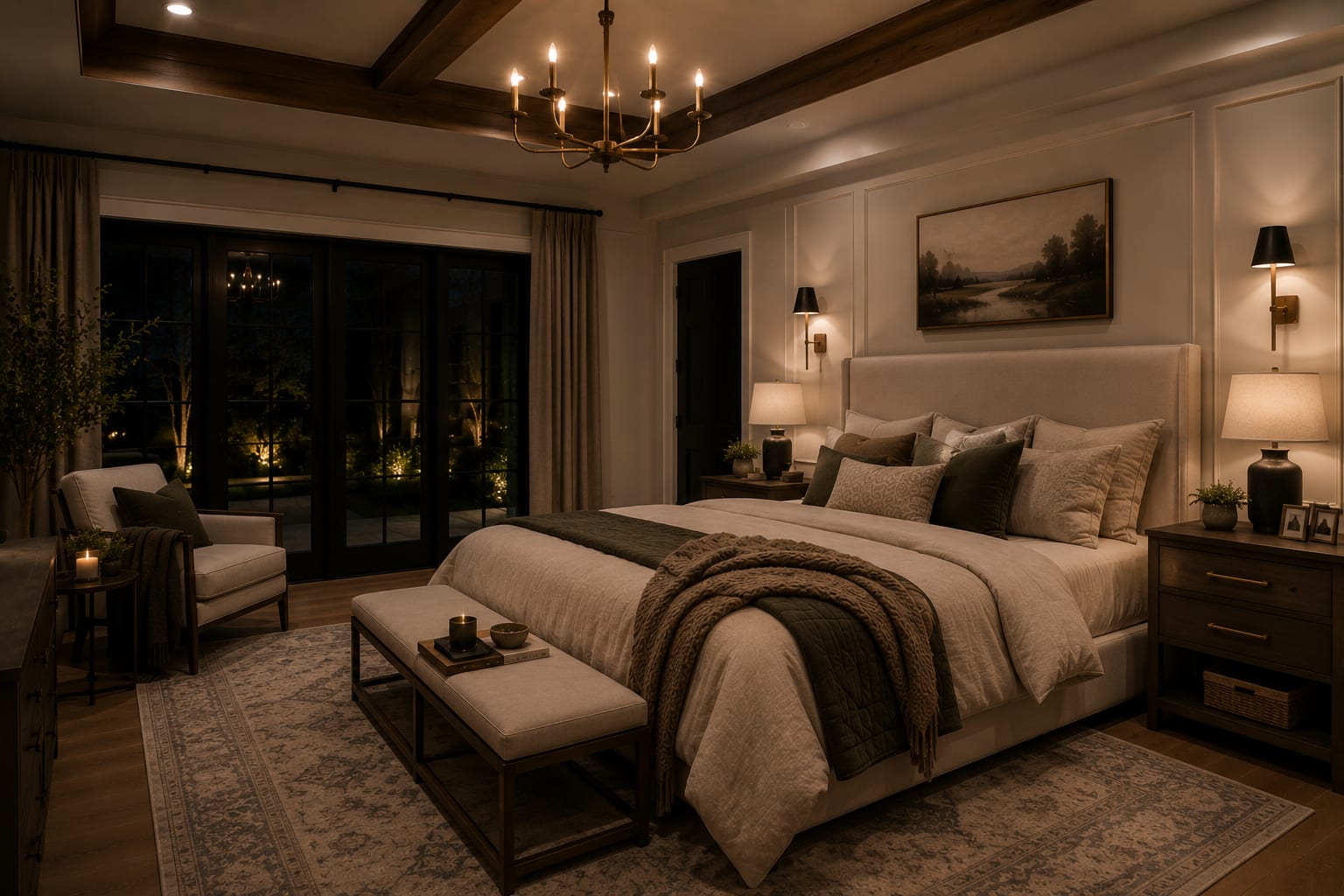
 Cream headboard, olive bedding, the same beams and brass. Steal this: carry one accent colour and one metal from the living areas into the bedroom, and the whole house feels cohesive. You don't need matching furniture, a shared colour thread does the work.
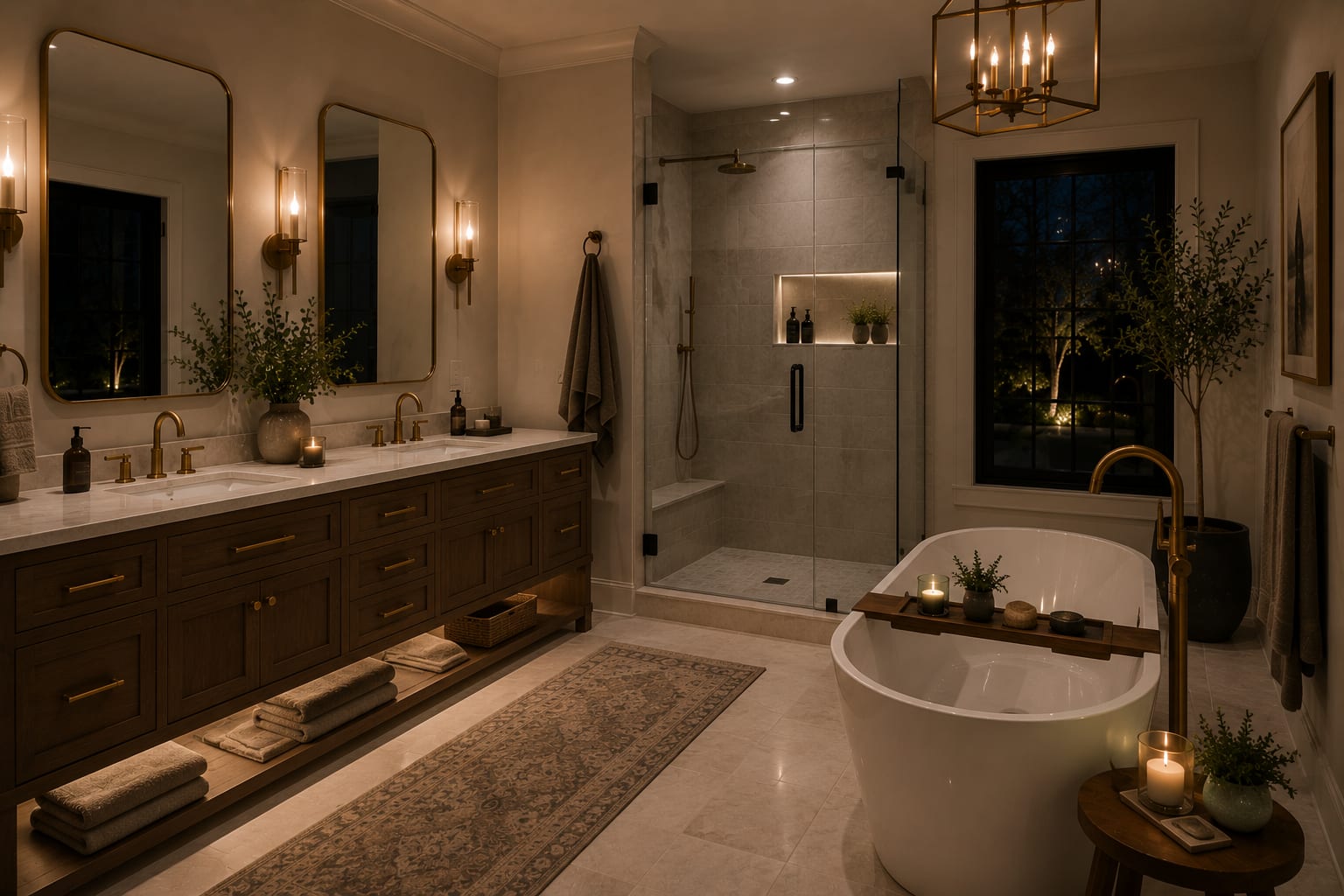
4. The bathroom, warm wood so tile doesn't go cold
 See the full design
 A walnut vanity and wall-to-wall brass keep all the tile and glass from reading clinical. Steal this: anchor a bathroom with a warm timber vanity and match every metal to one brass tone. Warm wood plus warm light is what turns a tiled room into a spa.
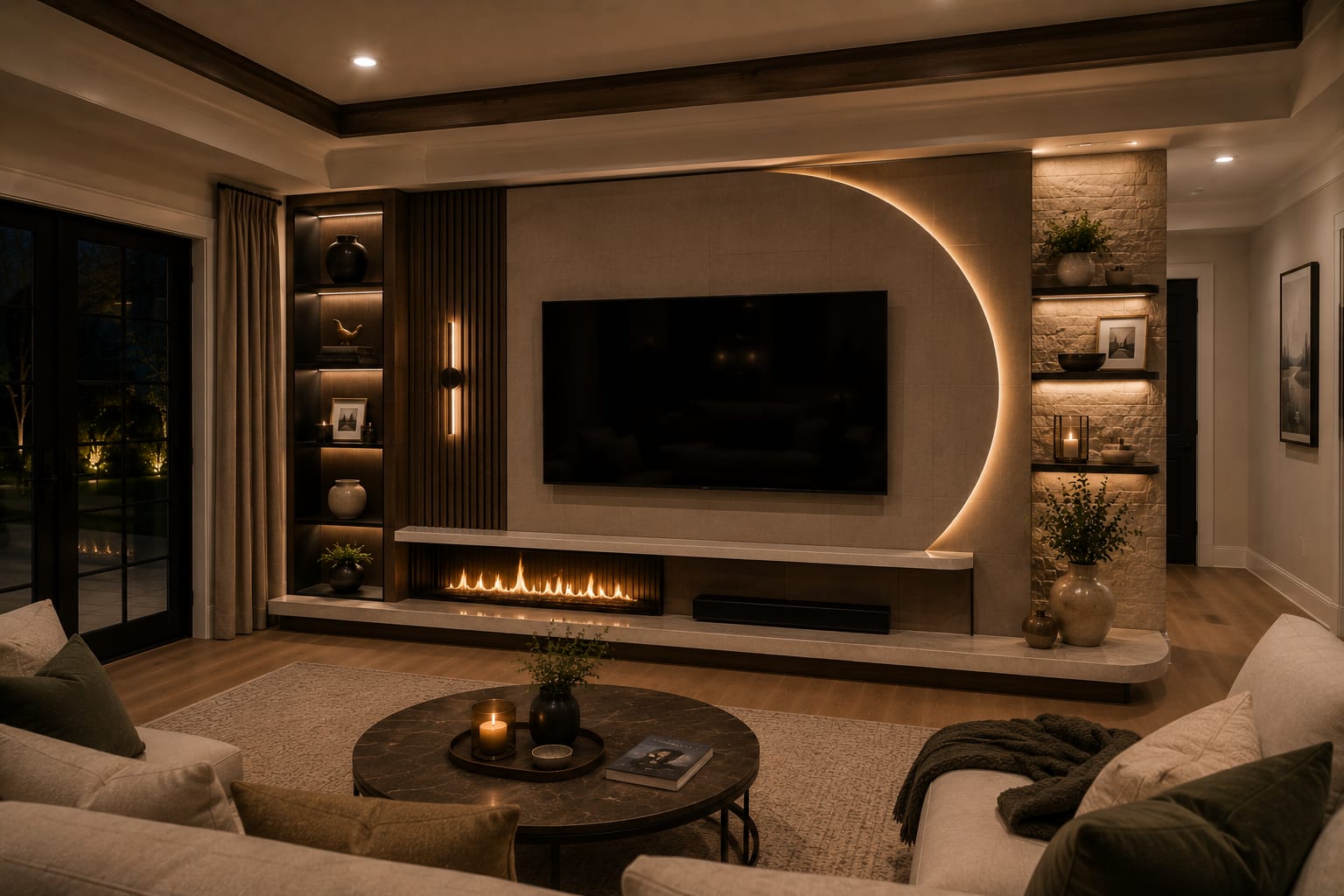
5. The media wall, one glowing curve
 See the full design
 A curved backlit panel turns the TV wall into a lit shape, with a linear fire below and stone and fluted wood either side. Steal this: put the screen on a matte, mid-tone panel and let hidden LED and a linear fire do the drama. Texture beside the screen (stone, fluting) ages better than the bold curve itself.
The four rules that hold this home together
- One green, used lightly. Full olive cabinetry in the kitchen, accents in the bedroom and living room. Same colour, different doses, never wall-to-wall.
- One wood, warm and repeated. Oak and walnut through cabinetry, beams, vanities and consoles. Mixed tones of the same warm family read as a home; four unrelated woods read as a showroom.
- One metal, brass, everywhere. Taps, pendants, mirror frames, hardware. A single metal is the cheapest way to make rooms feel connected.
- Warm, low light in every room. Candle-style chandeliers, sconces, cove strips and hidden LED, all warm and dimmable. The consistent warmth of the light is what makes the whole house feel like one mood.
Why a repeated palette beats a themed one
It's tempting to give every room its own 'look', a moody bedroom, a bright kitchen, a glam bathroom, but that's exactly what makes a house feel like a series of unrelated rooms. A home that flows picks a small kit of parts (here: olive, oak, brass, beams, warm light) and reuses it at different intensities. The kitchen gets the full colour, the bedroom just a whisper of it, but your eye reads them as the same home. If you only take one thing from this tour, let it be that: decide your four or five materials once, then repeat them everywhere.
Join the conversation
Share your thoughts on this room