

Five reasons a bedroom looks warm but does not feel comfortable
The bed blocks the room instead of anchoring it
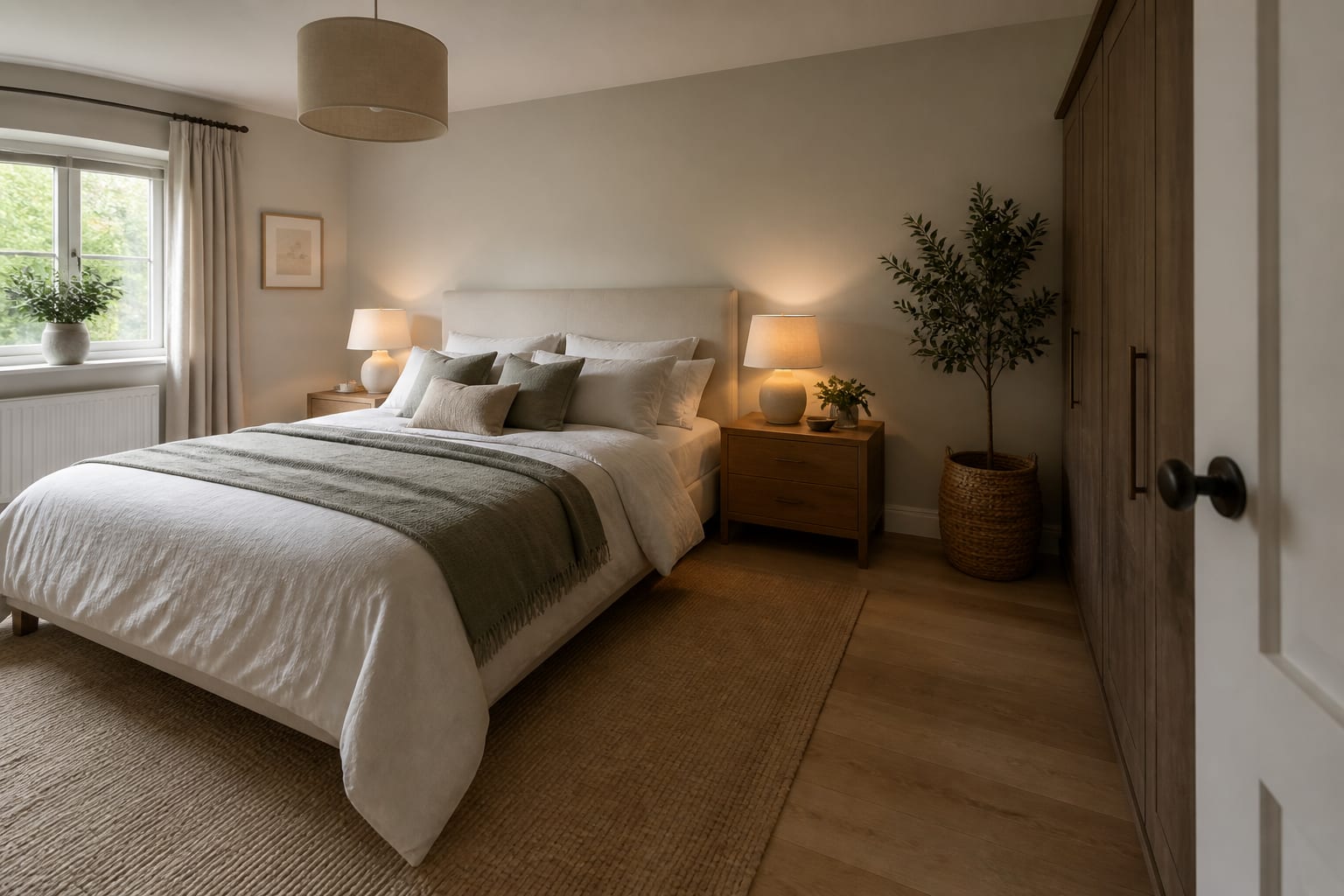
The bed should establish the room without turning circulation into an obstacle course. Center it on the longest suitable wall when that allows the door and wardrobe to work, then protect about 24 to 30 inches at each used side; 30 inches is more comfortable where space permits. Open every wardrobe door and drawer fully before approving the plan. In a tight room, one narrow bedside shelf can be better than two bulky tables, but both sleepers still need a light and a place for essentials. Use painter's tape to mark the proposed bed, tables and drawer extension on the floor. A visually perfect arrangement that cannot be used in the dark will never feel restful.
One ceiling light flattens the entire room
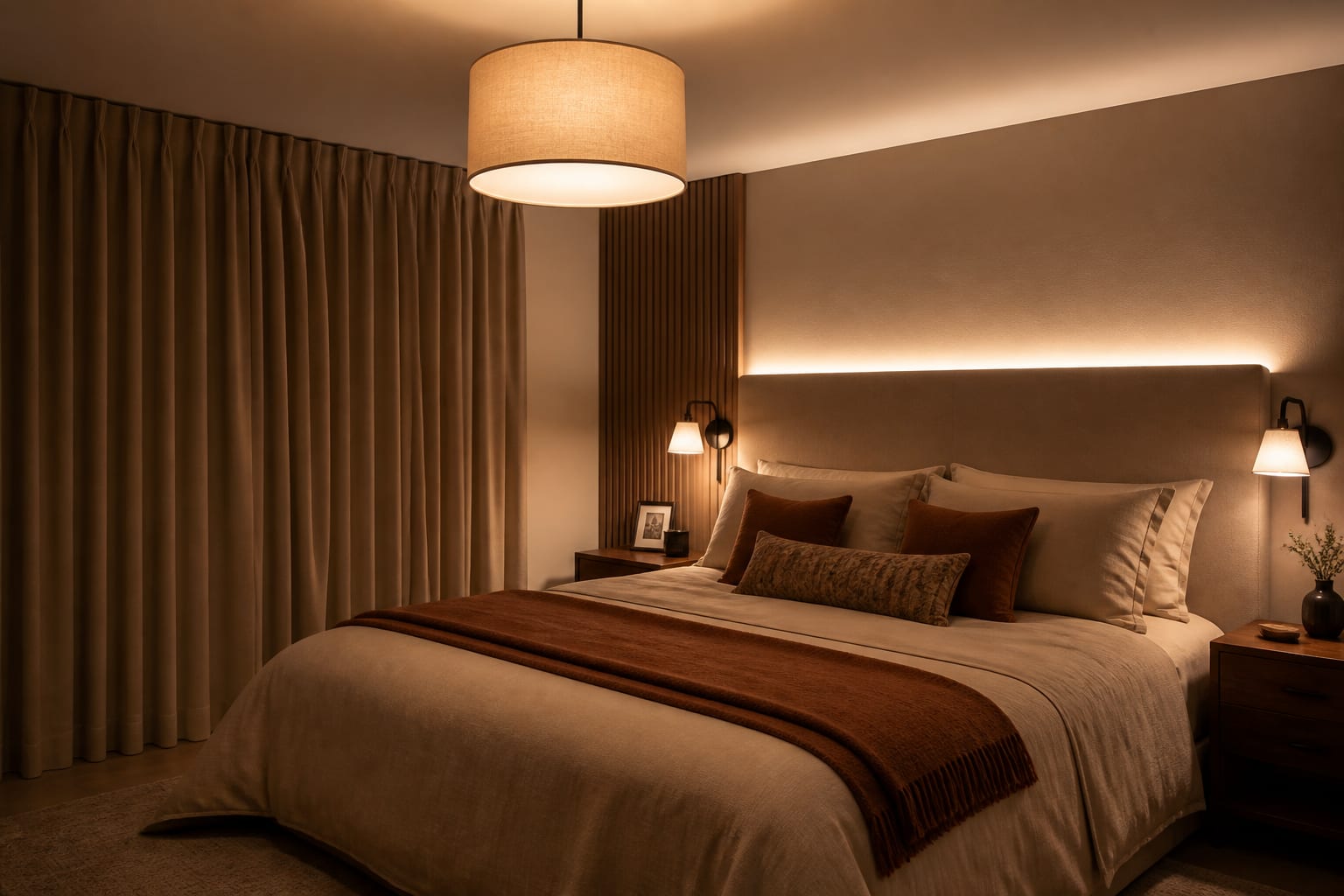
Use three layers instead of trying to make one fitting do every job. Ambient light helps with dressing and cleaning, focused bedside lights support reading, and a low accent light softens the room before sleep. Bulbs around 2400K to 2700K usually feel warmer than standard cool white lamps. Mount adjustable reading lights near seated shoulder or head height so the beam reaches the page without shining across the other pillow. Put each side on its own switch and add dimming where compatible. Concealed light can skim a textured wall or headboard, but the LED source should disappear from bed level. Good bedroom lighting creates choice: bright when needed, gentle when wanted and dark without a trail of glowing devices.
The bedding is decorative but difficult to live with

Build the bed from the body outward. Choose breathable sheets for the room temperature, supportive sleeping pillows and a duvet weight that matches the season. Add texture with one folded blanket and a restrained cushion rather than a mountain that must be removed nightly. If the duvet looks undersized, check its drop on both sides before replacing the bed or headboard; fuller coverage often makes the bed feel more settled. Repeat two or three materials, such as washed linen, wool and timber, instead of adding many unrelated patterns. The test is simple: the bed should take only a few minutes to make and every decorative layer should have a real place when removed.
Short curtains expose the window and weaken the bed wall
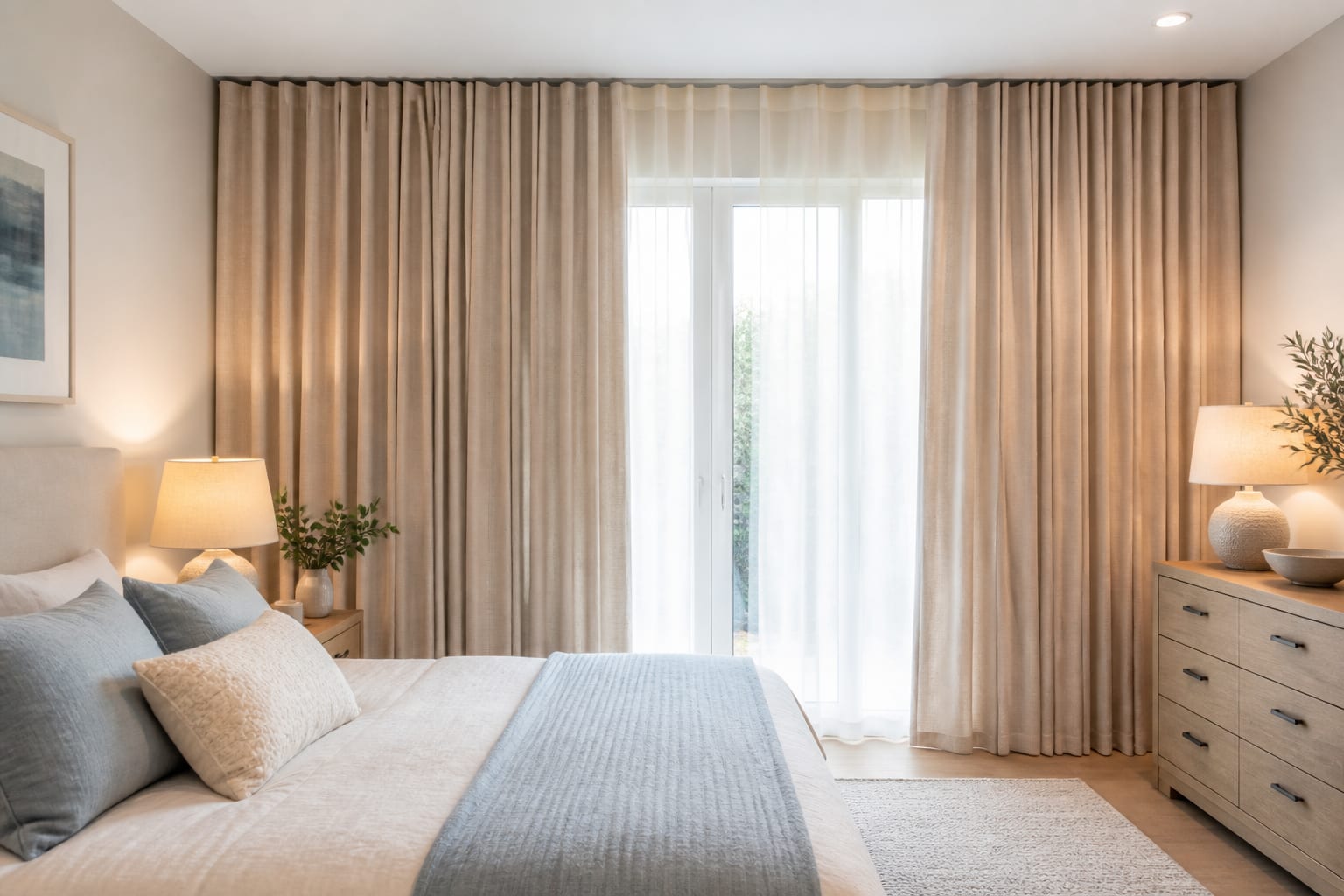
Curtains feel more generous when they relate to the wall, not just the glass. Mount the track high and, where possible, extend it roughly 6 to 12 inches beyond each side so open fabric uncovers more of the window. A total fabric width around one and a half to two times the track gives the folds enough body. Pair a sheer for daytime privacy with a lined blackout layer for sleep. Let the finished length meet or lightly kiss the floor instead of hovering several inches above it. Check radiators, vents and moisture before choosing a heavy puddled treatment. The aim is a soft architectural frame that controls light, not excess fabric that gathers dust or blocks heat.
Visible storage turns rest into a list of unfinished tasks
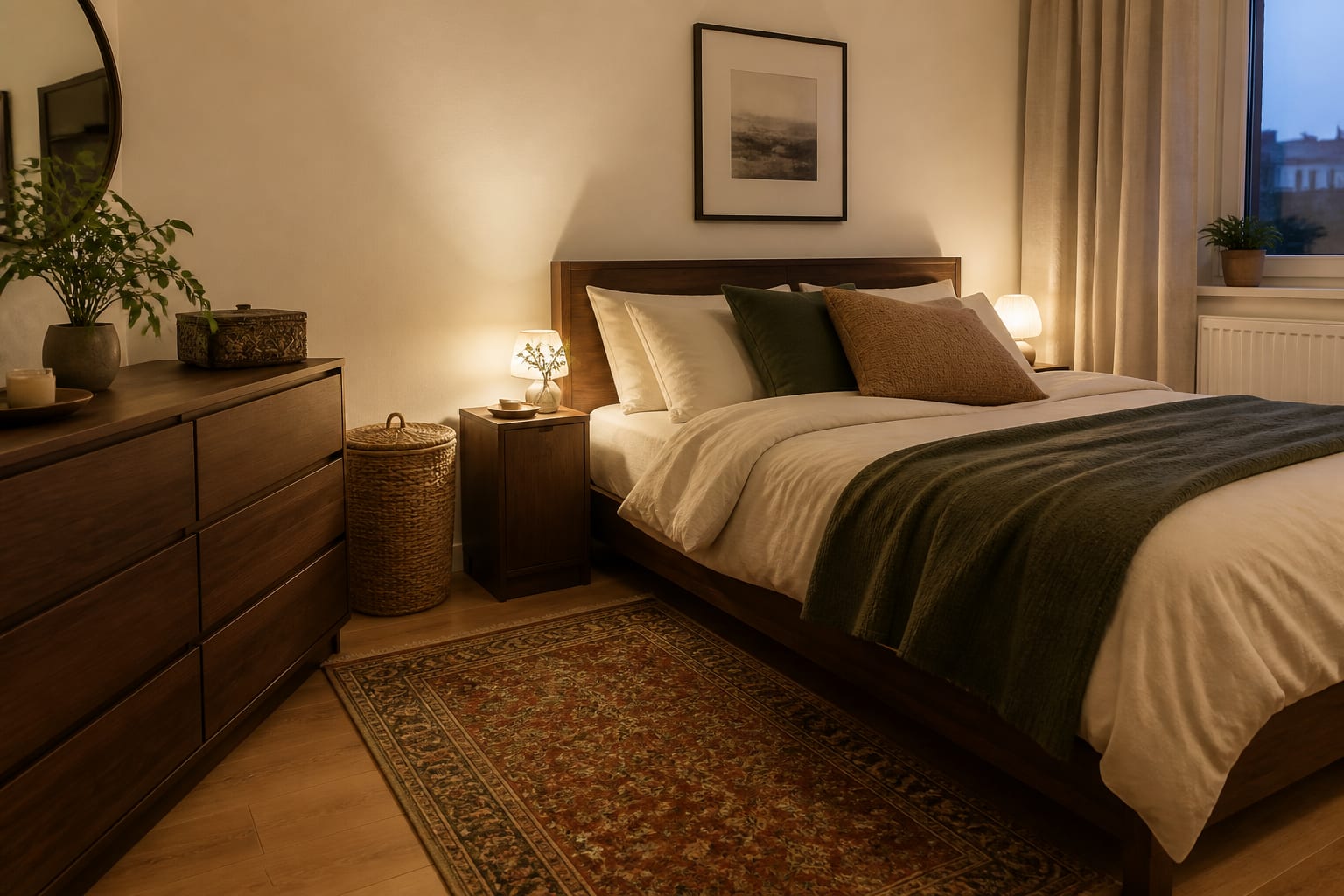
Open rails, overflowing chairs and exposed laundry keep reminding the eye that work remains. Put the greatest visual volume behind doors or inside matching drawers, then reserve open display for a few objects you genuinely enjoy. Allow about 20 to 24 inches in front of drawers where possible and make sure wardrobe doors do not collide with the bed. Give worn-but-not-dirty clothes one deliberate hook or valet instead of a chair. A covered laundry basket removes another large patch of visual noise. Clear the bedside surface to the lamp, water and one current book. The room can remain lived-in; it simply needs obvious return points that make a five-minute reset realistic.
A sensible order for a cozy bedroom reset
- Tape the bed and furniture footprints before moving anything.
- Protect the route to the bed, wardrobe and window.
- Set warm ambient and task lighting on separate controls.
- Choose bedding for comfort and maintenance before decorative volume.
- Mount curtains high and wide enough to frame the wall.
- Move the largest visual clutter into closed storage.
- Add art and accessories only after living with the reset for one week.
Spend where touch and daily use reveal quality
Prioritize the mattress support, sheets, useful bedside lighting and curtains that operate smoothly. Those details are touched every day. A dramatic feature wall cannot compensate for glare, blocked drawers or bedding that overheats. Once the functional layer works, paint and decorative texture can make the room more personal without carrying the whole burden of comfort.
Join the conversation
Share your thoughts on this room