

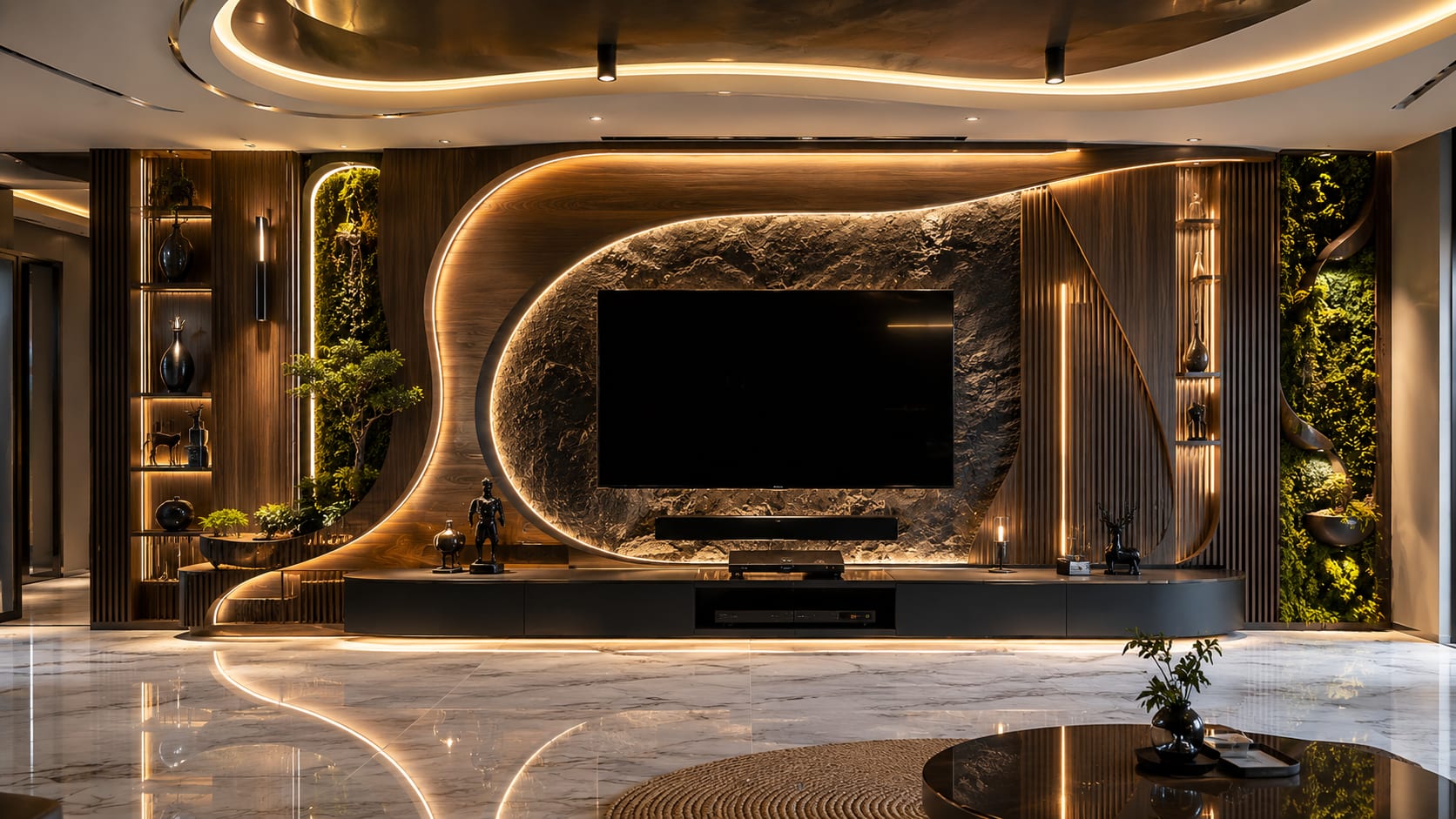
A useful thread runs through all of them: texture is what reads as expensive once the stone is gone, and texture only shows if you light it from the side rather than head-on.
1. Curves that carry their own light
 See the full design
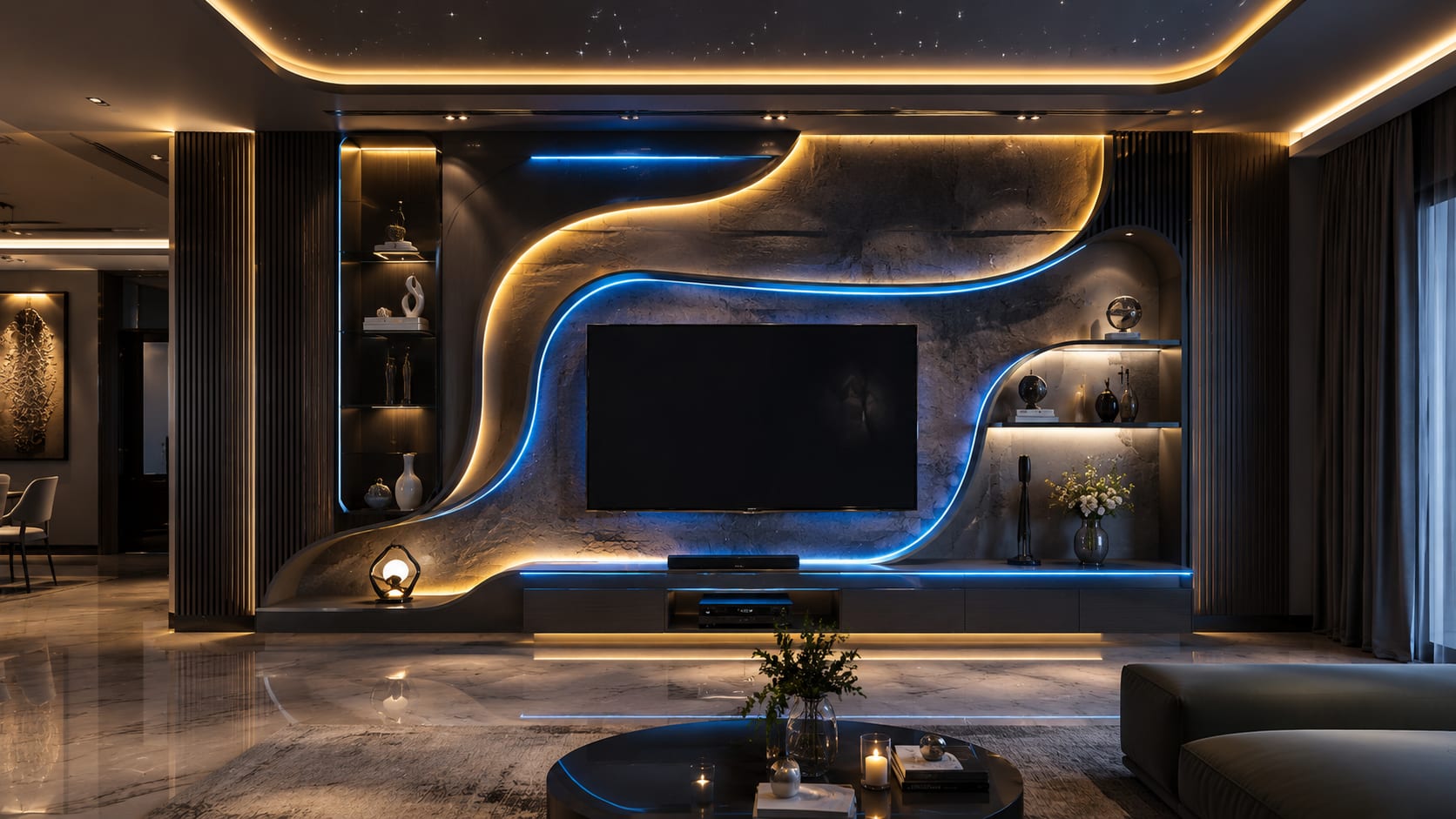
 Two enormous S-curves in textured stone-effect finish, each traced by a hairline of light, warm gold on one, cool blue on the other, with shelving carved out where the waves flatten. The colours never sit side by side, which is what keeps it architectural rather than nightclub. Steal this: use addressable LED so the blue can become warm white in a few years without touching the joinery.
2. Put something genuinely rough behind the screen
 See the full design
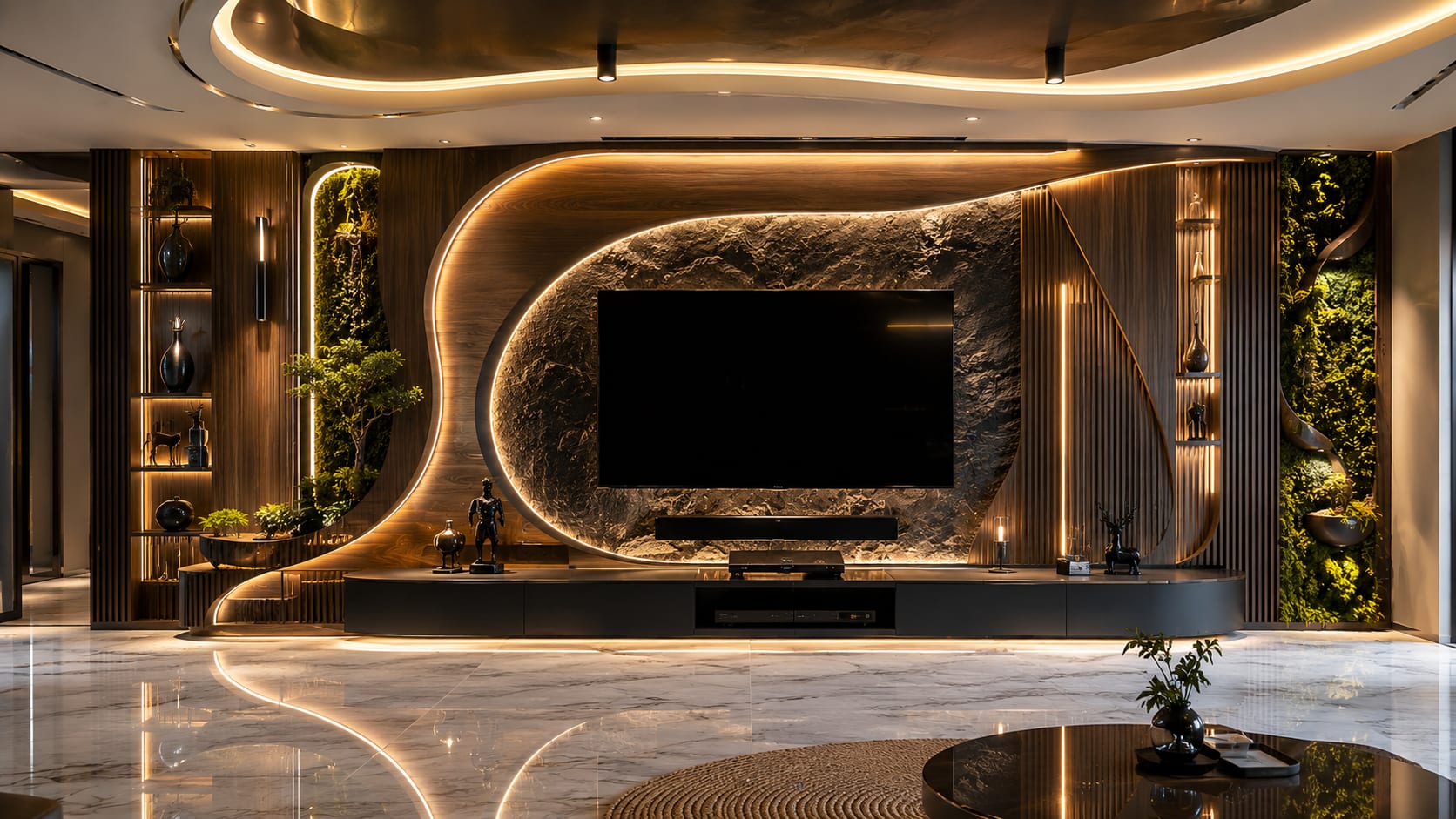
 Split-face stone sits behind the television, wrapped in a smooth walnut curve, with preserved moss panels either side. The contrast between raw and refined is the whole idea, and the moss adds colour and acoustic softness with no watering. Steal this: graze the stone with light from the curve edge, lit head-on, textured stone may as well be a photograph.
3. Let one unbroken line of light do the work
 See the full design
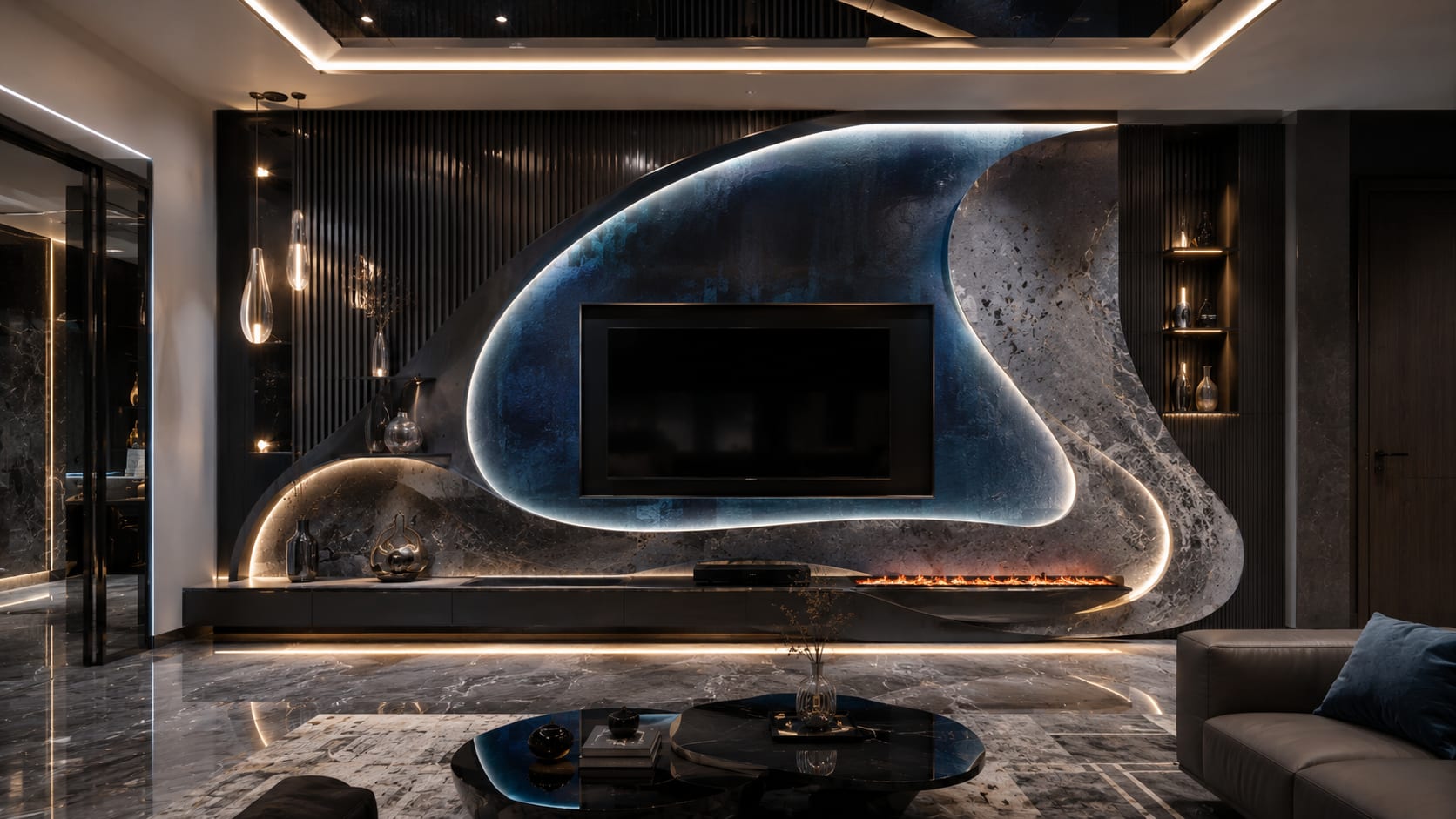
 The material changes along the curve rather than at a straight seam, and a single continuous LED follows the entire sweep. That unbroken stroke is what turns a complicated shape into one confident gesture. Steal this: if budget forces a compromise, simplify the shape and protect the light line, segmenting the LED is what kills this look.
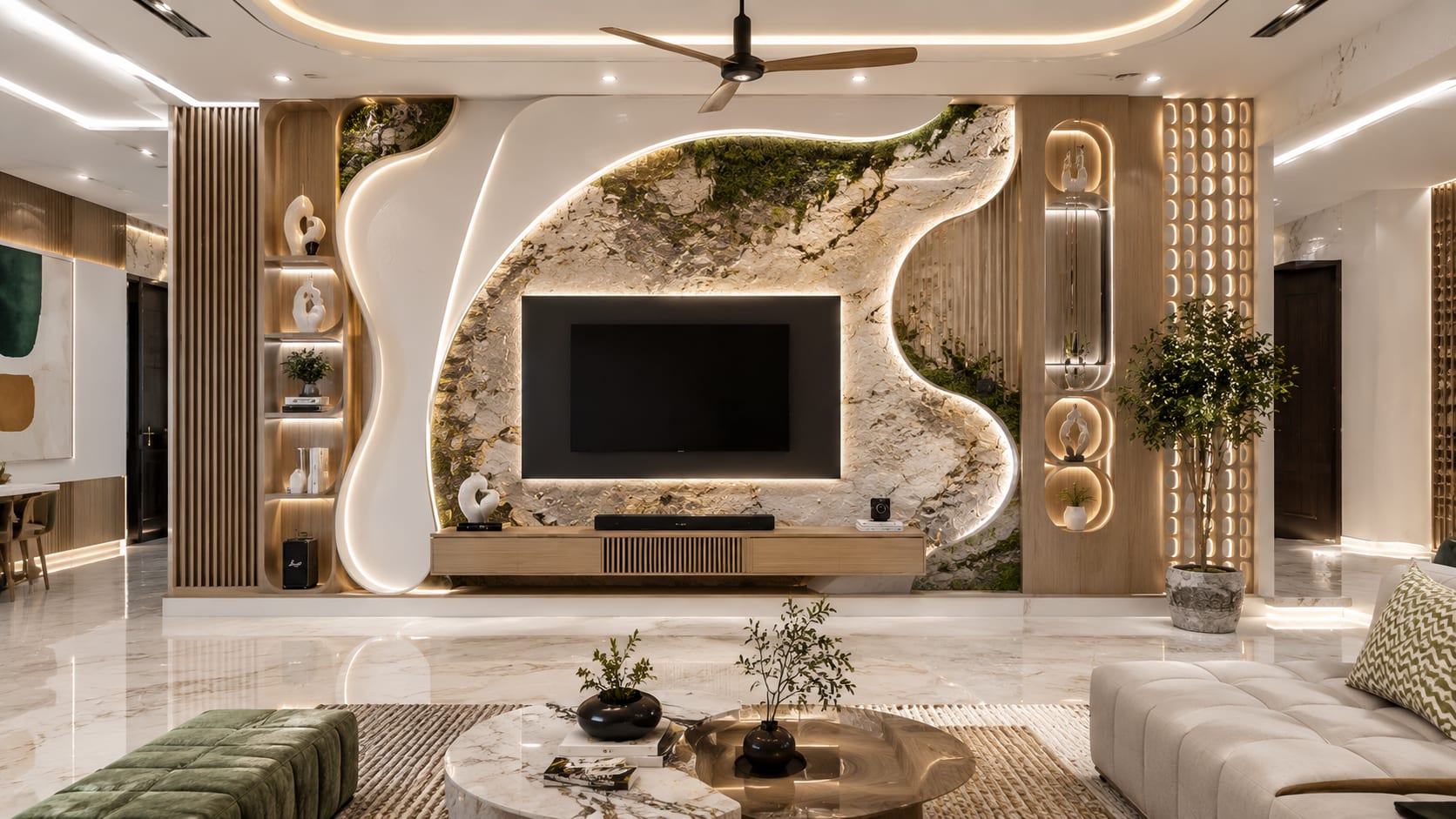
4. Sculptural drama without the darkness
 See the full design
 The same sculpted language as the moody walls, executed entirely in off-white with moss threaded through pale rough stone. Because everything else is tonal, the green becomes the only real colour and lands hard. Steal this: set moss into the stone's natural crevices rather than as a neat rectangle, it reads as real the moment it looks like it found its own way in.
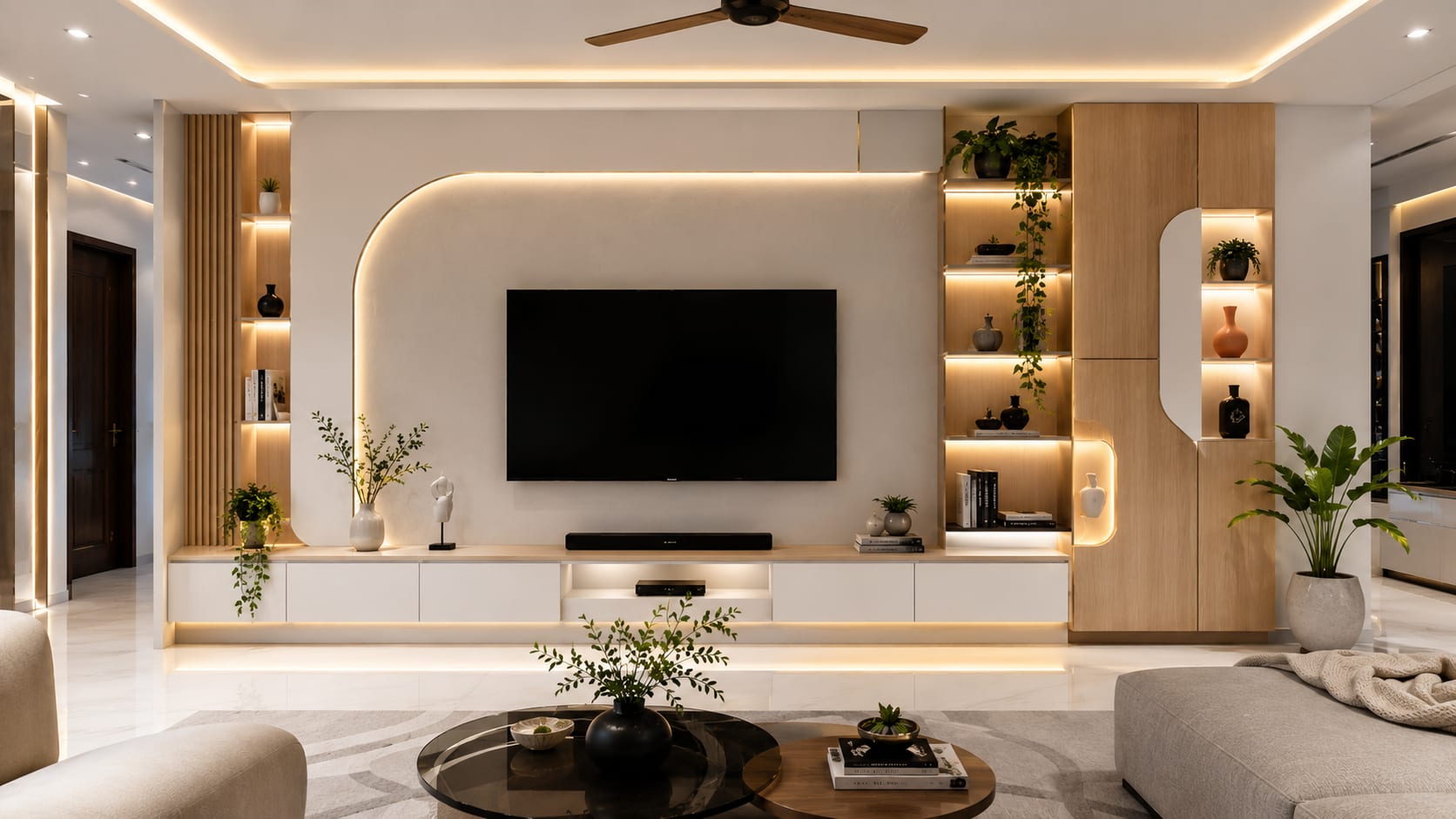
5. One arch, and nothing else
 See the full design
 A microcement wall with one rounded arch of hidden light around the screen, light oak shelving and trailing plants. No stone, no fireplace, no curved fabrication, which makes it the cheapest wall here and probably the easiest to live with. Steal this: repeat the arch shape once more somewhere on the wall so it reads as a motif rather than a one-off.
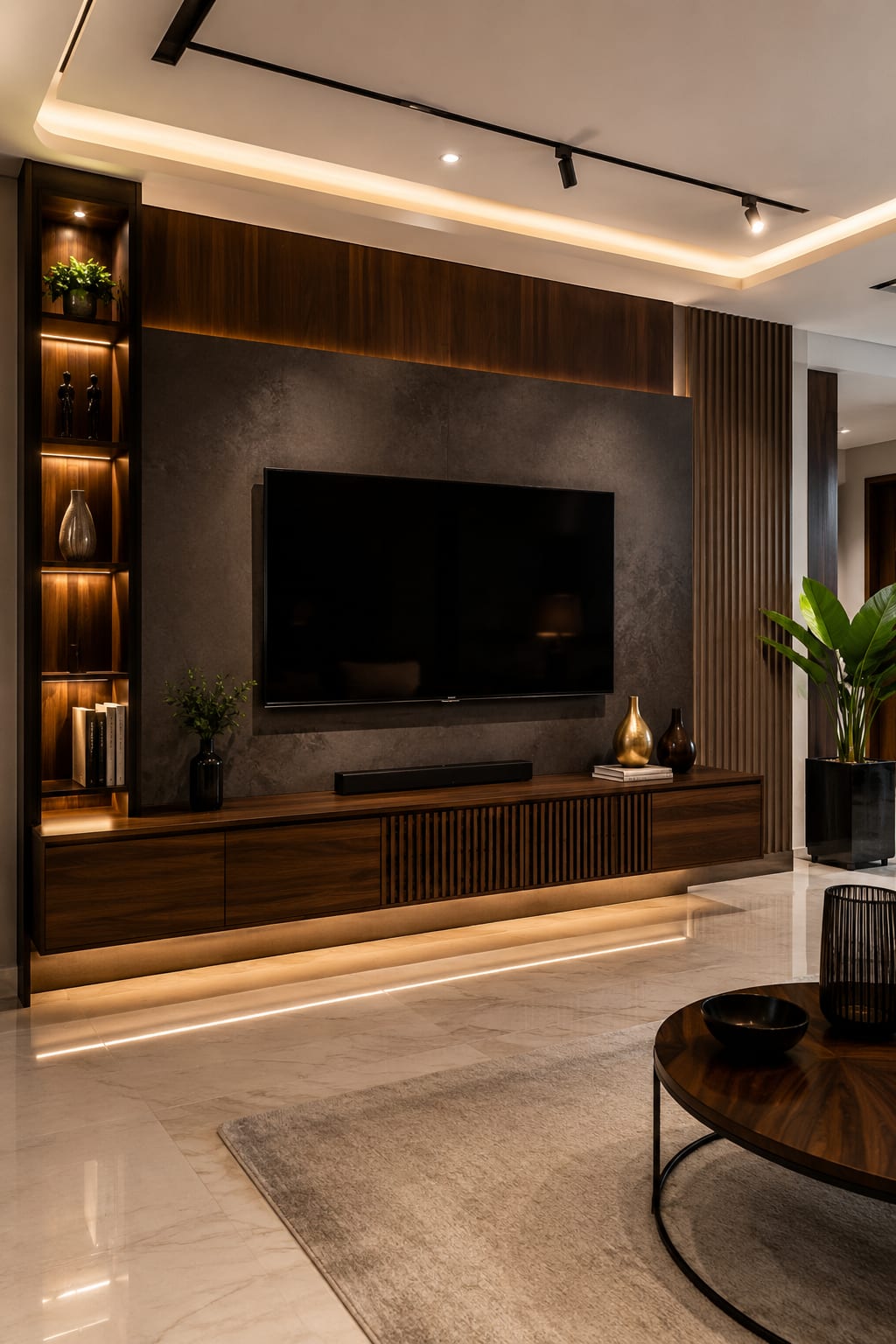
6. Concrete is a better screen backdrop than stone
 See the full design
 Matte microcement behind the television reflects almost nothing, so lamps and windows do not bounce back at you mid-film. With the backdrop deliberately plain, the walnut around it can be genuinely rich. Steal this: push the under-console LED slightly forward so it washes the floor, that spill is what makes the unit look like it is floating.
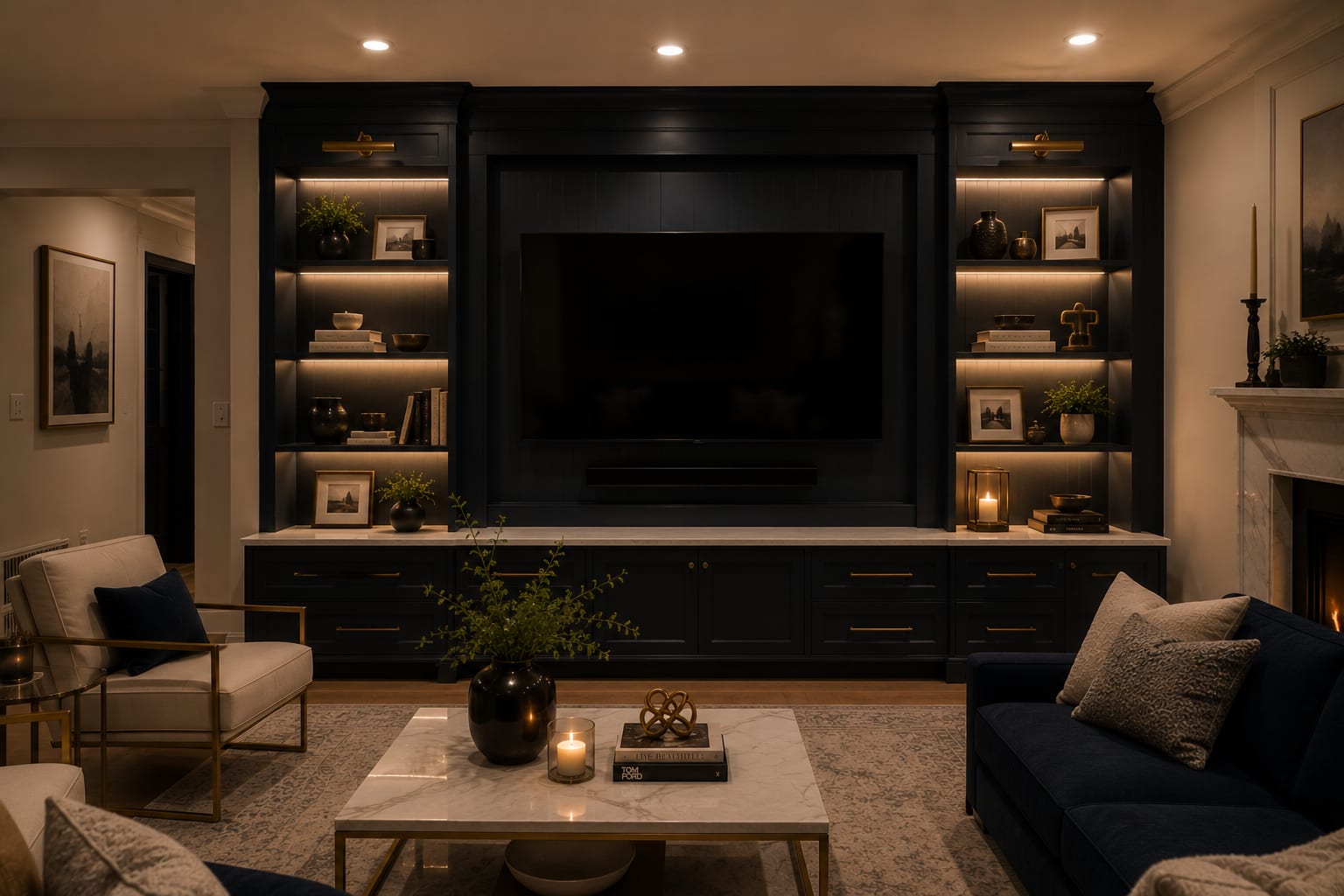
7. In a traditional room, build a built-in
 See the full design
 Deep navy shaker joinery, symmetrical lit shelving, brass picture lights and a stone counter. The dark paint makes the screen recede exactly as marble does, for the price of a tin of paint, and you get the closed storage most modern media walls quietly lack. Steal this: vent the joinery. Enclosed cabinets trap heat, and that is the most common fault in rushed built-ins.
8. Give the fire a real hearth
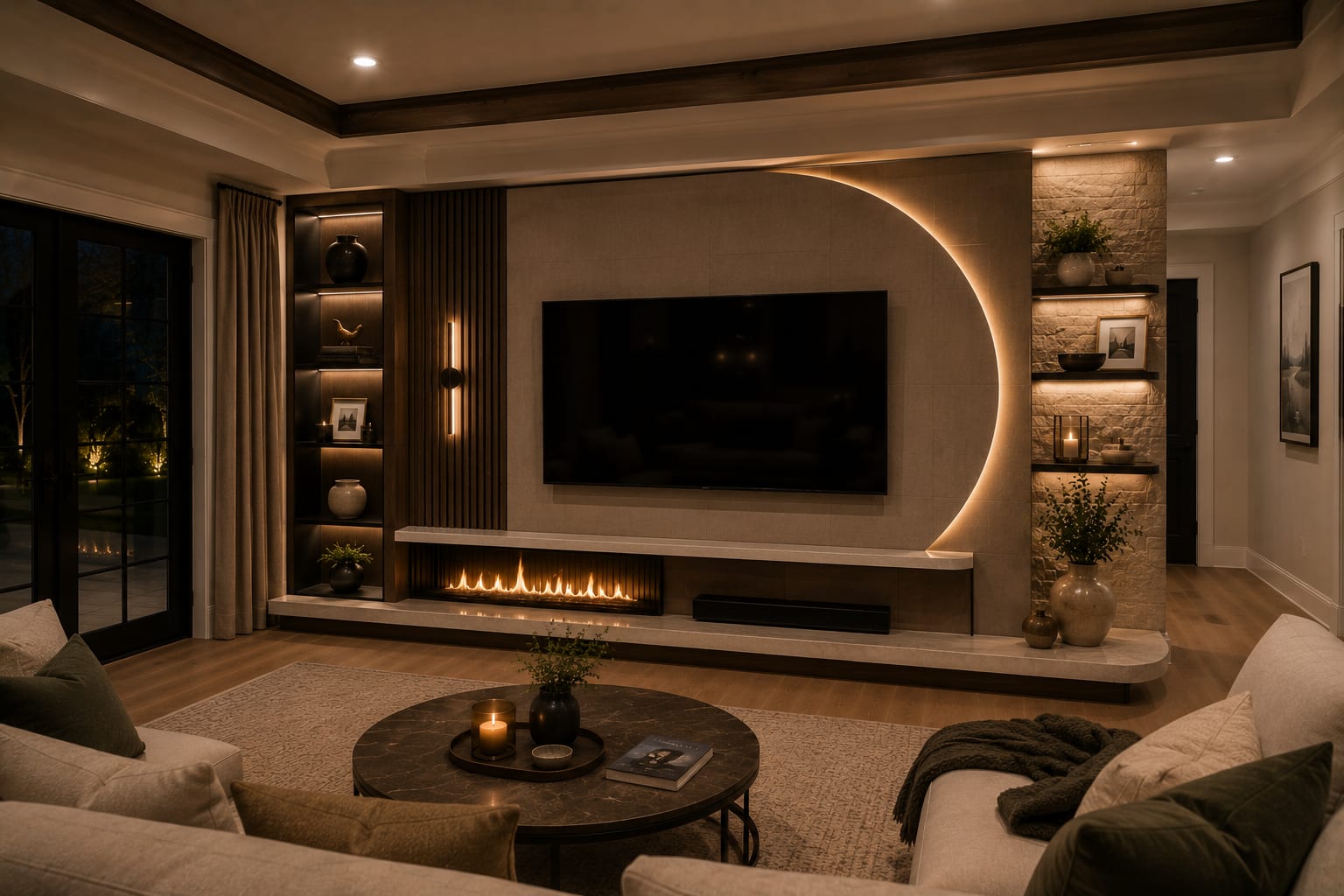 See the full design
 A softly backlit arch in warm limestone above a wide ribbon of flame set on a raised, projecting hearth. The ledge is what makes it feel like a hearth wall rather than a fire slotted into cabinetry. Steal this: design a removable access panel into the hearth face now, burners and controls always need reaching eventually.
9. The one you'll still like in ten years
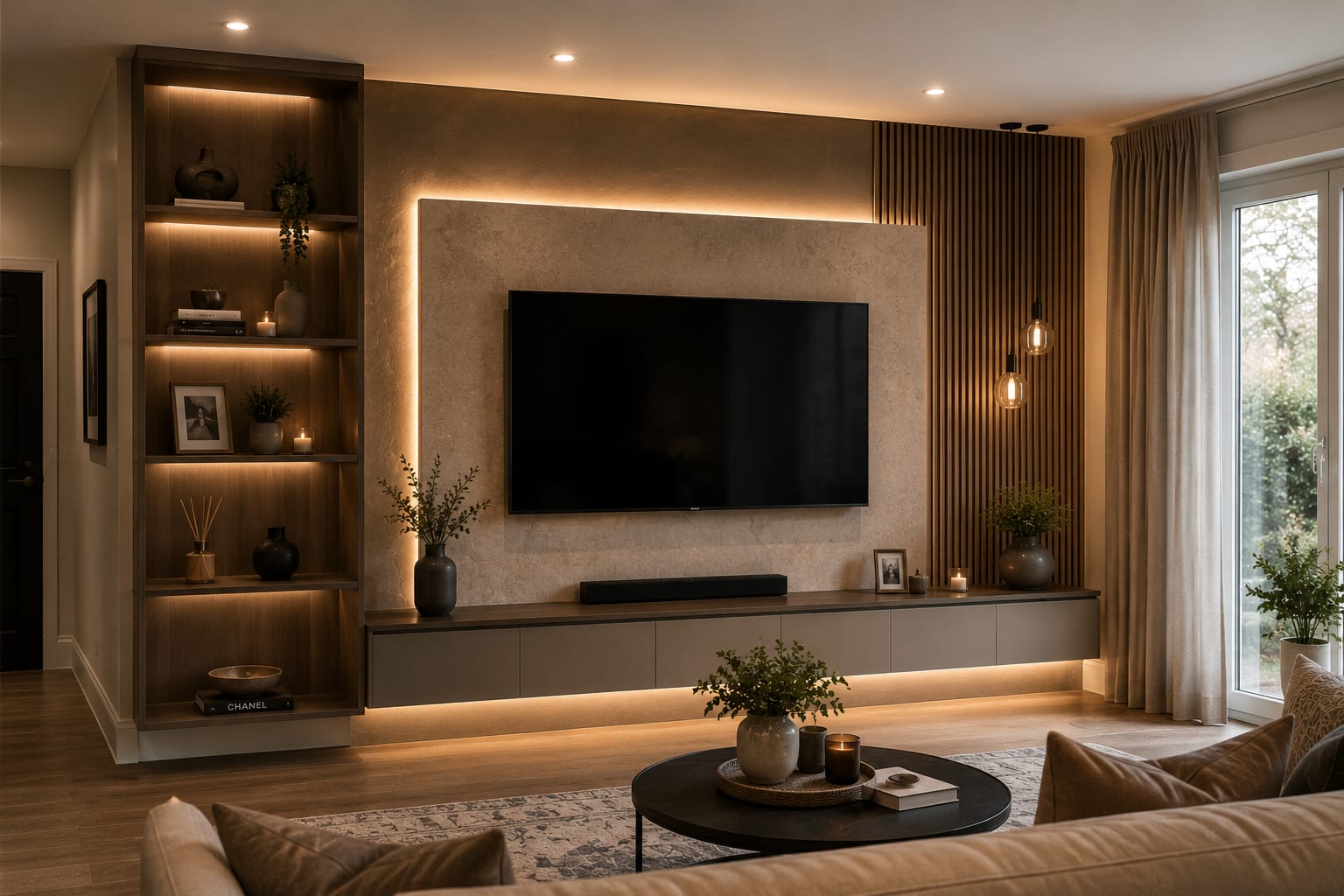 See the full design
 A textured limestone-plaster panel held off the wall with the LED behind it, so the light spreads as a halo rather than a hard line. Add oak slats, a proper bookshelf and a handleless console and you have a wall that works on an ordinary Tuesday. Steal this: hold the panel 40–60 mm off the wall, that gap is the difference between a soft halo and a visible strip.
Choosing between these and a marble wall
Be honest about how the room is used. If you watch a lot of television, matte plaster or concrete behind the screen is genuinely better than polished stone, because it kills reflections. If you need storage, a built-in or a wall with a real bookshelf will serve you far better than a slab. If you want drama, the sculpted curves deliver it, but accept that bold shapes and coloured light date faster than timber and plaster, so wire the colour on its own dimmer and keep the joinery neutral.
Costs run the other way from what people expect, too: shaped MDF, microcement and painted millwork are usually cheaper than templated stone, and the money moves into lighting profiles and the skill of whoever applies the finish. If you want the marble-led versions instead, the companion guide covers those in the same detail.
Join the conversation
Share your thoughts on this room