Room Designs You Can Recreate Palettes, Lighting and Styling Tips Honest and Independent · No Sponsored Posts Room Designs You Can Recreate Palettes, Lighting and Styling Tips Honest and Independent · No Sponsored Posts
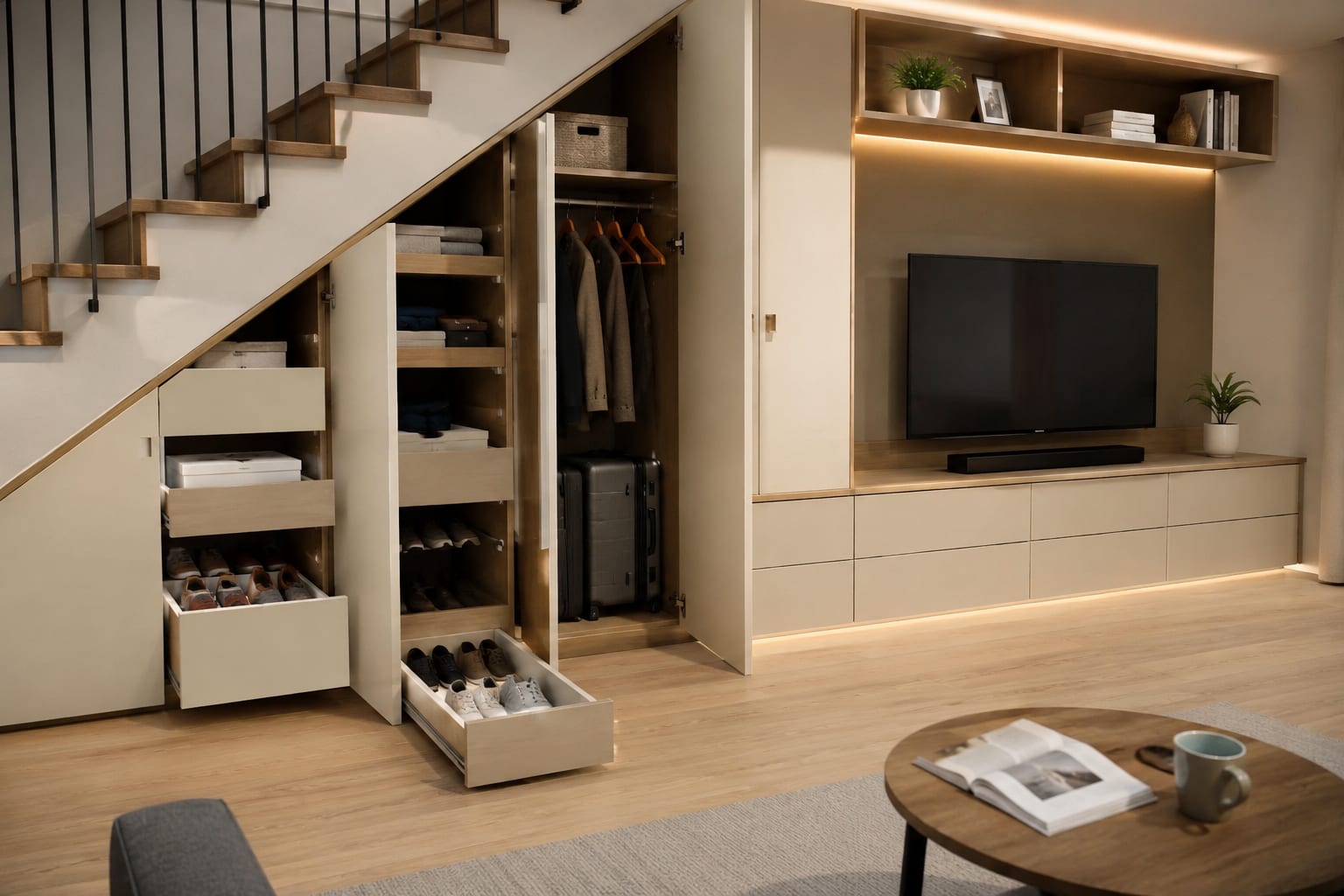
The space under a staircase is usually wasted, yet it is one of the biggest storage wins in a home. Fitted out with pull-outs, it can swallow shoes, coats and bulky bits without stealing a single square foot from your rooms.
Why it works
A normal cupboard under the stairs is hard to use because everything ends up buried at the back. Pull-out drawers and racks fix that: they slide the contents out to you, so the deepest, tallest part of the slope becomes usable instead of a black hole you avoid.
How to do it
Split the run by height. Put deep drawers at the low end for shoes and boxes, a tall pull-out rack in the middle for folded clothes or cleaning gear, and a short hanging rail at the high end for coats and a suitcase. Soft-close runners and simple handleless fronts keep it looking built-in.
Quick tip Measure the tallest point of the slope first and put your hanging rail there, then step the drawers down to follow the stairs so no height is wasted.
Plan it before you build
Map the usable triangle beneath the stair before choosing cabinet widths. Put shallow everyday storage near the tall end and reserve the lowest section for items that can be pulled out completely. A full-height paper template helps confirm that handles and drawer fronts will clear the skirting and adjacent doorway.
Measurements and installation checks
Measure width and height at the front, middle and back because stair cavities are rarely square.
Keep access to wiring, meters, plumbing and inspection points removable.
Use full-extension runners rated for the loaded drawer, not only the empty cabinet.
Budget and upkeep
A painted plywood carcass is usually more repairable than low-density board in a busy hallway. Vacuum the runner channels, label concealed categories and review stored items seasonally so the deepest drawers do not become forgotten overflow.
Mistakes to avoid
Building over utilities without an access panel.
Using small handles that are awkward when a drawer is heavily loaded.
Ignoring the stair structure or cutting framing without professional advice.
Choose access that suits the shape of the stair
A deep drawer is useful only when it can travel into clear floor space. At the tall end, full-height doors may give easier access to coats, a vacuum or sports equipment; at the low end, a wheeled box or short drawer usually uses the taper better. Decide whether the priority is quick daily access or dense seasonal storage before dividing the opening. A neat row of equal fronts can waste the awkward triangular volume behind them.
Questions to answer before a joiner measures
Which items must be reached weekly, and which can sit in the deepest section for a season?
Does the hallway provide enough clear floor for the longest drawer to open with someone standing beside it?
Where are the meter, sockets, pipework and structural stair members, and how will each remain accessible?
Will painted fronts, push catches or projecting handles cope best with bags, children and regular hallway traffic?
A lower cost version without fitted cabinetry
Use labelled lidded boxes on low furniture dollies for the deepest section and a freestanding narrow cabinet at the tall end. A painted plywood screen or curtain can calm the view without closing over utilities. It will not look as seamless as fitted work, but every container can be removed for cleaning and the arrangement can change when the household's storage needs change.
Organise by retrieval, not by empty volume
Put bulky but light seasonal pieces furthest back, everyday shoes or bags near the opening and anything heavy where it can be lifted without twisting. Photograph the contents after the first successful setup and attach a simple list inside the door. That small record prevents the triangular cavity becoming a place where useful objects disappear for years.
Frequently asked questions
What can you store under the stairs?
Shoes, coats, cleaning supplies, luggage and seasonal clothing all fit well. Pull-out drawers and a short hanging rail make even the low, deep part of the slope usable.
Is under-stair storage expensive?
A fitted pull-out set costs more than an empty cupboard but far less than adding a room. Ready-made drawer kits keep it affordable, and it is one of the highest-value upgrades in a small home.
home storageorganizationsmall space
Join the conversation
Share your thoughts on this room
No comments yet, be the first to share how you would style this room.


Join the conversation
Share your thoughts on this room