Room Designs You Can Recreate Palettes, Lighting and Styling Tips Honest and Independent · No Sponsored Posts Room Designs You Can Recreate Palettes, Lighting and Styling Tips Honest and Independent · No Sponsored Posts
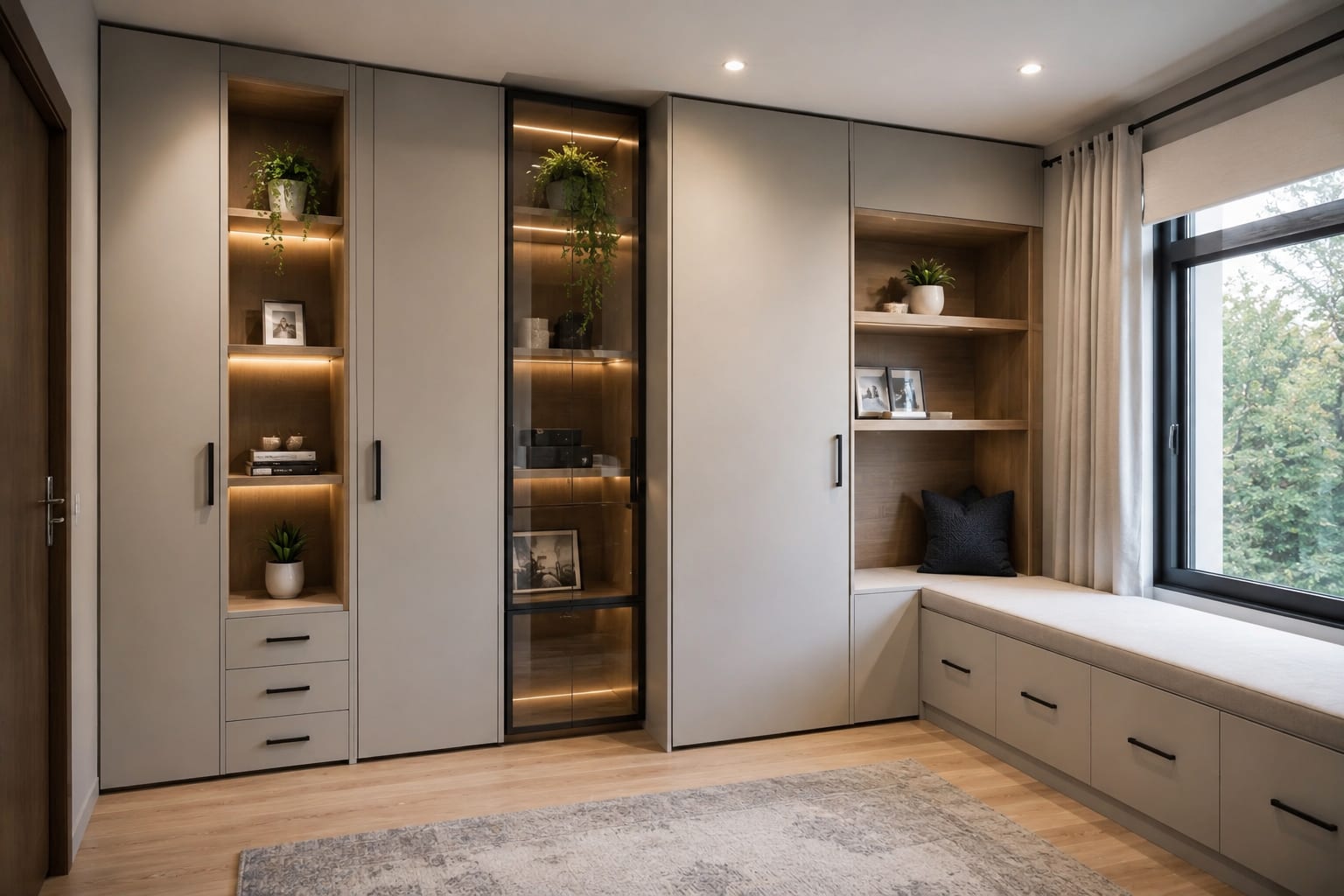
A run of floor-to-ceiling built-in wardrobes holds far more than freestanding furniture and makes a bedroom look calm and custom. The trick is to break the solid doors so the wall feels designed rather than like one big box.
Why it works
Taking the units all the way to the ceiling removes the dust-catching gap on top and gives you a whole extra shelf for out-of-season bedding. Handleless, wall-coloured doors let the storage disappear so the room reads as bigger and quieter.
How to do it
Run wardrobes across the full wall, then interrupt them with one glass-fronted, softly lit niche for a few nice pieces. Add a window seat with drawers underneath for extra folded storage, and fit internal drawers, rails at two heights and a shelf tower so every type of clothing has a home.
Quick tip Paint the doors the same colour as the walls so the wardrobes visually vanish, and save the display niche for a handful of objects, never clutter.
Plan it before you build
Start with an inventory of hanging lengths, folded clothing, shoes and luggage instead of copying a symmetrical elevation. Long garments need a dedicated bay; double hanging suits shirts and trousers; frequently worn pieces belong between waist and eye level. Take the wardrobe to the ceiling only if the top section has a clear purpose.
Measurements and installation checks
Allow enough internal depth for hangers and the thickness of sliding or hinged doors.
Check that hinged doors will not collide with the bed, switches or curtains.
Plan ventilation and keep shelves clear of damp external walls.
Budget and upkeep
Spend first on reliable hinges, runners and a durable interior finish. Add lighting with accessible drivers, use washable shelf liners for shoes and leave a small amount of spare capacity so the wardrobe remains usable after laundry day.
Mistakes to avoid
Dividing every bay equally without measuring what you own.
Making shelves so deep that folded items disappear behind one another.
Sealing a wardrobe against a wall that already shows condensation.
Hinged, sliding or open fronts change the whole plan
Hinged doors expose a complete bay and make interior lighting straightforward, but they need clear floor space. Sliding doors save that swing space yet always cover part of the wardrobe, which can be frustrating when two people dress at once. Open storage is easy to access but demands more visual discipline and dusting. Choose the front first, then design rails and drawers around the access it genuinely provides rather than around a perfectly symmetrical elevation.
Build the interior from a clothing audit
Measure the longest coat or dress and the folded depth of the bulkiest knitwear you actually own.
Count shoes by type so shelves are spaced for boots, trainers and formal pairs instead of one generic height.
Mark switches, sockets, curtains, radiators and bedside furniture that doors or handles must clear.
Decide which top cupboards can be reached safely and where a step stool will be stored when it is not in use.
How to get a fitted look with freestanding pieces
Place two matching wardrobes tightly together, add a removable painted infill at the sides and use coordinated boxes above them. Inside, add a second rail, shelf dividers and battery lights only where they solve a real visibility problem. This approach costs less, moves with you and allows a damp wall to remain inspectable. Avoid fixing decorative panels over ventilation gaps or creating a sealed pocket behind the units.
Leave room for the wardrobe to work on a bad day
A wardrobe photographed when half empty is not a useful target. Plan a temporary landing shelf for clothes that have been worn but are not ready for laundry, keep one drawer partly free and allow spare rail space after washing day. That margin is what prevents a well-designed interior from becoming difficult the moment real life returns.
Frequently asked questions
Are built-in wardrobes worth it?
Yes. They use the full height and width of a wall, so they hold noticeably more than freestanding furniture and make a bedroom feel calmer and more finished.
How do I make fitted wardrobes look less bulky?
Match the door colour to the walls, keep the fronts handleless or with slim edge pulls, and add one lit open niche to break up the run.
home storageorganizationhome organization
Join the conversation
Share your thoughts on this room
No comments yet, be the first to share how you would style this room.


Join the conversation
Share your thoughts on this room