Room Designs You Can Recreate Palettes, Lighting and Styling Tips Honest and Independent · No Sponsored Posts Room Designs You Can Recreate Palettes, Lighting and Styling Tips Honest and Independent · No Sponsored Posts
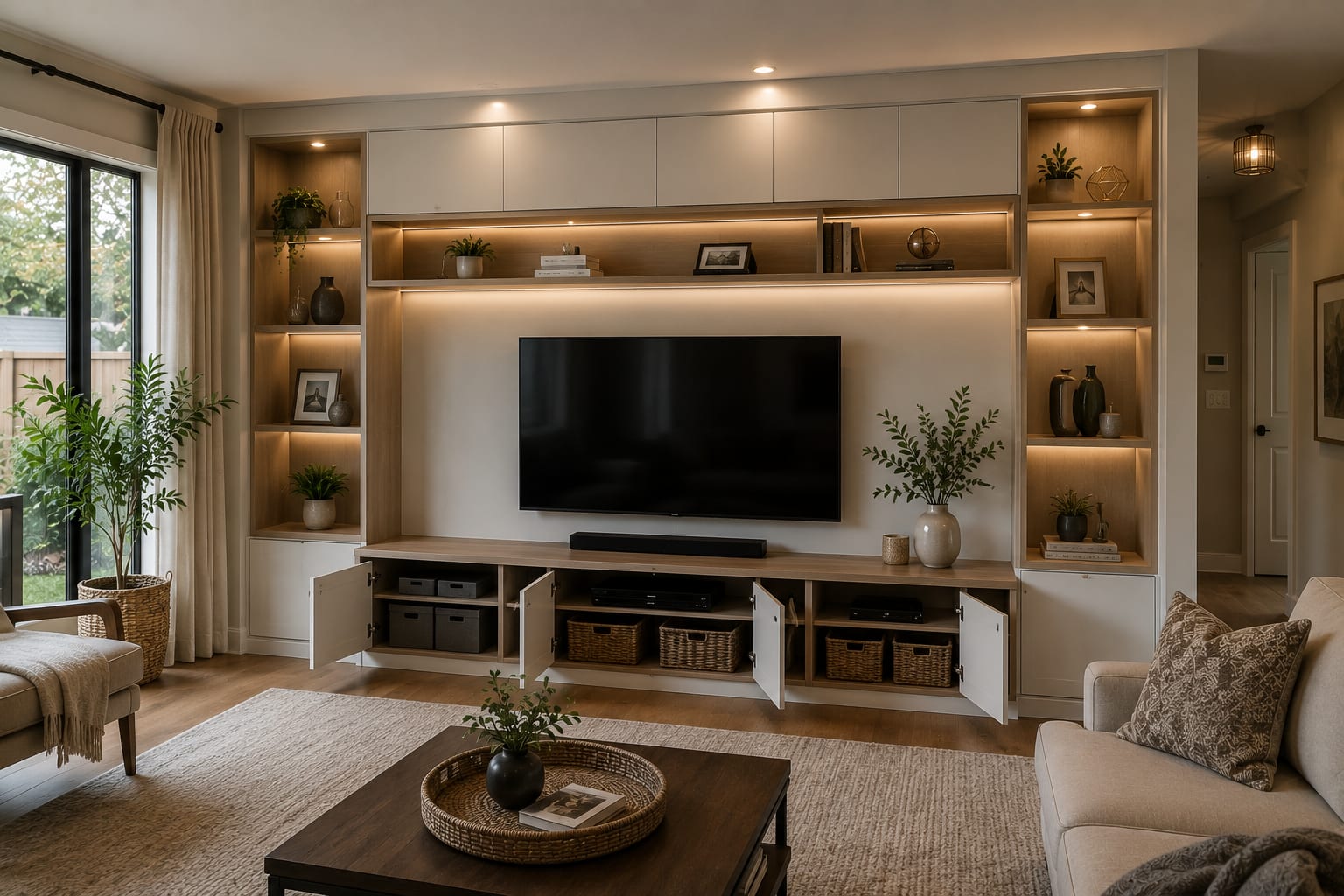
In a small lounge the media wall is often the only big surface you have, so let it hold more than the television while still looking styled.
Why it works
Splitting it into open, lit shelves for display and closed cabinets for clutter gives you the best of both. The room looks calm and considered while remotes, games, cables and chargers stay completely out of sight.
How to do it
Keep the upper shelves open and softly lit for a few books and objects, and put closed doors below with labelled baskets for the messy bits. Match the unit's wood or metal to something else in the room so it feels connected.
Quick tip Run one basket per category, remotes, chargers, games, so tidying the lounge is just dropping things into the right box.
Plan it before you build
Begin with screen size, viewing height, speakers, consoles, router and future cable access. Decide which items require infrared or wireless visibility and which can sit behind doors. Balance the elevation around the viewing position rather than centring every shelf purely for appearance.
Measurements and installation checks
Follow TV, fireplace and appliance clearance requirements.
Provide ventilation and service access for every powered device.
Confirm the wall can support the screen and any floating cabinetry.
Budget and upkeep
Use labelled, replaceable cables and accessible power rather than sealing connections behind finished panels. Clean vents and allow room for device upgrades. Painted cabinetry is easier to refresh; stone, slatted timber and specialist lighting raise both cost and repair complexity.
Mistakes to avoid
Hiding sockets where they cannot be reached.
Mounting the screen too high for the seating distance.
Combining heat sources and electronics without manufacturer-approved clearances.
Start with viewing comfort, not a symmetrical elevation
Set the screen height and seating distance first, then place storage around that relationship. Open illuminated shelves can balance a large dark screen, but they should not push the television above a comfortable eyeline. Closed base cabinets are often the most useful place for clutter, while tall side units suit books or media only if their doors do not interfere with speakers and circulation. Symmetry is optional; service access and comfortable viewing are not.
Coordinate the trades before closing the wall
List every socket, data point, speaker cable, LED driver and ventilation route on one drawing.
Confirm television, fireplace and appliance clearances from the relevant manufacturers rather than copying an image.
Provide removable access to connections and enough cable length for equipment to be tested outside its bay.
Check the wall structure, total cabinet load and fixing method before specifying floating stone, timber or a large screen.
Build the effect with separate components
Use a long low cabinet, paint the wall behind the television one controlled tone and add one or two shallow shelves away from the screen. A plug-in picture light or table lamp can supply atmosphere without integrated wiring. Conceal cables in an appropriate surface route that remains removable. The composition can still feel architectural while every element stays replaceable and easier to repair.
Leave capacity for the next device
Do not size every opening tightly around today's router, console or sound equipment. Keep at least one adaptable shelf and use removable dividers rather than permanent tiny niches. Dust vents, review cable labels after any change and avoid filling illuminated shelves with small objects. Empty space is part of both the cooling strategy and the visual design.
Frequently asked questions
How do I hide clutter around the TV?
Use closed cabinets below the screen with labelled baskets for remotes, games and cables, and keep only styled objects on the open shelves.
What should go on a media wall?
A mix of open lit shelves for a few books and objects, and closed storage below for the everyday clutter, so the wall looks composed rather than busy.
home storageorganizationhome organization
Join the conversation
Share your thoughts on this room
No comments yet, be the first to share how you would style this room.


Join the conversation
Share your thoughts on this room