Room Designs You Can Recreate Palettes, Lighting and Styling Tips Honest and Independent · No Sponsored Posts Room Designs You Can Recreate Palettes, Lighting and Styling Tips Honest and Independent · No Sponsored Posts
A pantry only stays tidy if you can see what you own. A few simple systems stop food hiding at the back and quietly going to waste.
Why it works
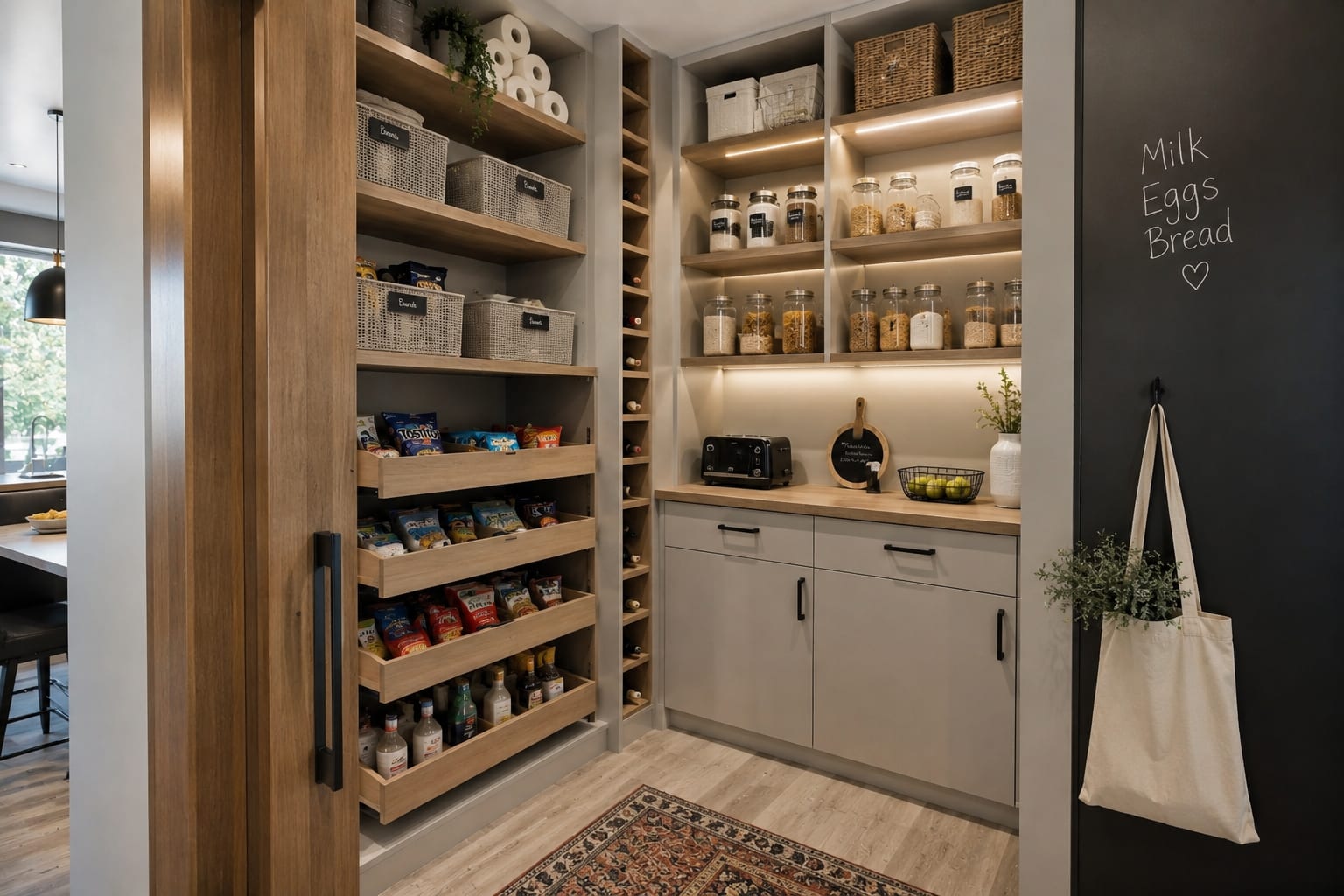
Matching jars with clear labels make stock levels obvious at a glance, pull-out baskets bring snacks and packets forward, and a chalkboard door turns into a running shopping list so staples never get forgotten.
How to do it
Decant dry goods into matching jars and label them, use pull-out wicker baskets for loose packets, and slot a narrow vertical rack into any leftover gap for bottles. Keep everyday items between knee and shoulder height and save the top and bottom shelves for occasional things.
Quick tip Chalk milk, eggs and bread onto the back of the door the moment you run low, so the list is always ready when you shop.
Plan it before you build
Group the pantry by task: breakfast, baking, snacks, cans, back stock and small appliances. Put heavy items between knee and waist height, keep daily ingredients visible and limit deep shelves so packages do not form hidden rows. Containers should solve a real stacking problem rather than replace perfectly usable packaging by default.
Measurements and installation checks
Measure the largest appliance and bulk package before fixing shelf spacing.
Leave a comfortable aisle and make sure the door can open without blocking shelves.
Provide ventilation and keep food away from heat, direct sun and damp surfaces.
Budget and upkeep
Choose adjustable shelves before decorative organisers. Date decanted food, rotate new stock behind old stock and keep a short inventory of duplicates; these habits save more space and money than buying matching bins for every item.
Mistakes to avoid
Using shelves deeper than you can comfortably see and reach.
Decanting food without allergen, expiry or cooking information.
Storing heavy appliances on high shelves.
Shelf depth matters more than the number of shelves
A narrow shelf can be easier to use than a deep one because every label remains visible. Deep lower shelves suit appliances or large baskets; eye-level food storage is usually better kept shallow or divided into pull-out zones. Before choosing an L-shaped or U-shaped layout, mark the clear aisle and test whether two open cupboard doors or a person carrying groceries can still move comfortably. More shelving is not useful if the back row becomes invisible.
Plan around packages, habits and food safety
Measure the tallest bottle, widest appliance and largest packet bought regularly rather than relying on standard spacing.
Keep frequently used food between knee and eye height and reserve high shelves for light, infrequent items.
Choose containers only where they improve sealing, stacking or visibility, and retain cooking and allergen information.
Provide a clear first-in, first-out route so older food moves forward when new groceries arrive.
Start with an adjustable pantry before going bespoke
Commercial-style adjustable shelving, a sturdy lower unit and a few category baskets can create a highly functional pantry without fitted joinery. Set shelf positions after living with the groceries for several weeks. Add a door rack only for light items that will not interfere with handles or the aisle. The result may be less decorative, but it is easier to alter as shopping habits change.
A ten minute weekly reset protects the system
Return stray packets to their zone, bring opened items forward, wipe one shelf and note duplicates before shopping. Do not spend the reset making every label face perfectly; concentrate on visibility, dates and an empty landing area for unpacking. A pantry that supports quick decisions is more valuable than one arranged only for a photograph.
Frequently asked questions
How do I organize my pantry?
Decant staples into labelled jars, use pull-out baskets for packets, and keep everyday items at eye level. A door chalkboard doubles as a shopping list.
Should you decant food into jars?
For dry staples like pasta, rice, cereal and flour, yes. Jars keep food fresher, make stock levels visible and stop half-open packets spilling at the back.
home storageorganizationkitchen storage
Join the conversation
Share your thoughts on this room
No comments yet, be the first to share how you would style this room.


Join the conversation
Share your thoughts on this room