
Kitchen Organization
Kitchen Organization ideas, storage hacks and practical guides for a calmer, more organized home.
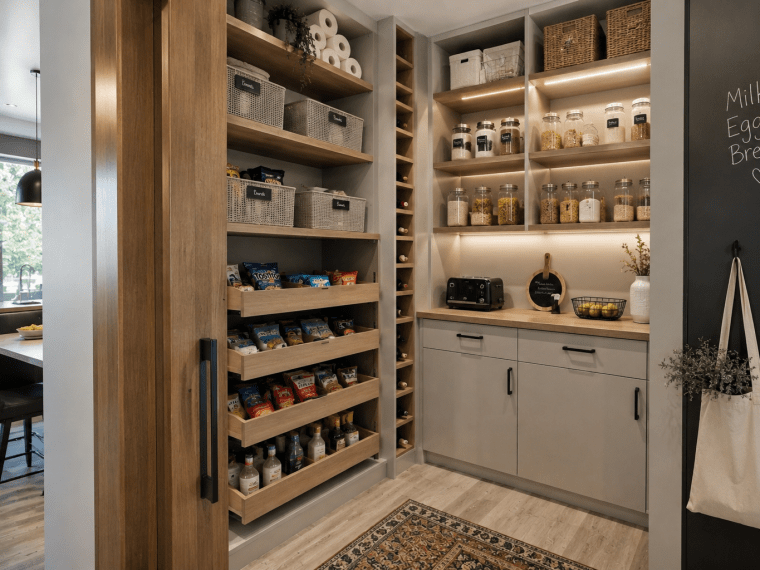 KitchenWalk-In Pantry OrganizationLabelled jars, pull-out baskets, a slim wine rack and a chalkboard shopping-list door that keep a pantry tidy for good.Read the guide
 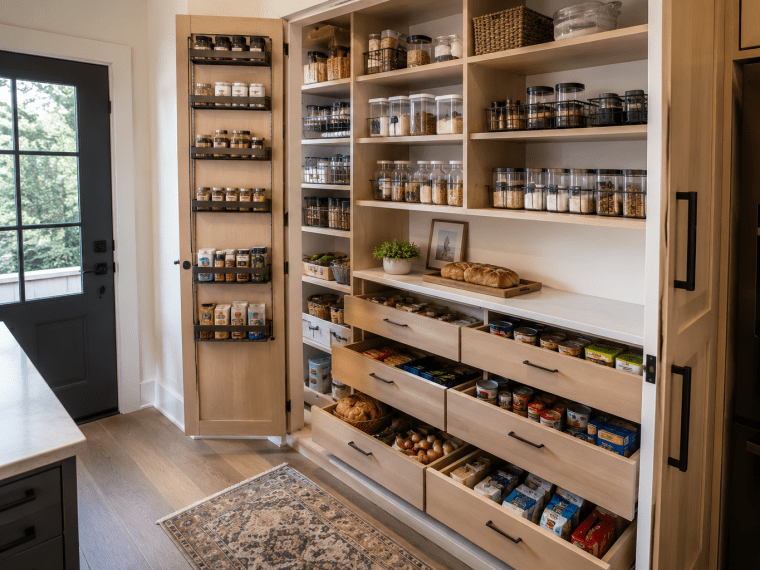 KitchenPull-Out Pantry Drawers and Door Spice RackDeep pull-out drawers that bring every tin forward, plus a door-mounted spice rack that uses the dead space.Read the guide
  KitchenSmall Kitchen Pull-Out StorageA full-height pull-out larder, deep pot drawers and a concealed bin that nearly double a tiny kitchen's capacity.Read the guide
 Organize the kitchen by task, reach and safe storage
Kitchen storage should shorten the path between an ingredient or tool and the task it supports. Group breakfast items near the preparation area, baking supplies together and pans near the hob where the room layout permits. Heavy appliances belong on supported shelves between knee and waist height; rarely used light pieces can occupy higher cupboards.
Pull-outs and deep drawers improve visibility only when their dimensions account for hinges, pipes, handles and neighbouring appliance doors. Measure the clear internal opening rather than the nominal cabinet size, check runner load ratings and preserve ventilation specified by appliance manufacturers. Keep household chemicals separate from food and out of children's reach.
Before decanting everything into matching containers, decide whether the new container protects freshness, improves stacking or makes stock easier to see. Preserve expiry, allergen and cooking information, rotate older products forward and leave a little spare capacity. An easy weekly reset saves more space than packing every shelf to its limit.
Review the storage after cooking a normal meal rather than immediately after tidying. Note which cupboard doors remain open, which tools cross the room and where clean-up pauses. Those observations reveal whether a shelf needs adjusting, a category belongs closer to the dishwasher or a frequently used appliance deserves permanent worktop space.
- Store by cooking task rather than package colour.
- Measure hinge and pipe obstructions.
- Keep heavy items below shoulder height.
- Maintain food labels and expiry information.